Invasion Zone: Medellin, Columbia
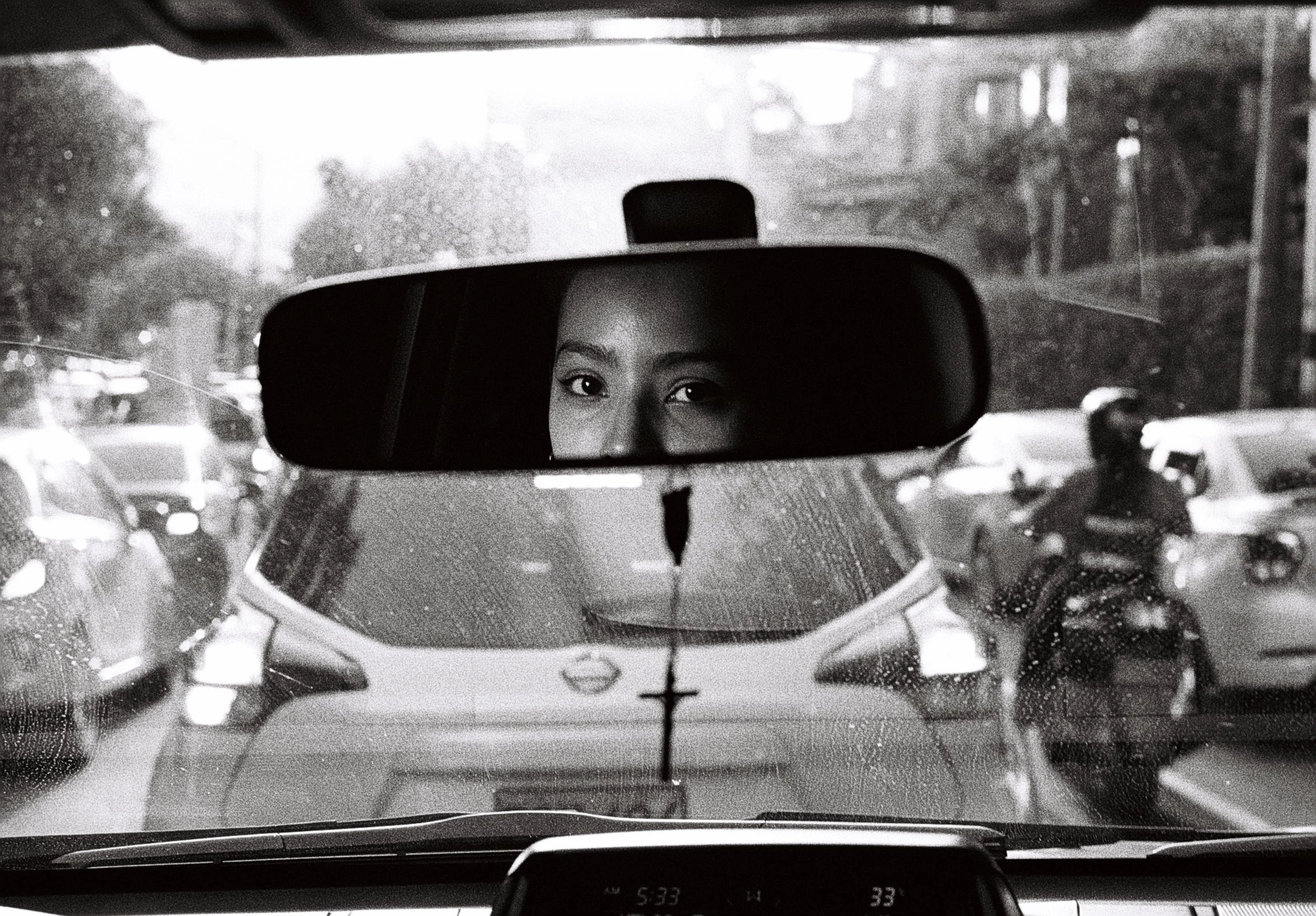
Cover Photo. A young woman appears in a rear-view mirror while driving an vintage taxi in Medellín, a rosary hanging from the mirror behind a dirty windshield.
National collapse in Venezuela has pushed her into an informal economy where movement functions as both income and protection in a city marked by instability and risk. The invasion zone situates displacement inside everyday labor, where survival replaces choice and migration becomes a permanent condition embedded in ordinary life.

Three boys stand together in a Medellín hillside barrio on the outskirts of Medellin.
Their closeness suggests dependence and shared survival inside a landscape of informal housing and limited security. Displacement shapes childhood, where loyalty, vigilance, and mutual protection replace institutional safety in neighborhoods formed by migration and necessity.
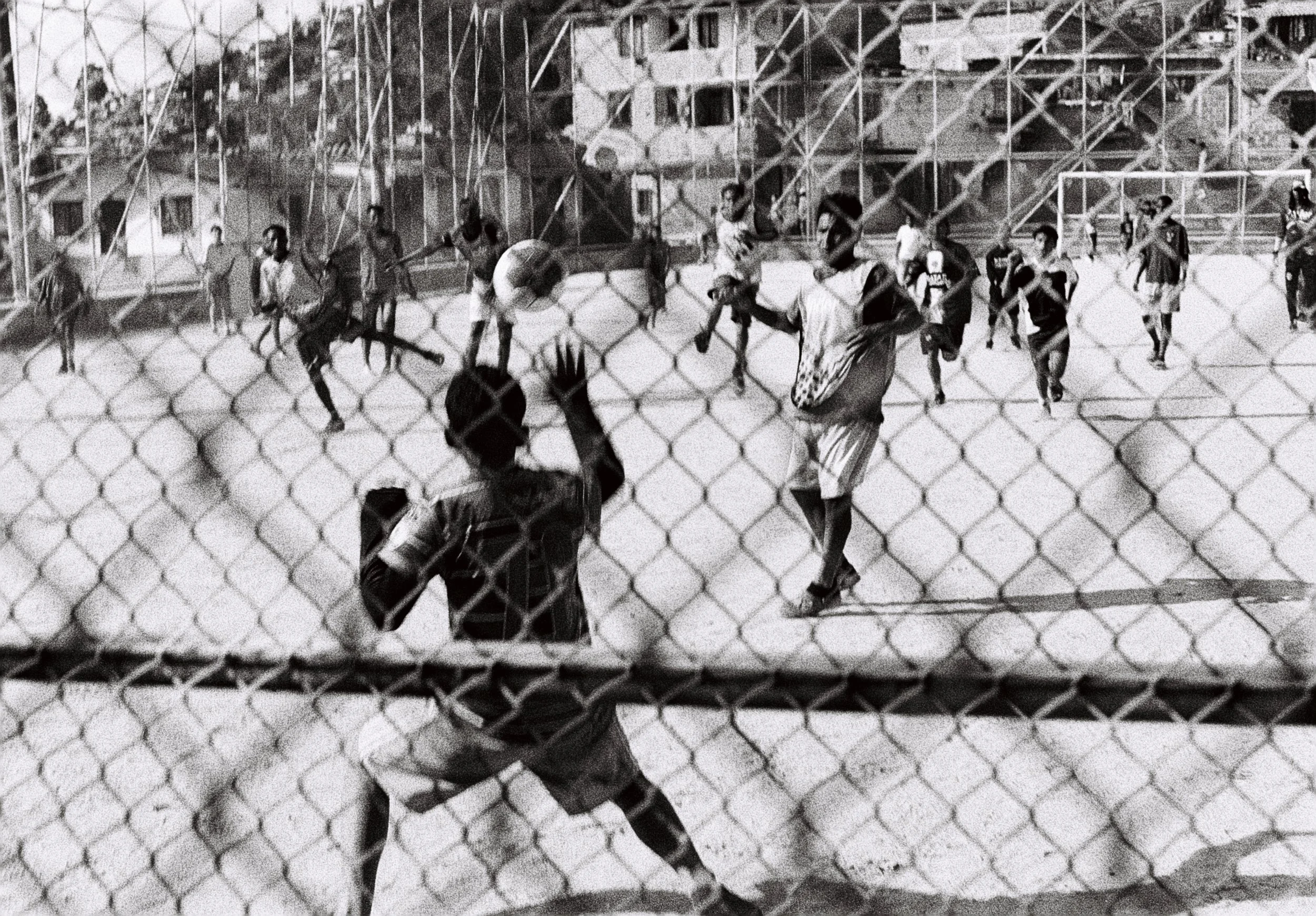
A soccer game in the dusty barrio field as a shot is taken on goal, defended by a young boy.
The match shows how community reorganizes inside the invasion zone, where space is scarce but social order persists. Men and boys of all ages share the same ground, using play as cohesion, discipline, and continuity amid migration, crowding, and instability.
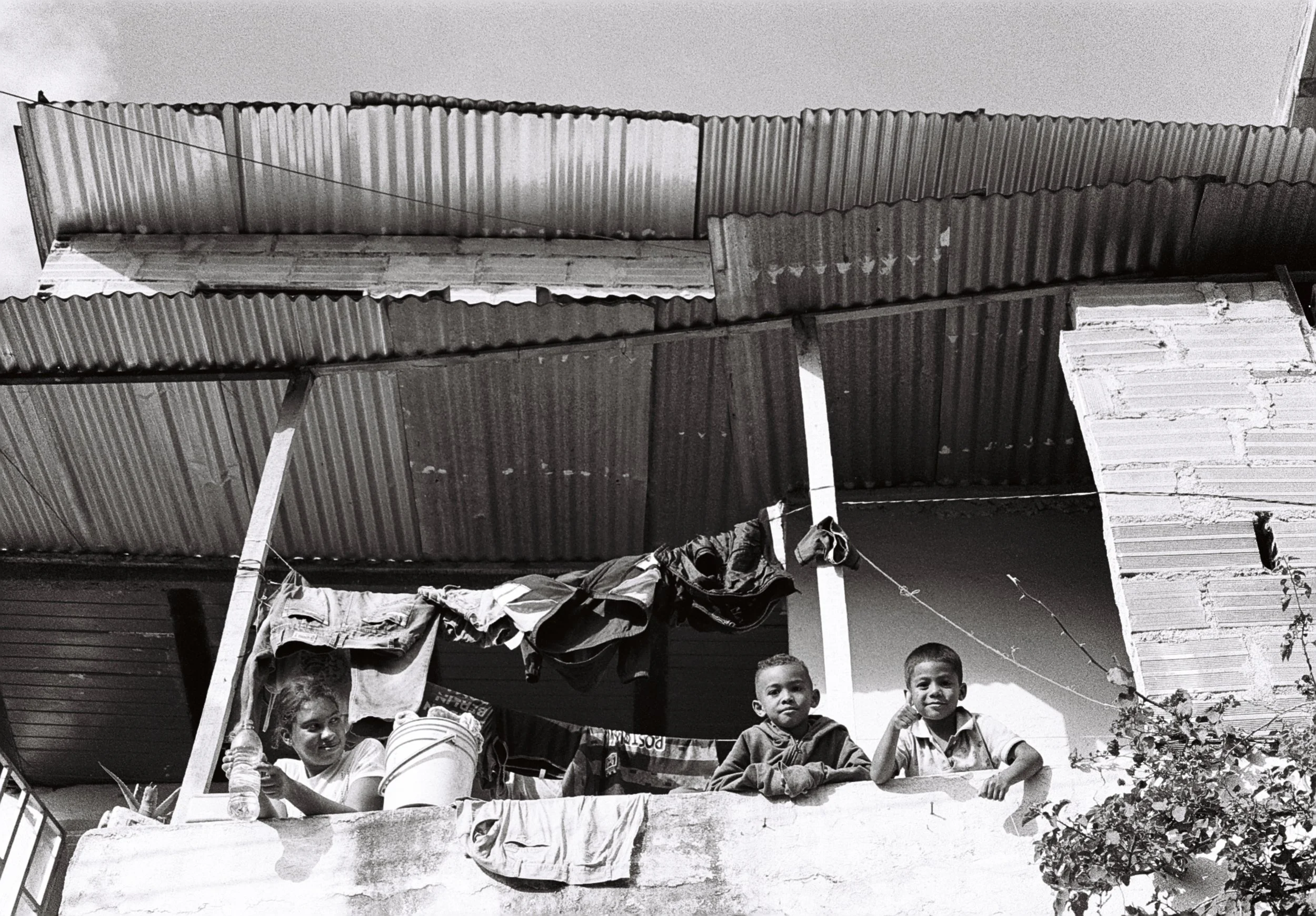
A home in the Invasion Zone is constructed from scavenged wood, crooked brick and a temporary roof of corrugated metal.
In Medellín’s invasion zone it is improvisational architecture. Homes are assembled without permits, plans, or protections. These basic materials hold together lives that are permanently exposed to collapse, landslide, and police removal. Survival here is fragile and dangerous.
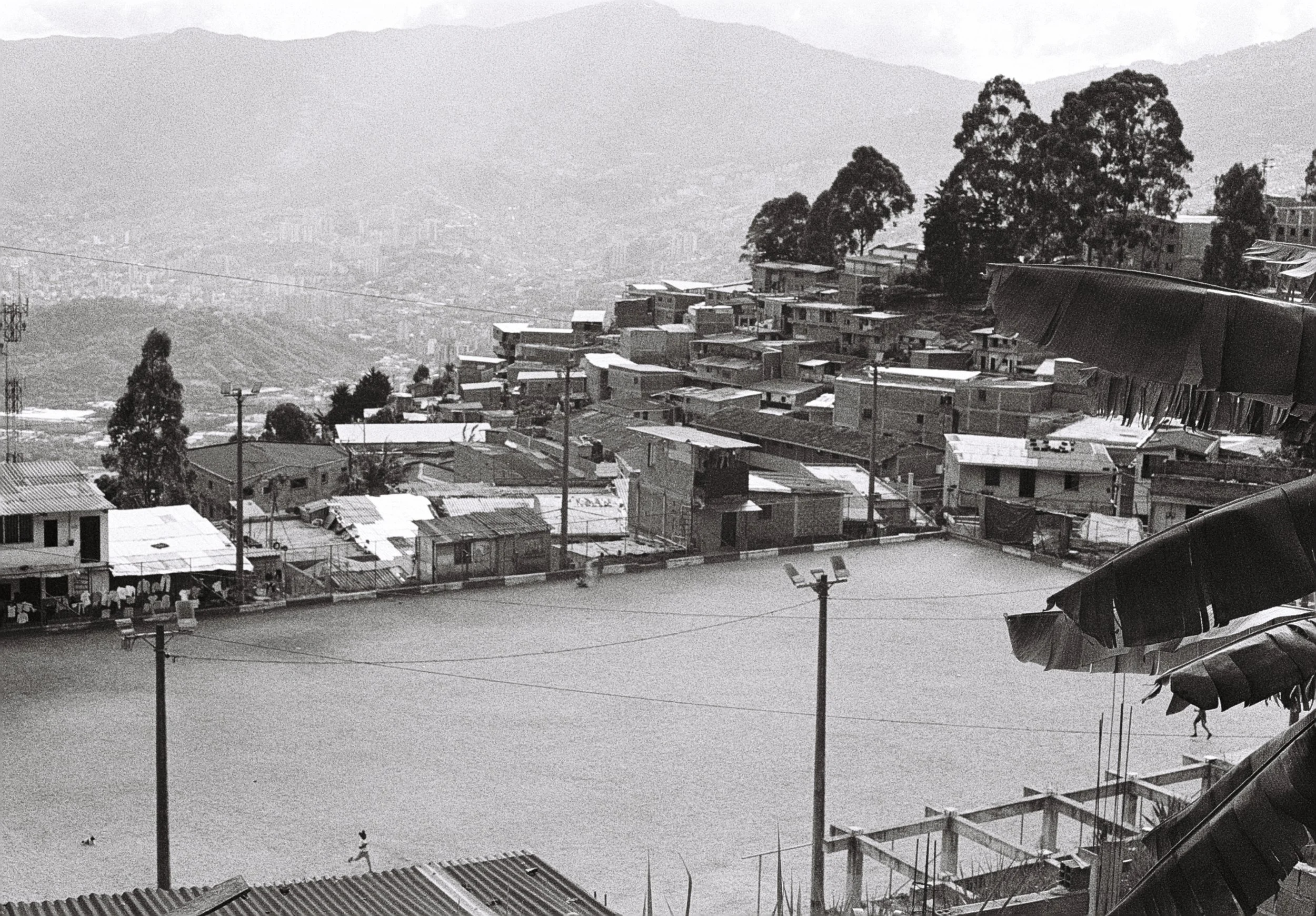
A high vantage view looks down across a dense hillside barrio on the edge of Medellín.
The terrain rises steeply from the valley floor, forcing homes to stack tightly against one another on unstable ground exposed to rain, erosion, and landslides. Displacement is shaped by geography and survival depends as much on negotiating the environment as on navigating the city below.
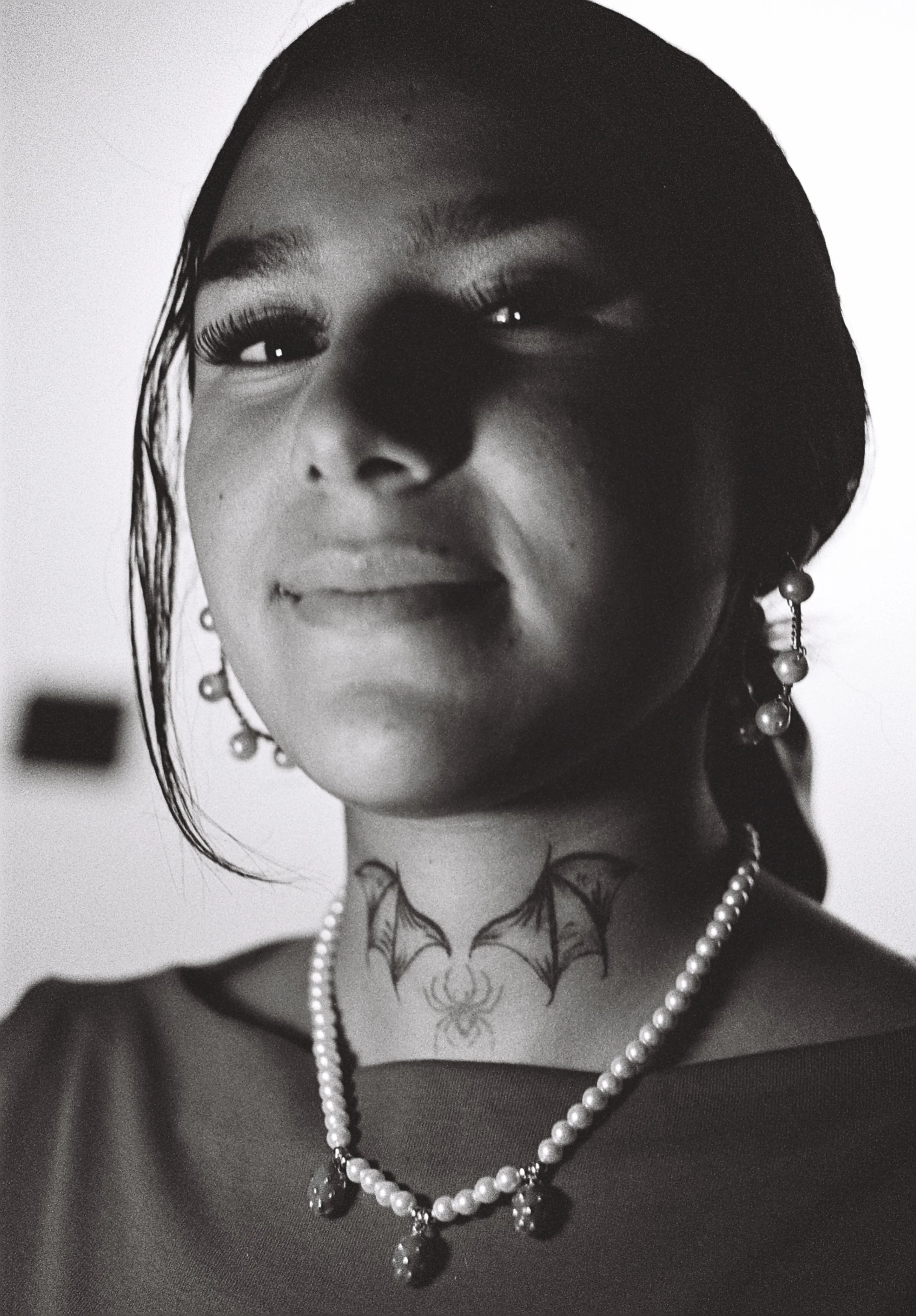
A tattooed young woman working at a shop in the invasion zone.
Tattoos signal toughness and territory in an environment shaped by migration, economic pressure, and daily proximity to danger.
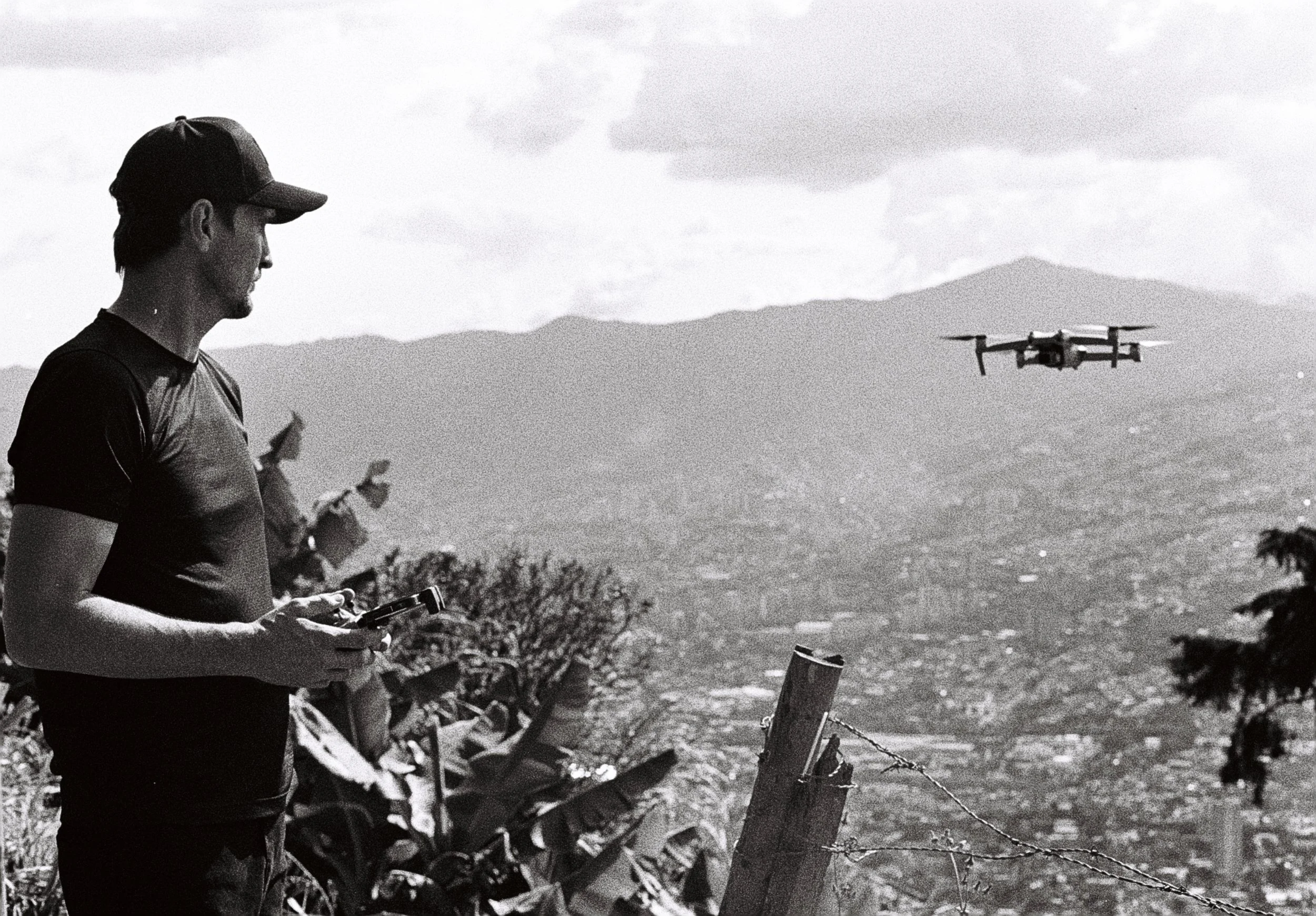
An international worker launches a drone to perform a damage assessment after landslides that killed families and destroyed homes.
As illegal migration continues, additional homes are built on higher and more unstable terrain.

A sex worker in Medellín.
Illegal migration and limited economic options shape informal labor carried out under constant exposure to danger.
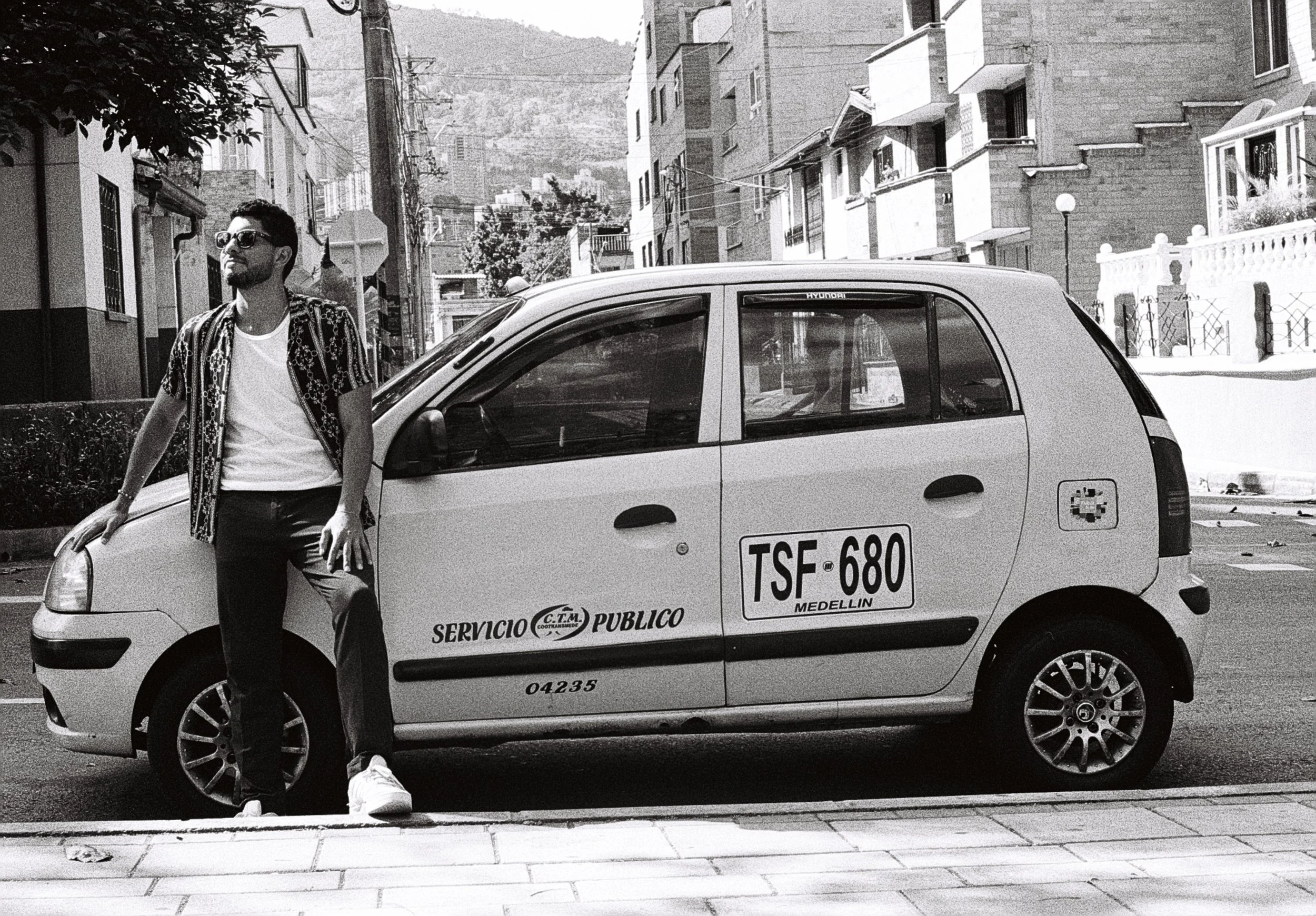
A man stands next to his taxi, the iconic shape is known throughout Columbia.
He stands as a symbol of Medellin. The taxi driver stands as a transitional figure in the invasion zone, rooted in Medellín, yet economically shaped by the constant influx of migrants who expand and strain the informal transport economy. His pride beside the taxi signals adaptation rather than victimhood, showing how migration reshapes not only those arriving, but those who must survive alongside them.