This is Israel: Life After October 7
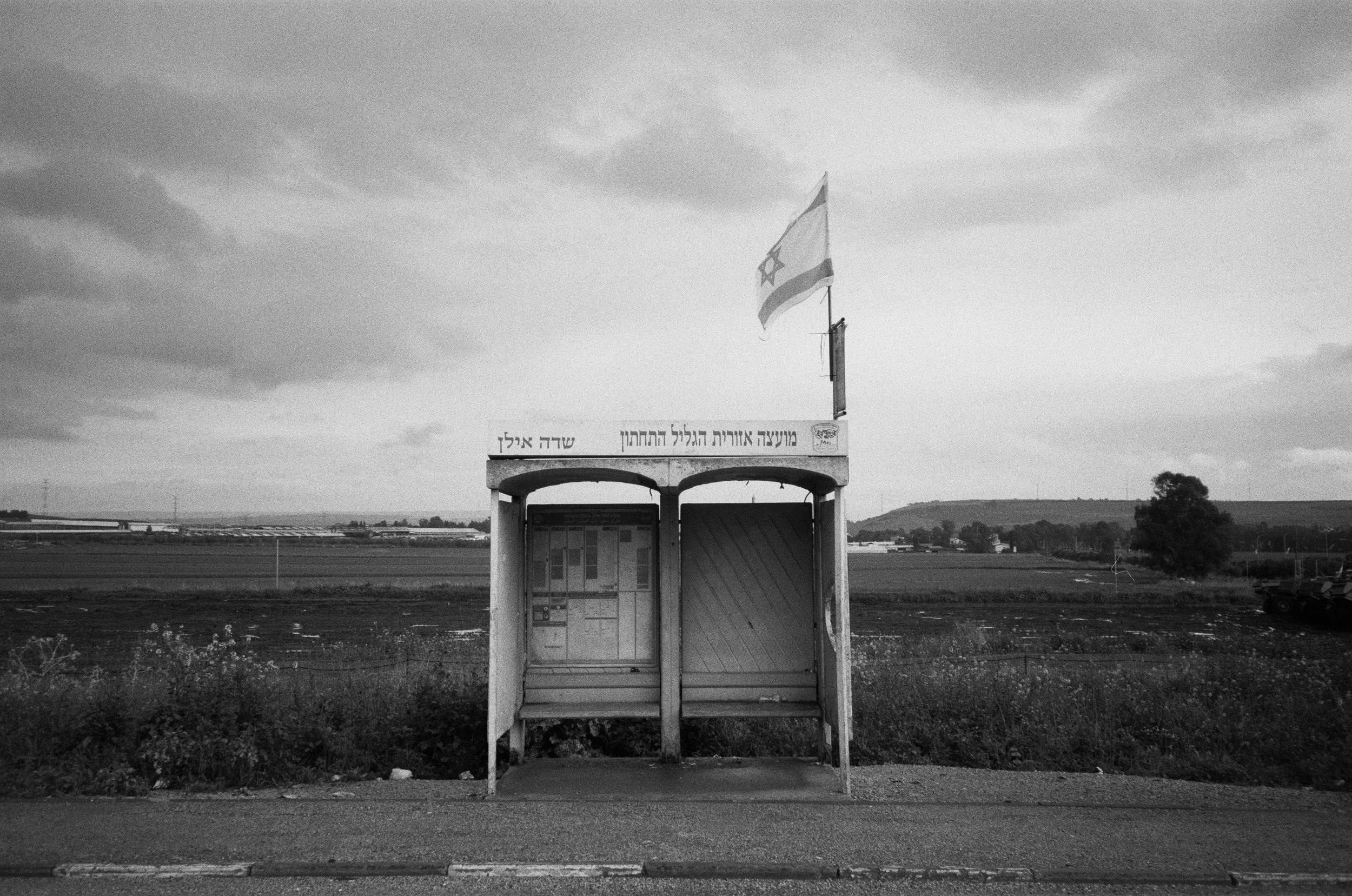
Cover Photo: A remote bus station in the Golan Heights, northern Israel.
The wood and concrete outpost stands amid historic kibbutz land and functions both as a bomb shelter and as a transportation gateway to Haifa’s technology corridor. The improvised, proudly mounted flag signals resourcefulness and biblical resolve. Built on ground that gave rise to Zionism and the modern State, the site embodies a country rooted in ancient traditions, shaped by difficulty, but always innovating and oriented toward the future. This is Israel.
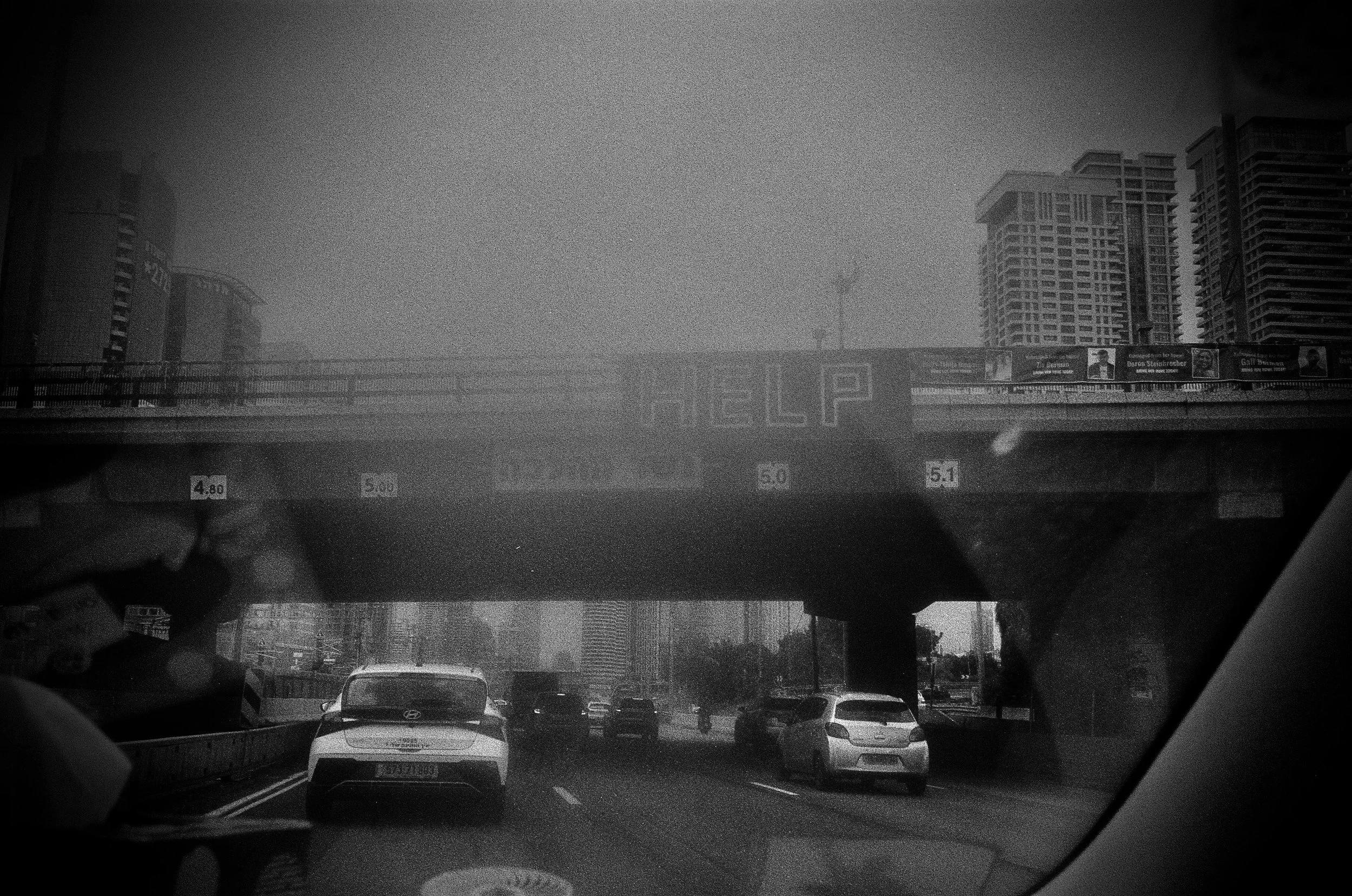
A large “HELP” banner hangs from a highway overpass as cars stream into downtown Tel Aviv.
A nation in mourning. The simple English appeal transforms ordinary infrastructure into a public signal of national emergency meant for both Israelis and the watching world. Even under that plea, traffic keeps moving as this is a country grieving and unsettled, yet still functioning and pushing forward.
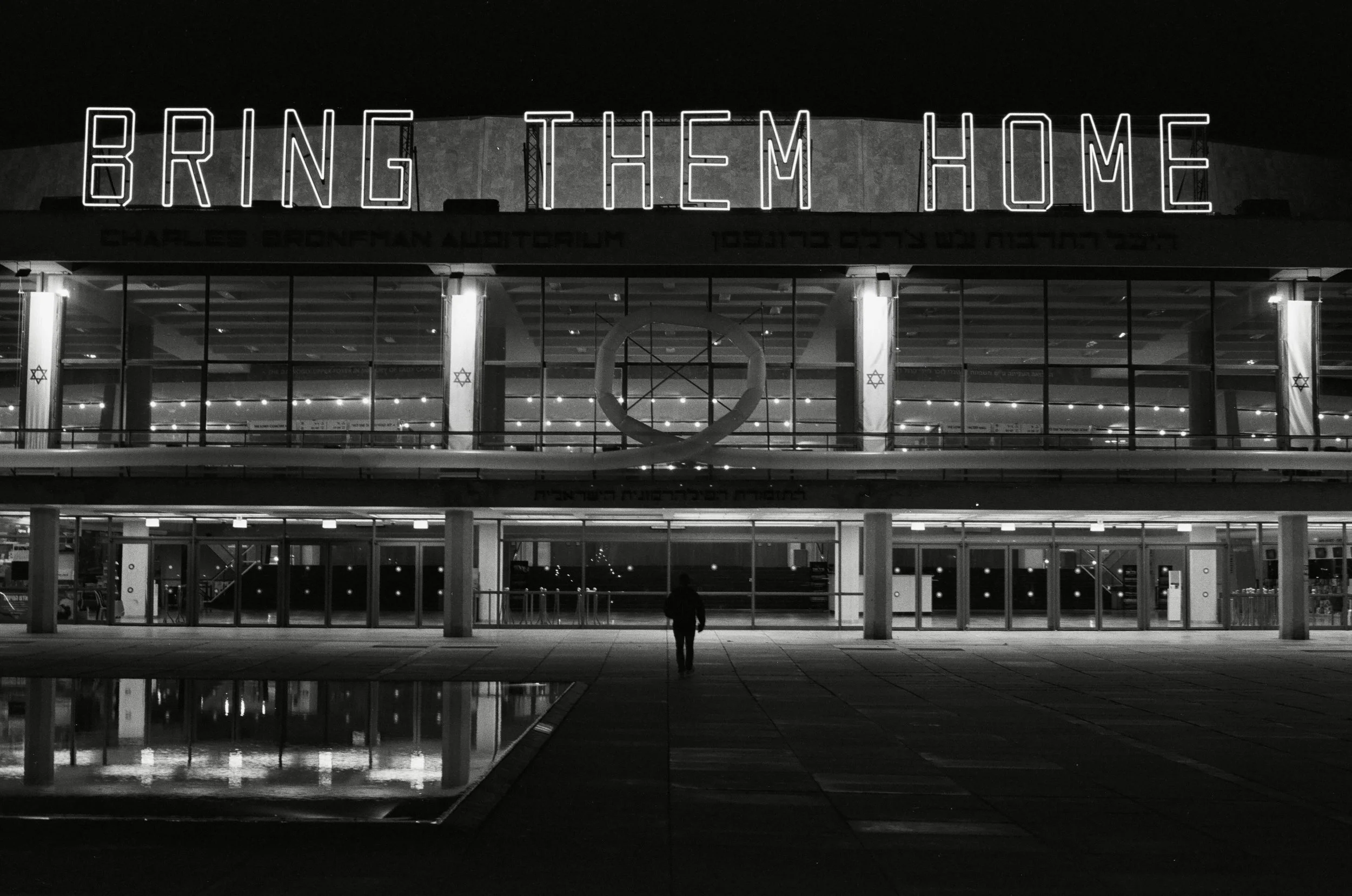
A lone man walks toward the Tel Aviv Cultural Center.
Built as a symbol of modern Jewish cultural life, the building has been transformed into a public memorial for the hostages. What was meant to celebrate creativity and confidence now stands as a reminder that hope, not bloodshed, remains at the center of Israeli identity.
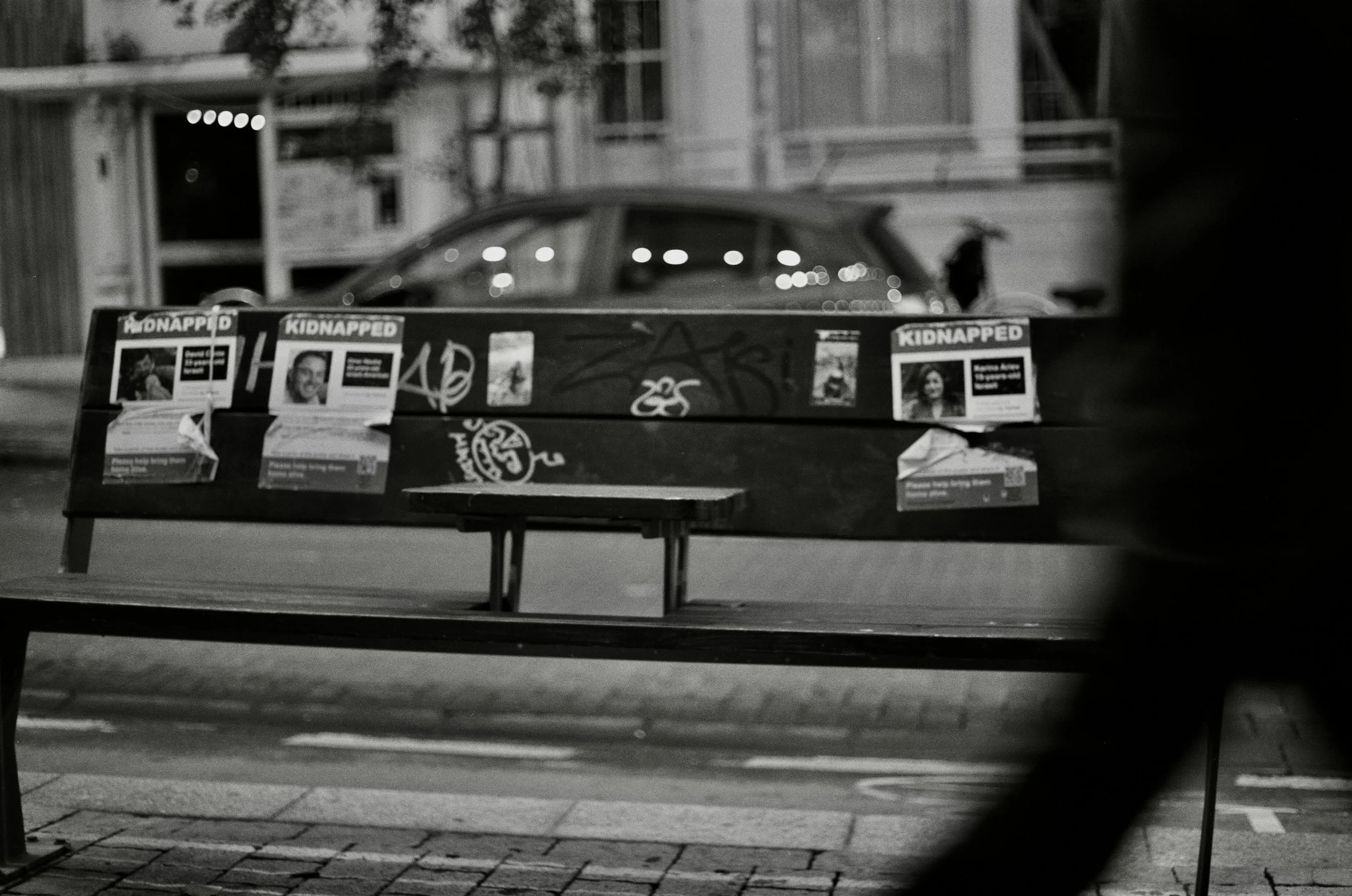
A commuter hurries past a Tel Aviv bench covered with posters of kidnapped Israelis.
The ordinary street bench becomes a public ledger of absence, carrying the word “hostage” that is ancient in meaning yet painfully modern in practice. Israel has lived with hostage-taking since its earliest decades, and this display shows how that history still shapes a society that refuses to forget its people.
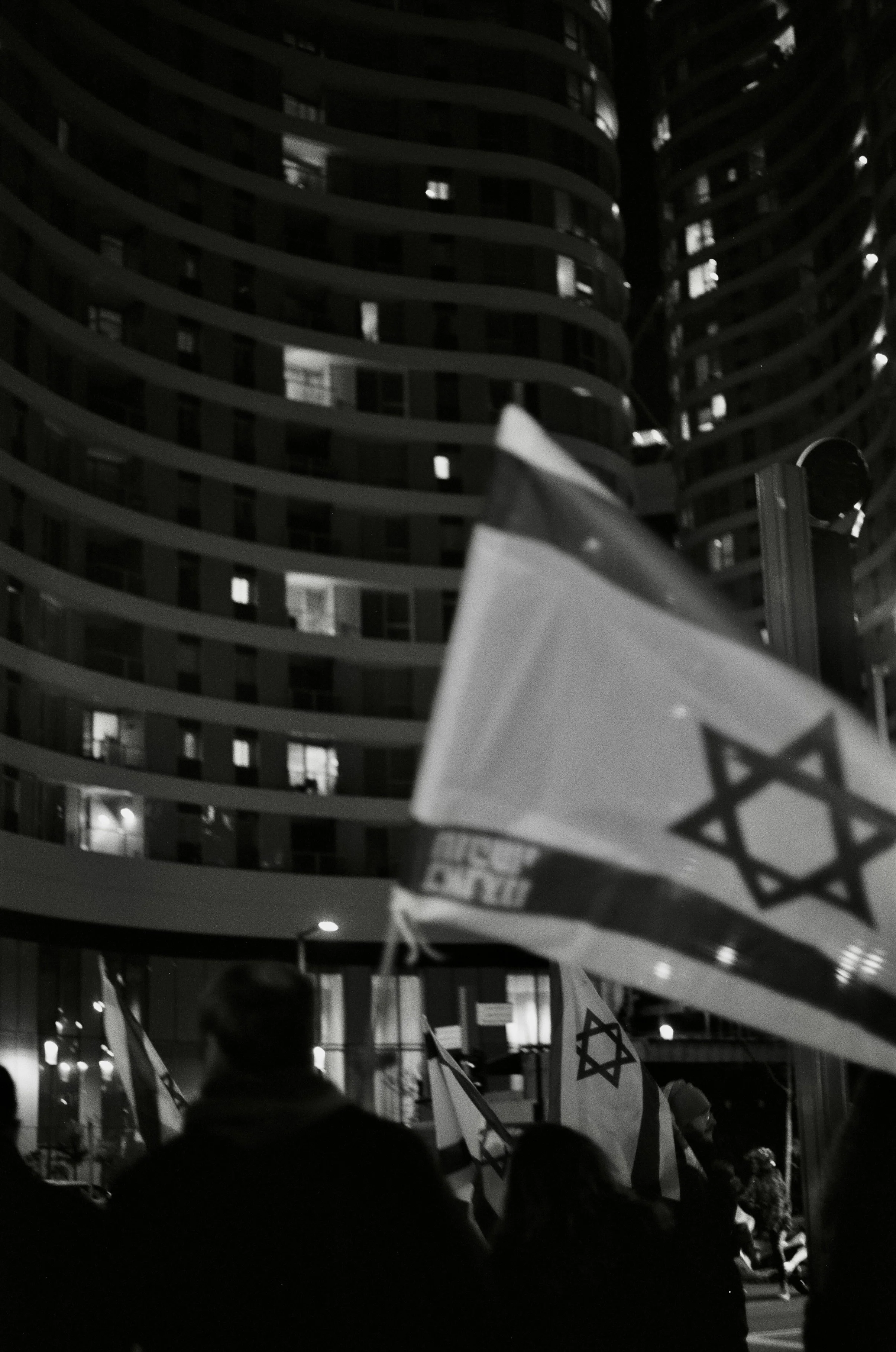
Protesters gather outside the Gindi Apartment Complex in downtown Tel Aviv, the residence of Israel’s Minister of Defense.
Their presence reflects a public demand for a ceasefire and the release of remaining hostages, bringing the moral urgency of the war into the center of everyday urban life. Even in crisis, Israel’s democratic character remains visible: citizens assemble, dissent, and speak freely in the streets.
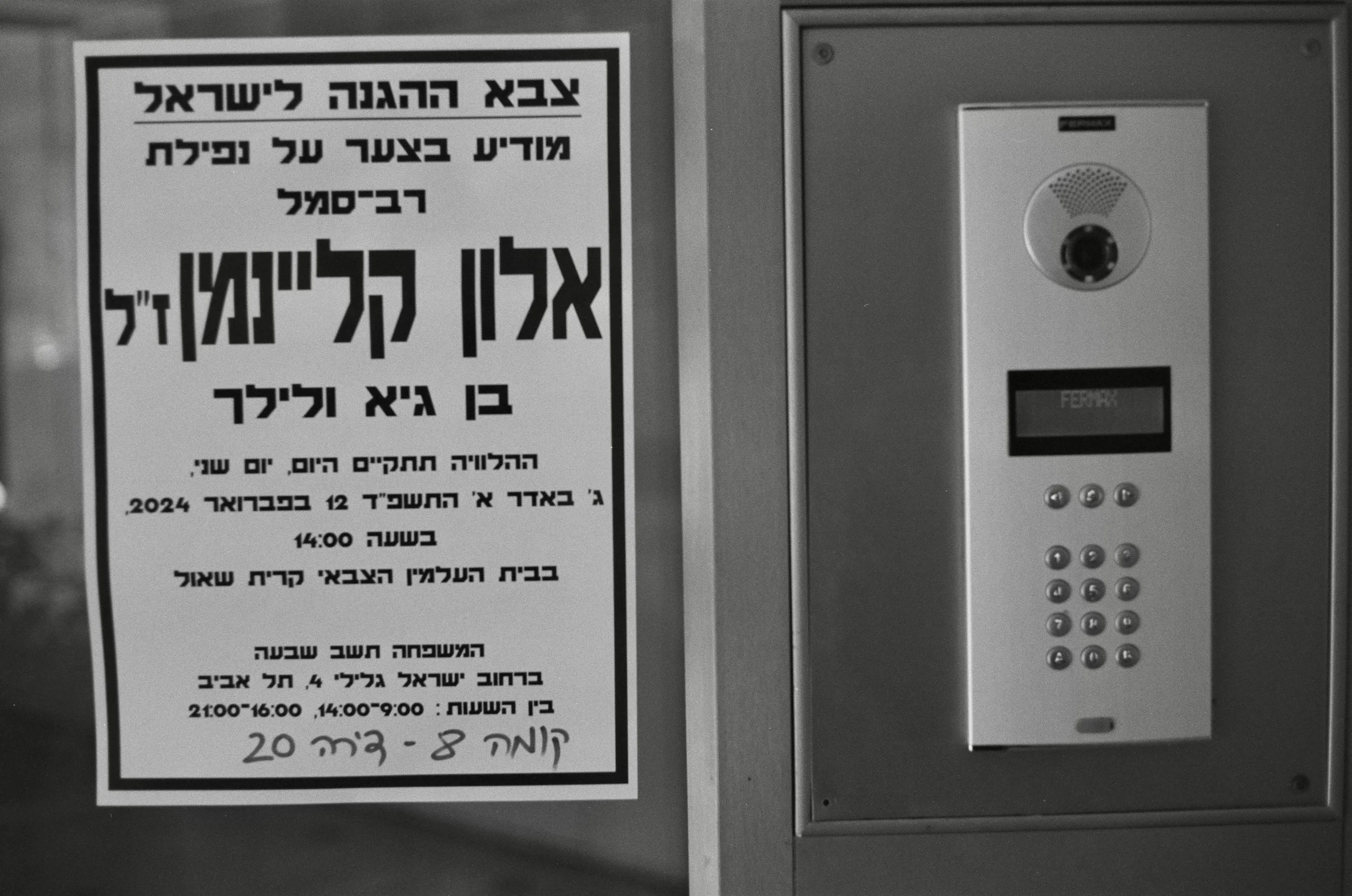
A memorial announcement for an IDF soldier killed in Gaza, posted beside a building’s intercom in Tel Aviv.
The placement between private entry and public street shows how mourning has been woven into everyday urban life rather than kept at a distance. It is another modern war unfolding on ancient land; the old and the new colliding once again.
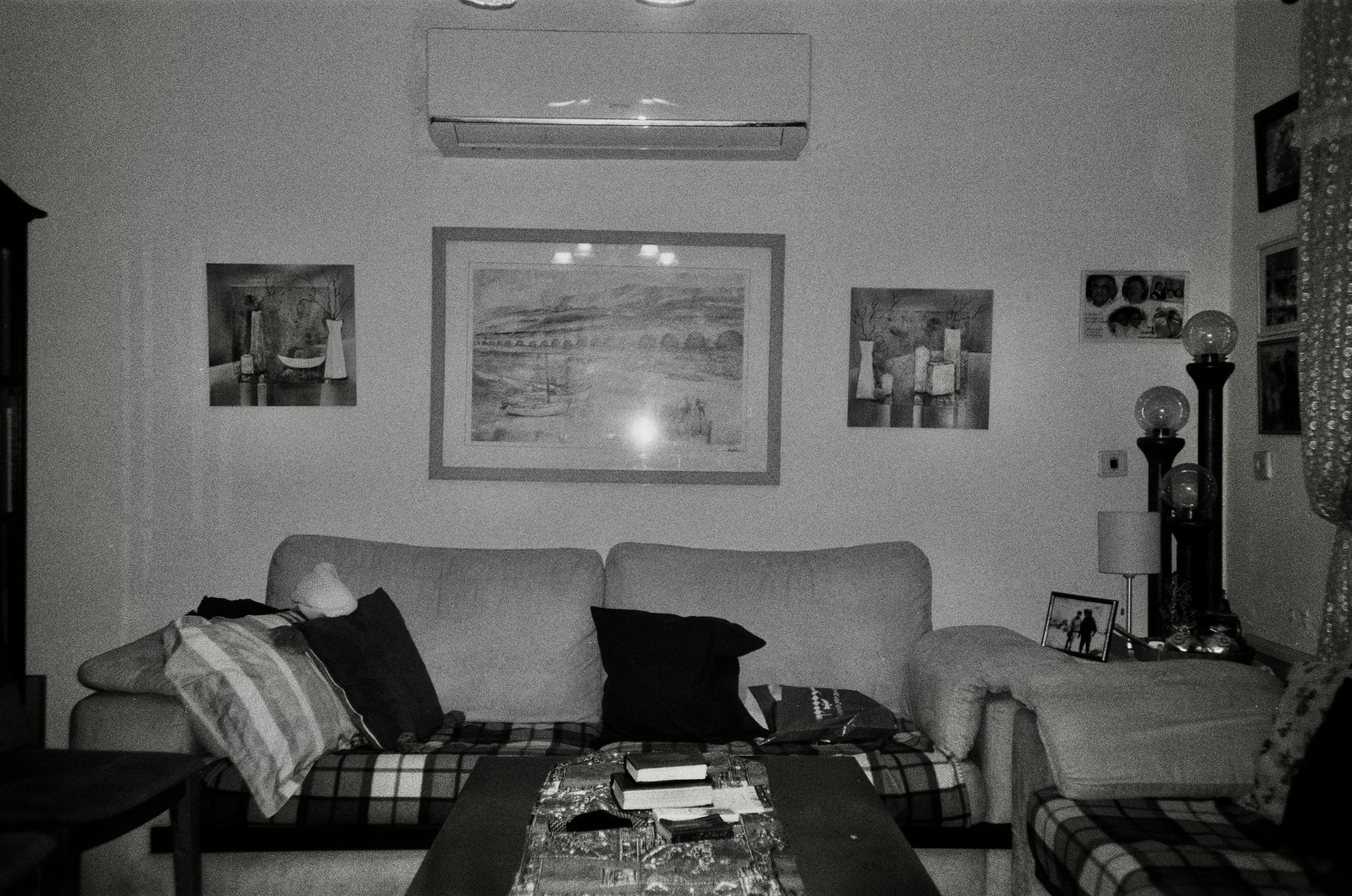
Prayer books rest on a table inside a family living room in an Israeli home.
Their son is dead. Killed while serving with the IDF in Gaza, the family will ‘sit shiva’ for seven days of mourning, prayer, and remembrance. In homes like this across Israel, an ancient ritual now unfolds inside a modern society at war. Tradition and contemporary life coexisting in the same room.
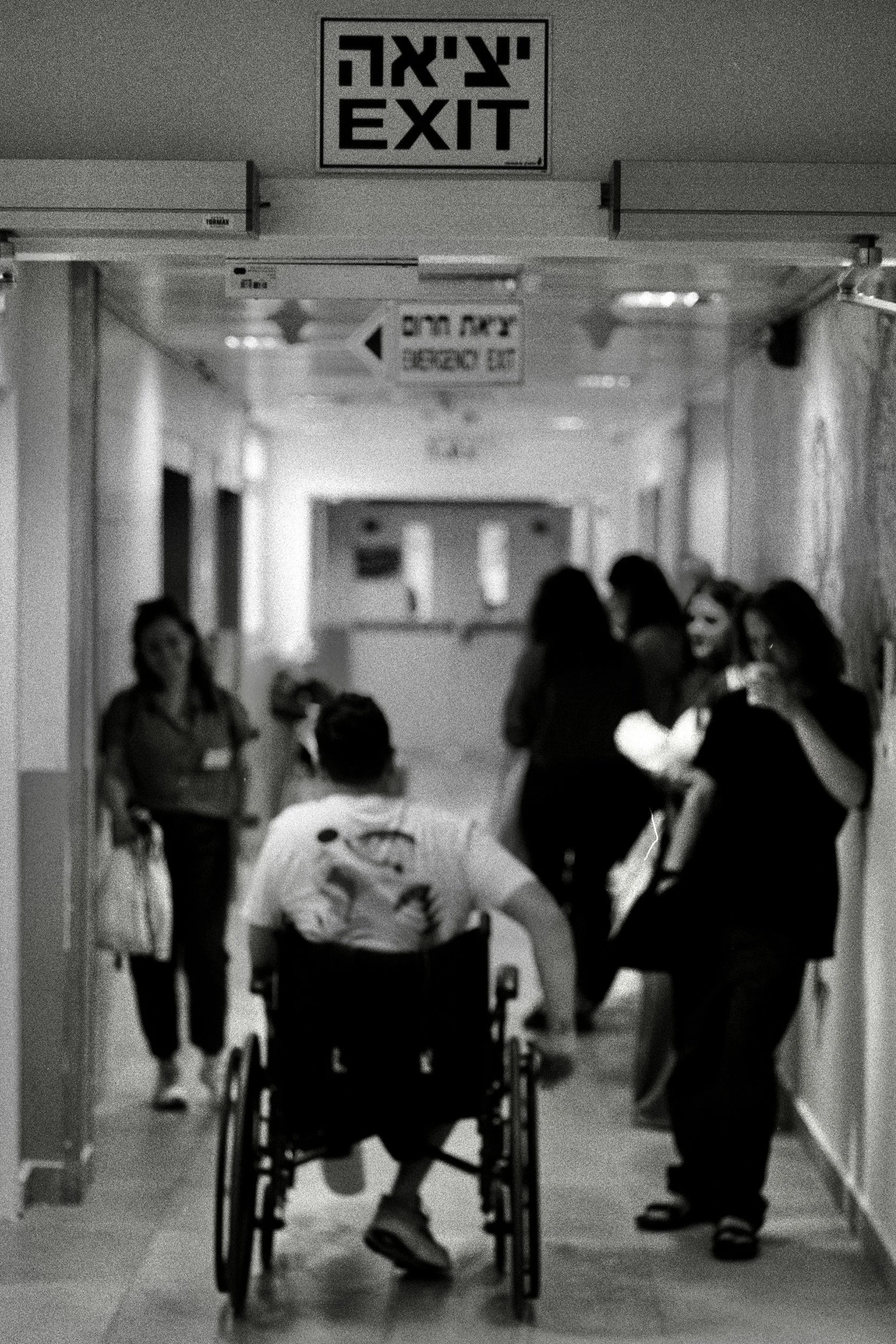
The departure hall of a military hospital near Tel Aviv.
An Israeli soldier, wounded in Gaza and now missing part of his left leg, rolls toward home after multiple surgeries. Nurses, volunteers, and civilians gather to send him offf. Part gratitude, part grief, part resolve. In a modern, technologically advanced nation still shaped by ancient bonds of duty and community, recovery becomes both personal and collective.
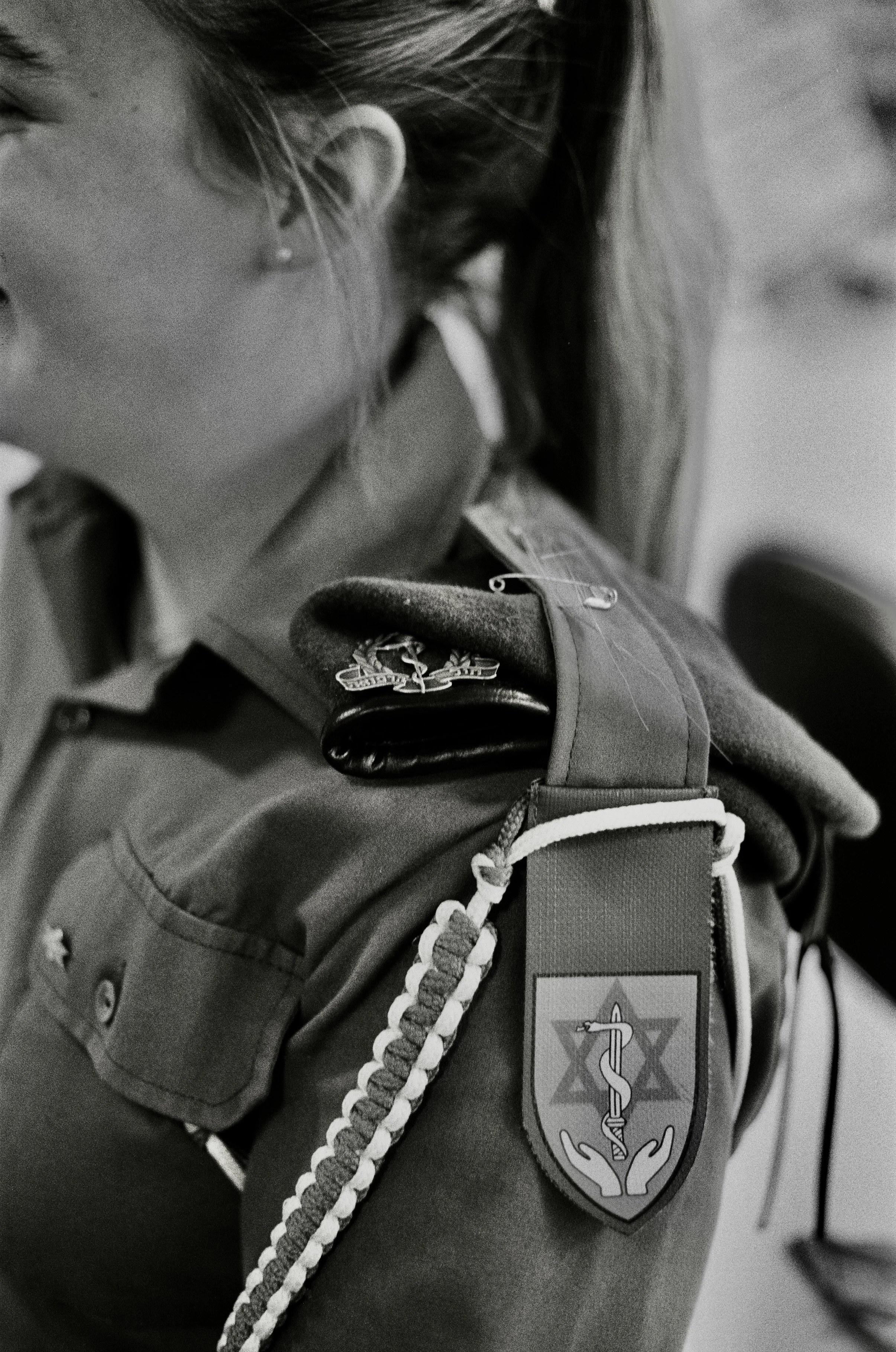
A female Israeli soldier and medic waits in the lobby of a military hospital near Tel Aviv for news about comrades wounded in Gaza.
Her presence reflects Israel’s universal conscription, in which women and men alike serve and shoulder responsibility for national survival. This tradition is rooted in the early defense of Jewish settlements and continues to now operate inside one of the world’s most advanced military and intelligence systems, joining historic duty with modern capability.
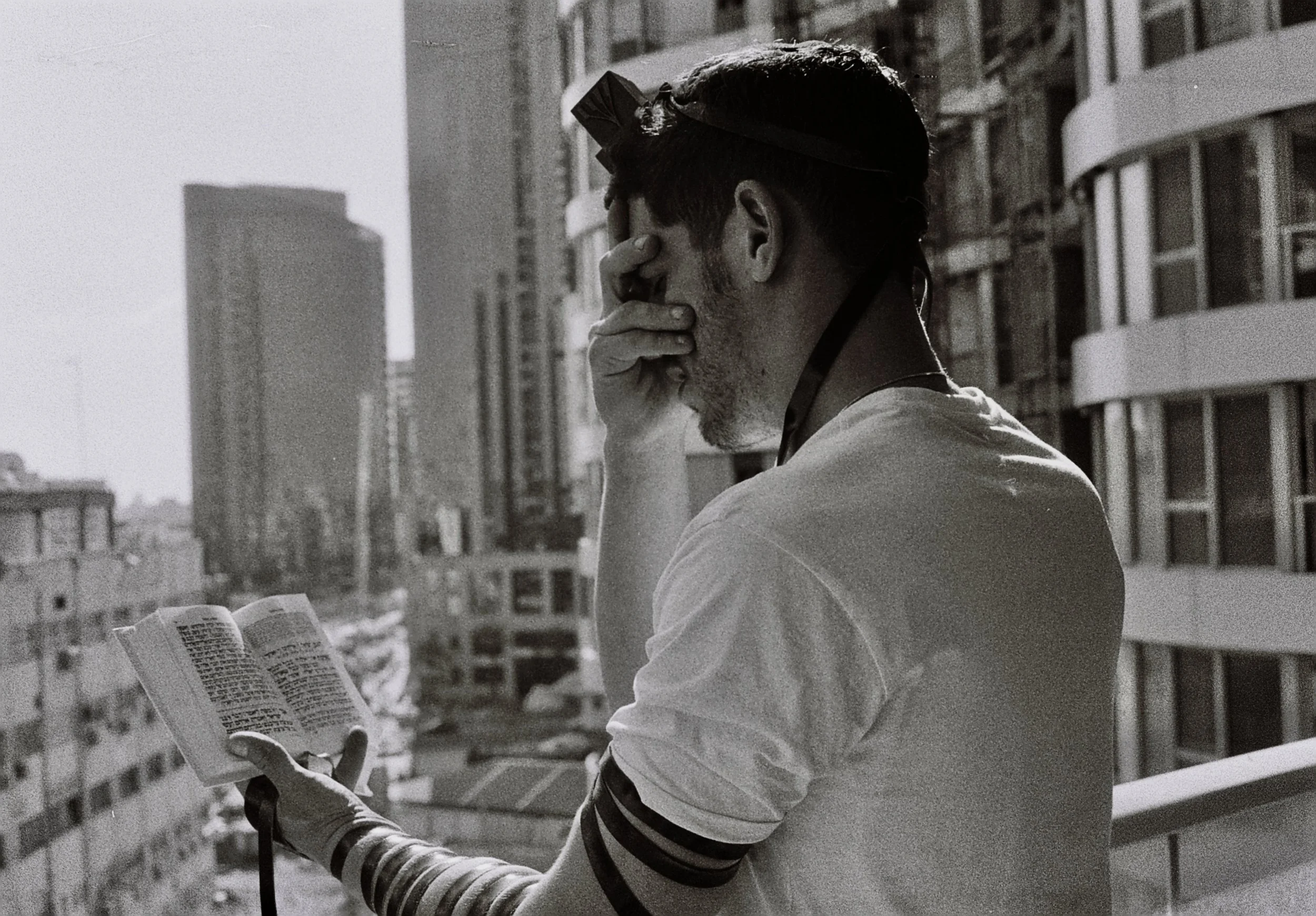
A young Jewish man stands on a Tel Aviv balcony praying from the Torah while wearing tefilin, which symbolize the binding of heart and mind to God.
A nation of prayer. His arrival to Israel after the events of October 7 carries greater urgency, almost like an act of conviction while he seeks to claim his Right of Return, build a family, and create a future in Israel.
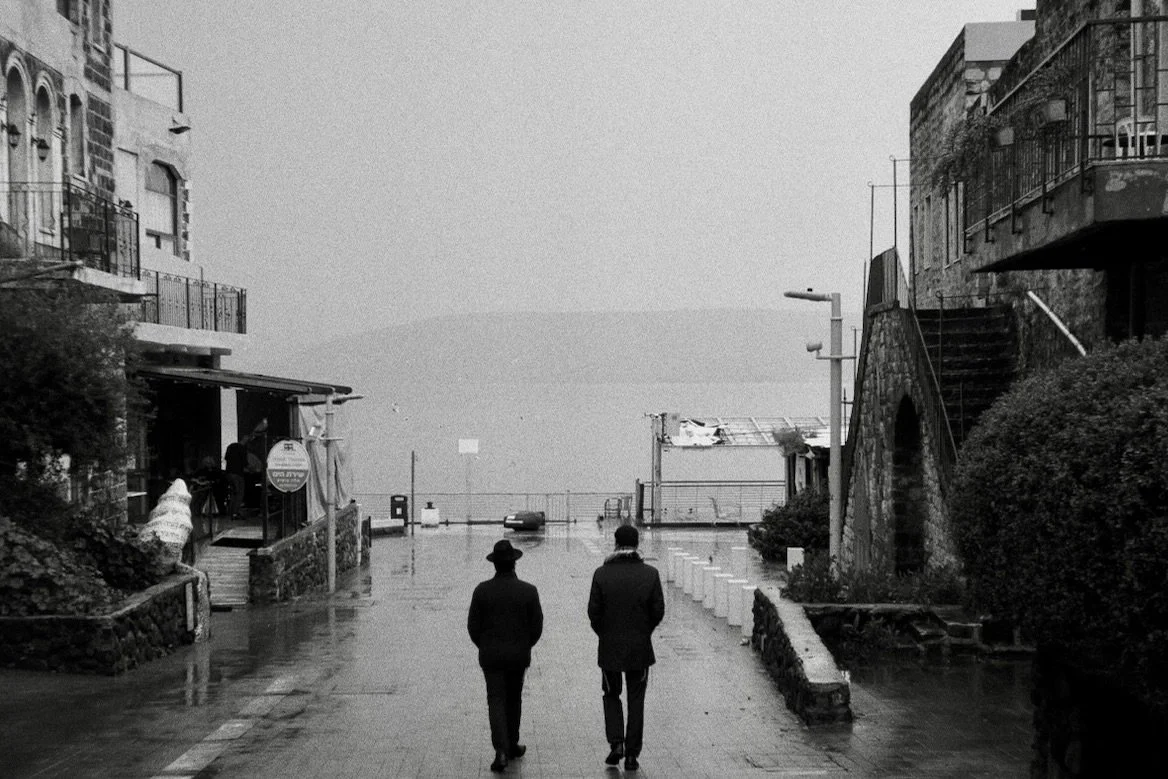
Two rabbis walk side by side along a rain-soaked road on the shore of Tiberias, facing the Sea of Galilee.
The quiet waterfront, empty streets, and heavy sky create a mood of pause after catastrophe, as if the town itself is remembering. The ancient lake which has been a source of fresh water for Jews across generations stands behind them as a reminder of time, change, and continuity. This too shall pass.
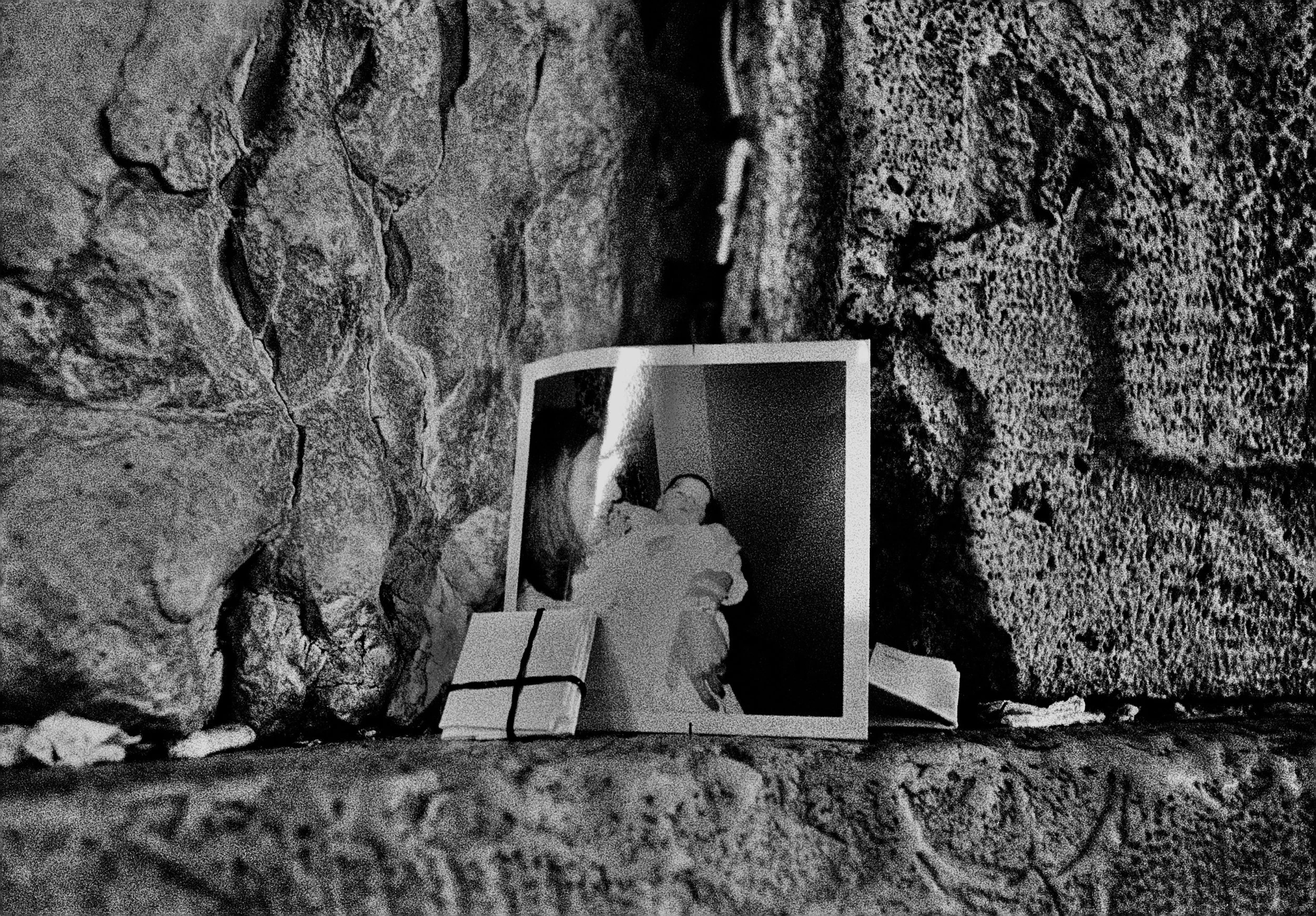
Prayers, handwritten notes, and photographs of loved ones are placed between the ancient giant stones of the Western Wall in Jerusalem.
The Wall is the surviving remnant of the original Temple and anchors Jewish memory in a place that has outlasted empires, wars, even exile. In a country shaken after October 7, this practice shows how ancient faith remains a living foundation for modern Israel, carrying grief, hope, and continuity at the same time.
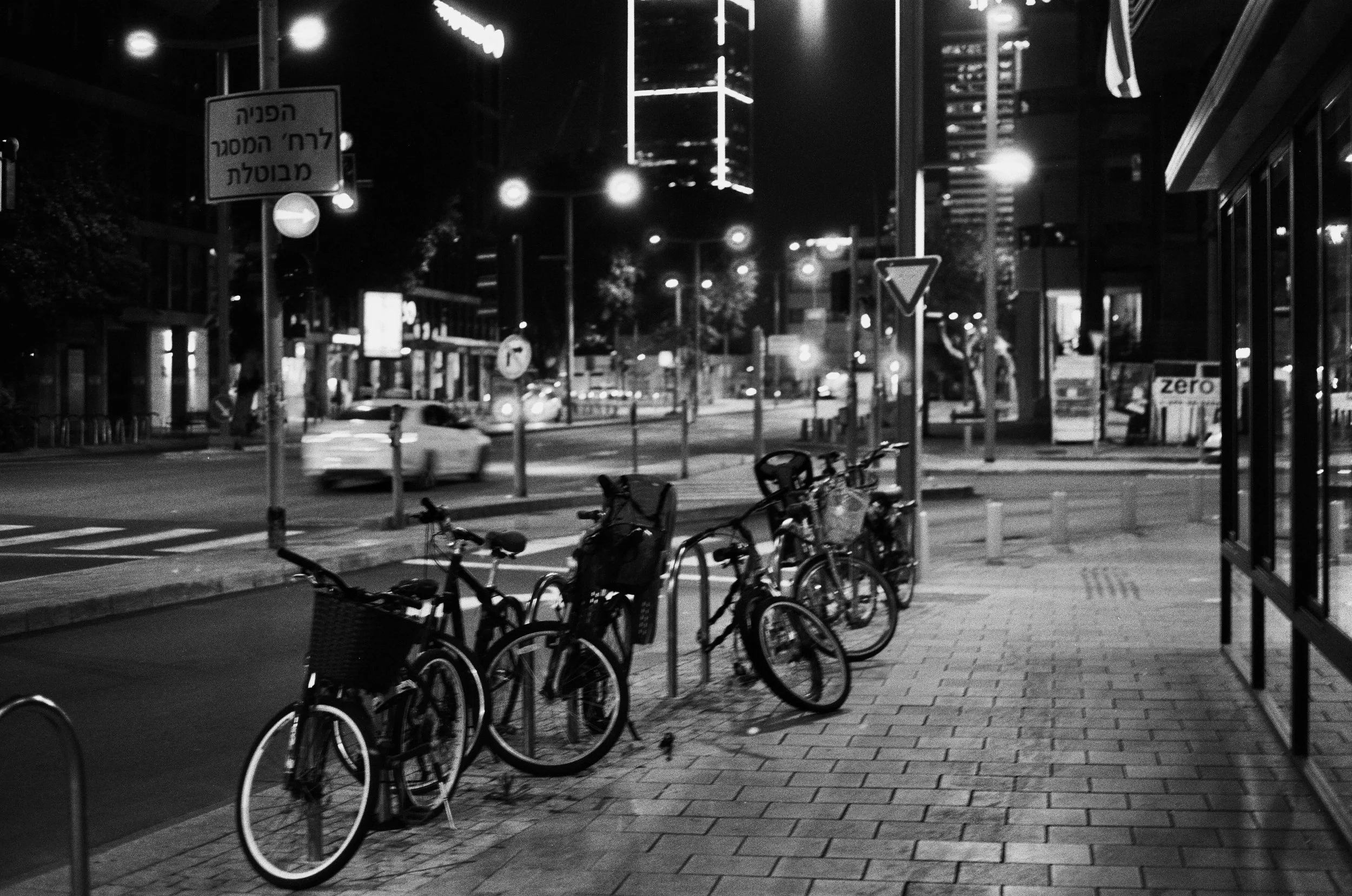
A quiet Shabbat night in downtown Tel Aviv, bicycles lined along an empty sidewalk and a single taxi passing through an otherwise still street.
Shops are closed, traffic is minimal, and the city pauses as families gather at home or attend synagogue. After October 7, Shabbat carries renewed weight. Tradition, prayer, and collective reflection take on deeper meaning in a country reshaped by loss and war.
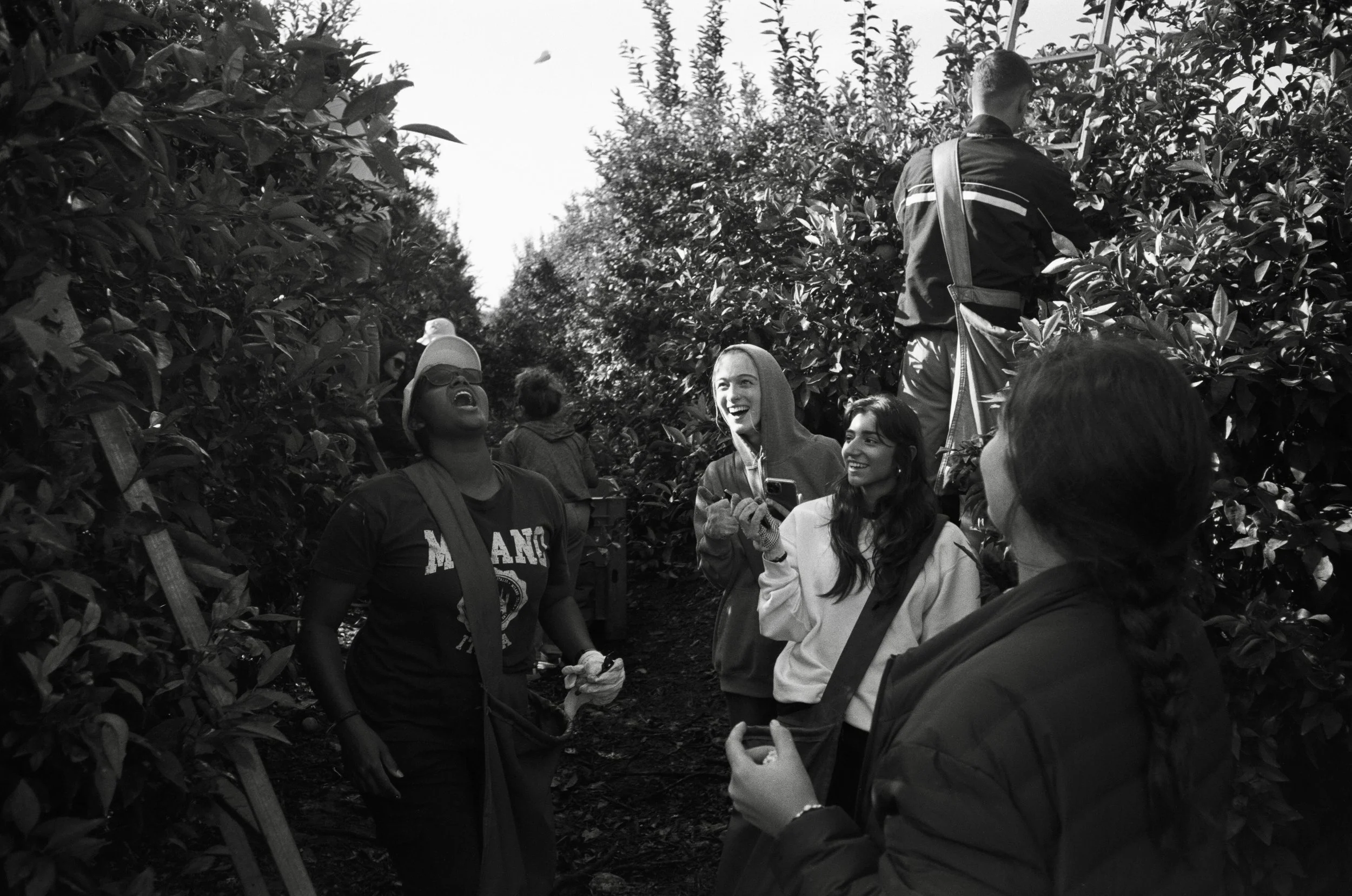
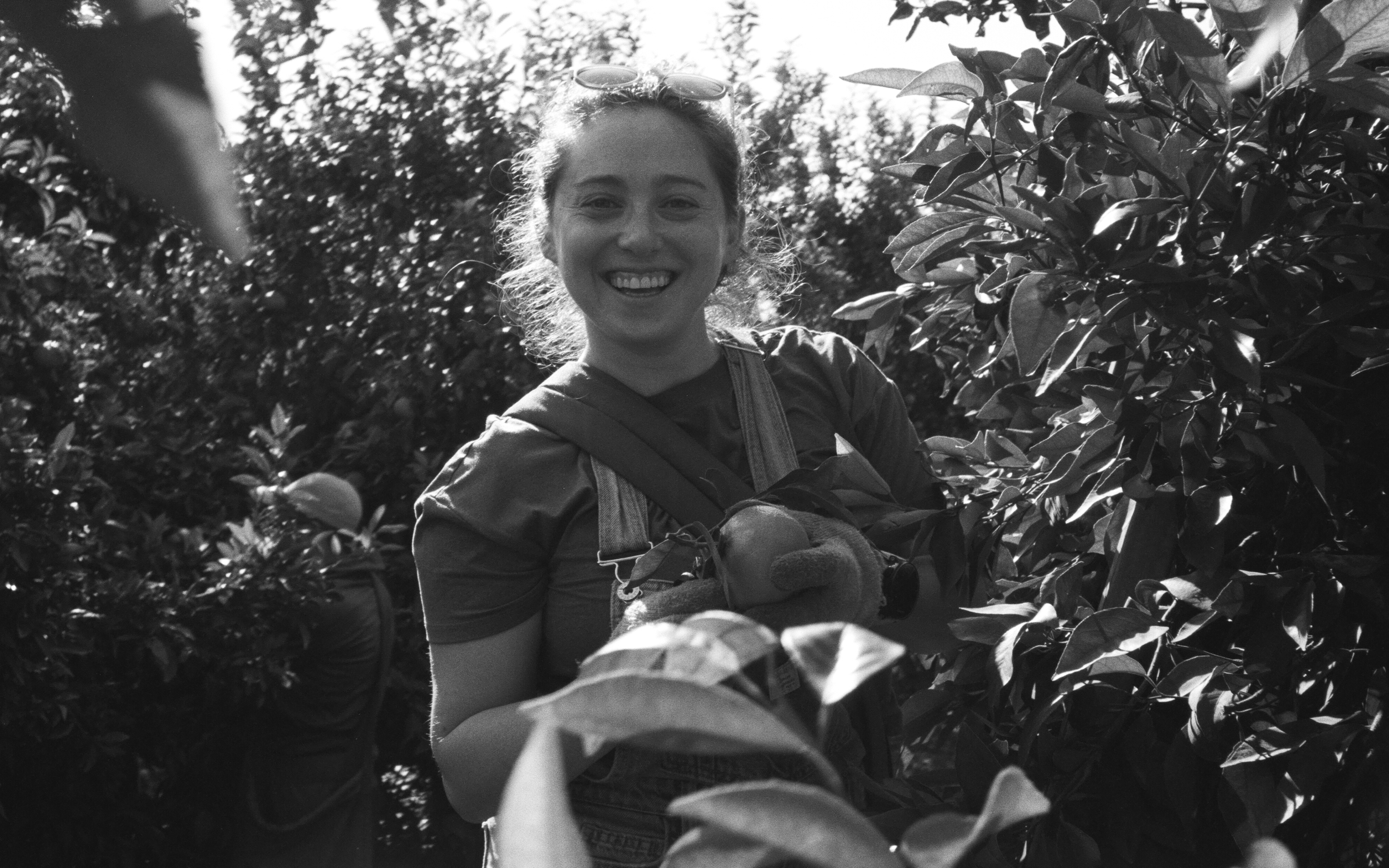
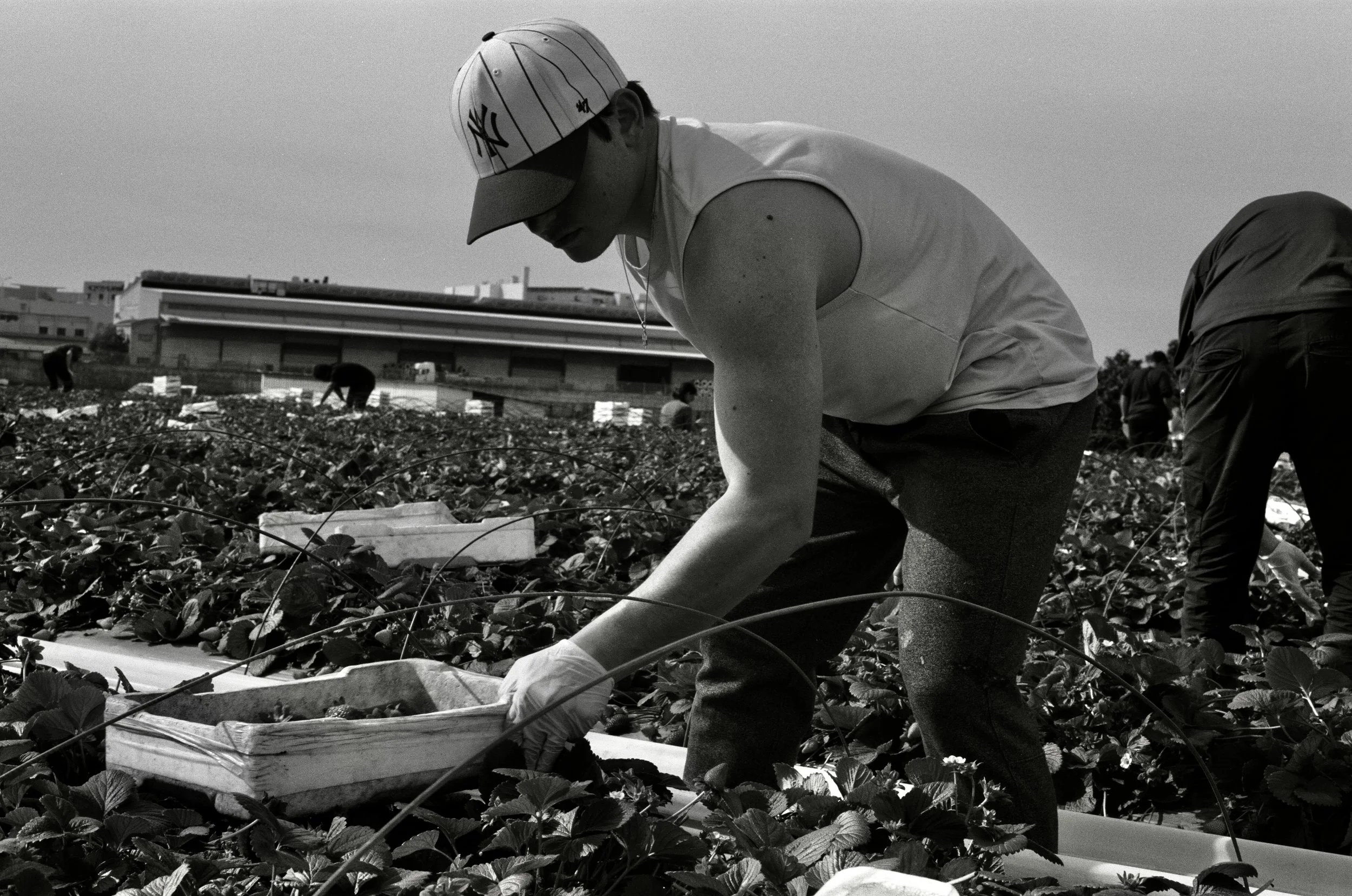
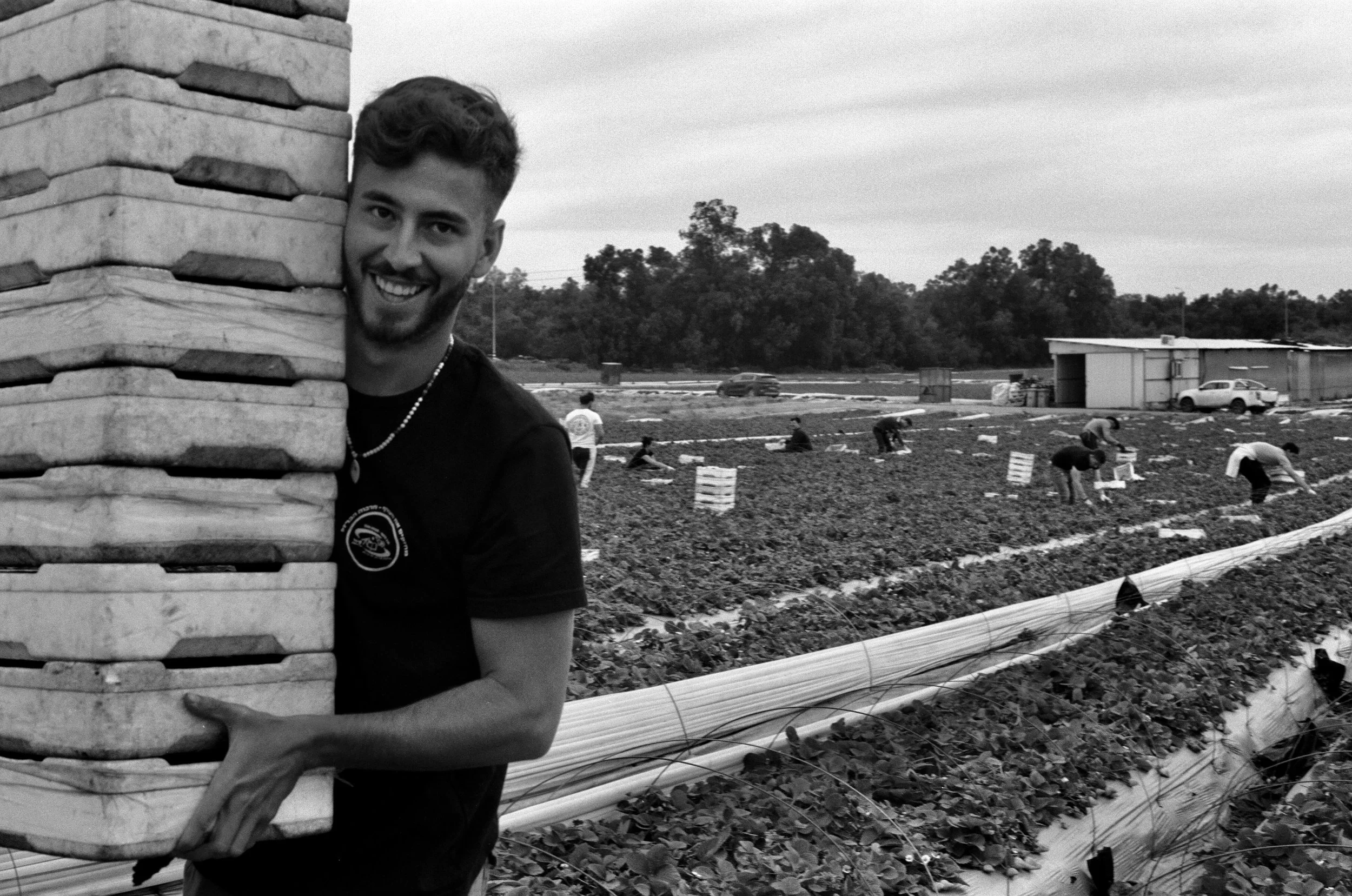
International jewish volunteers harvest tangerines and strawberries in the Golan Heights after October 7, filling the labor gap left when migrant workers departed for safety.
A nation of farming. Working the land much like the early kibbutzim that established the state of Israel, they reconnect to agricultural origins while keeping farms productive. They are the new generation of pioneers in an Israel.
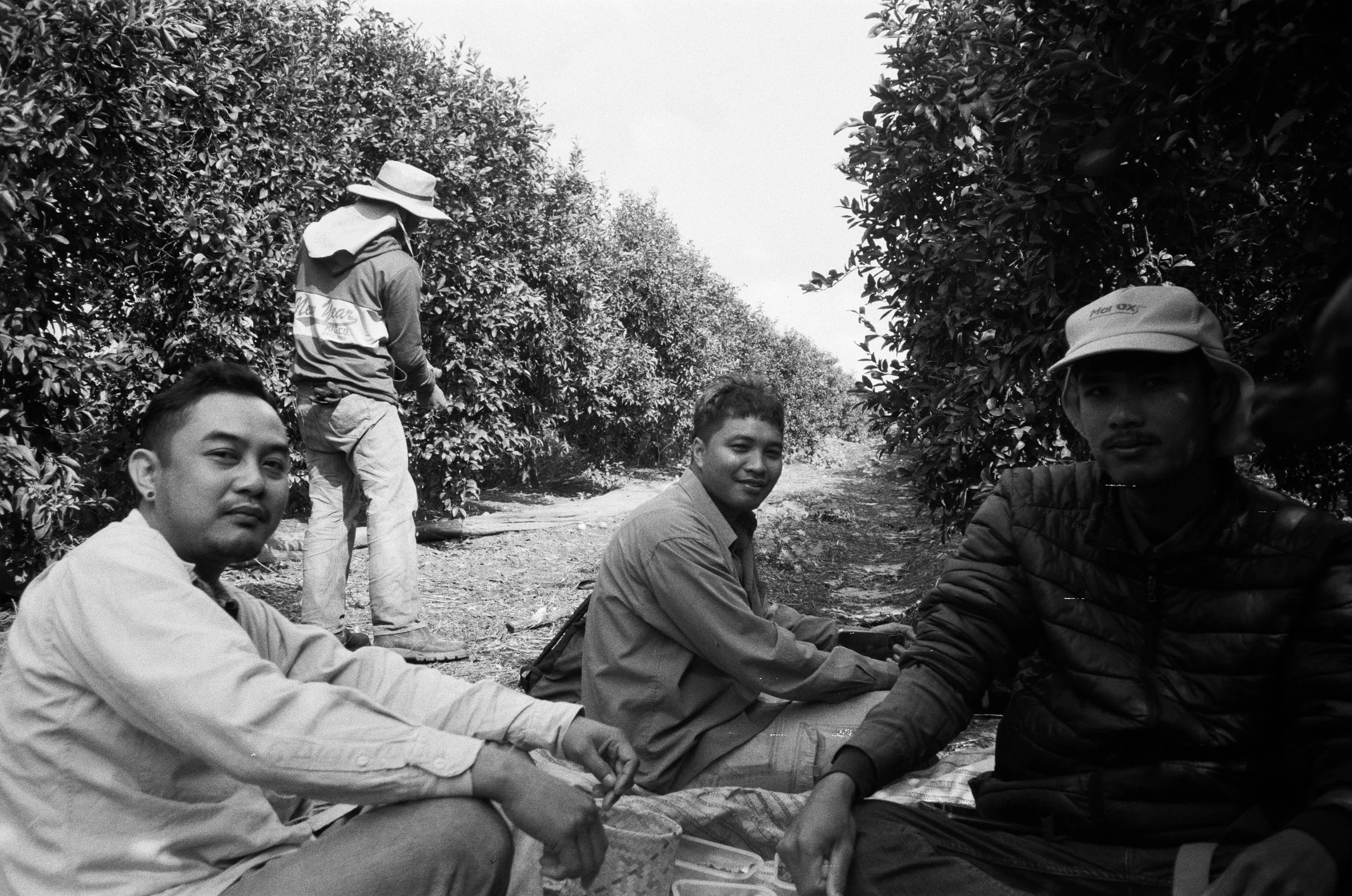
Four Thai agricultural workers rest during lunch on a farm in northern Israel.
The last of their kind in Israel. Most of their compatriots fled while some were killed or taken hostage on October 7. Their labor sustains Israeli agriculture while linking Israel to a wider global economy, showing how everyday work, migration, and mutual dependence continue even in wartime.
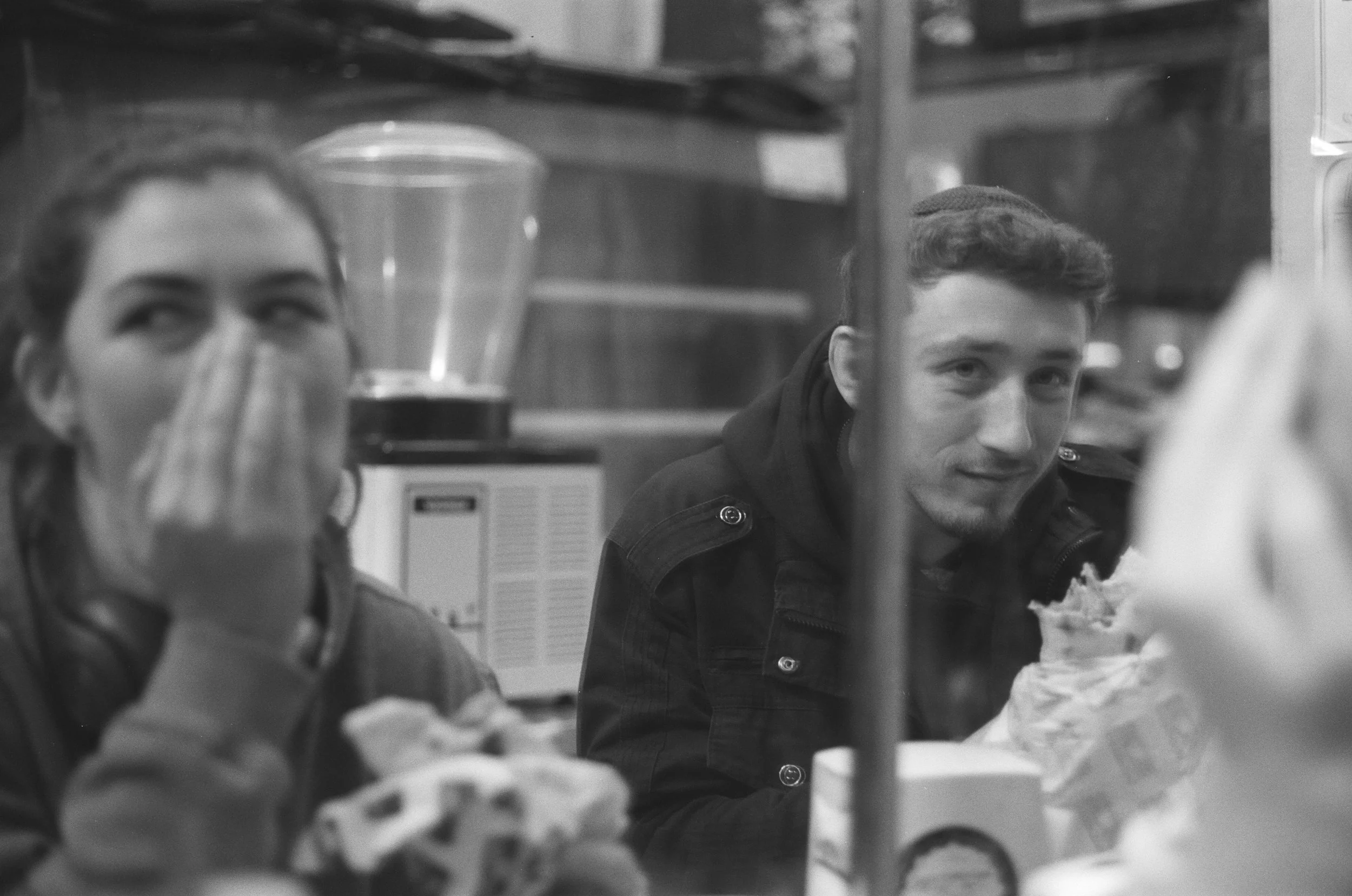
After a long day of volunteer farm work in northern Israel, a young man steals a quick glance at a young woman as they share shawarma at a street food stand.
In the midst of rebuilding after October 7, a small spark of connection including food, laughter, and possibility of romance, reminds us that ordinary life, traditions and family are the bedrock of Judaism.
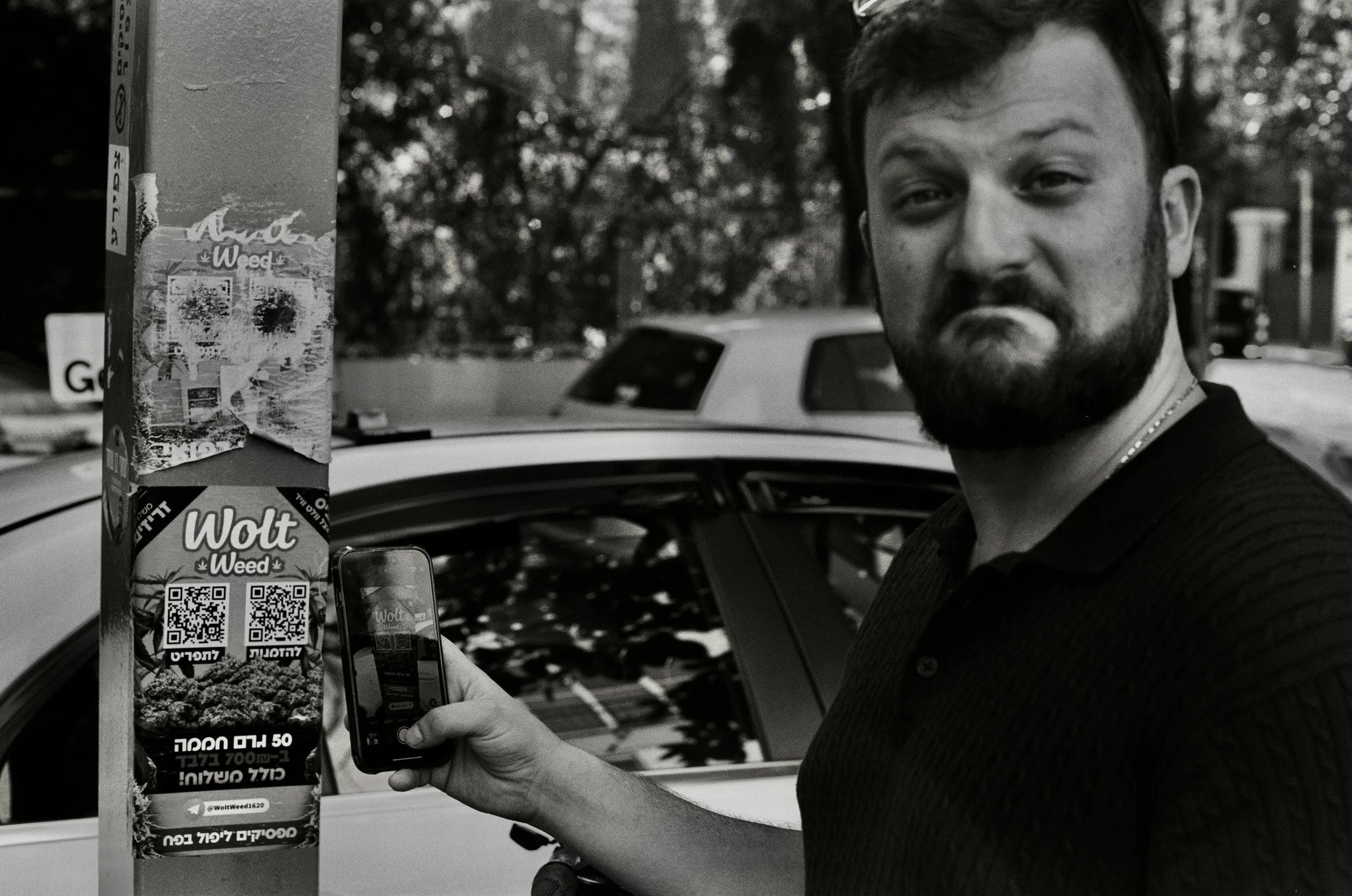
An international volunteer scans a QR code on a Tel Aviv lamppost to download a cannabis delivery app.
Since the Gaza war began, medical cannabis has been fully legalized as stress and sleeplessness have grown. This is a small glimpse of how tragedy, agriculture and high technology now shape daily survival after October 7.
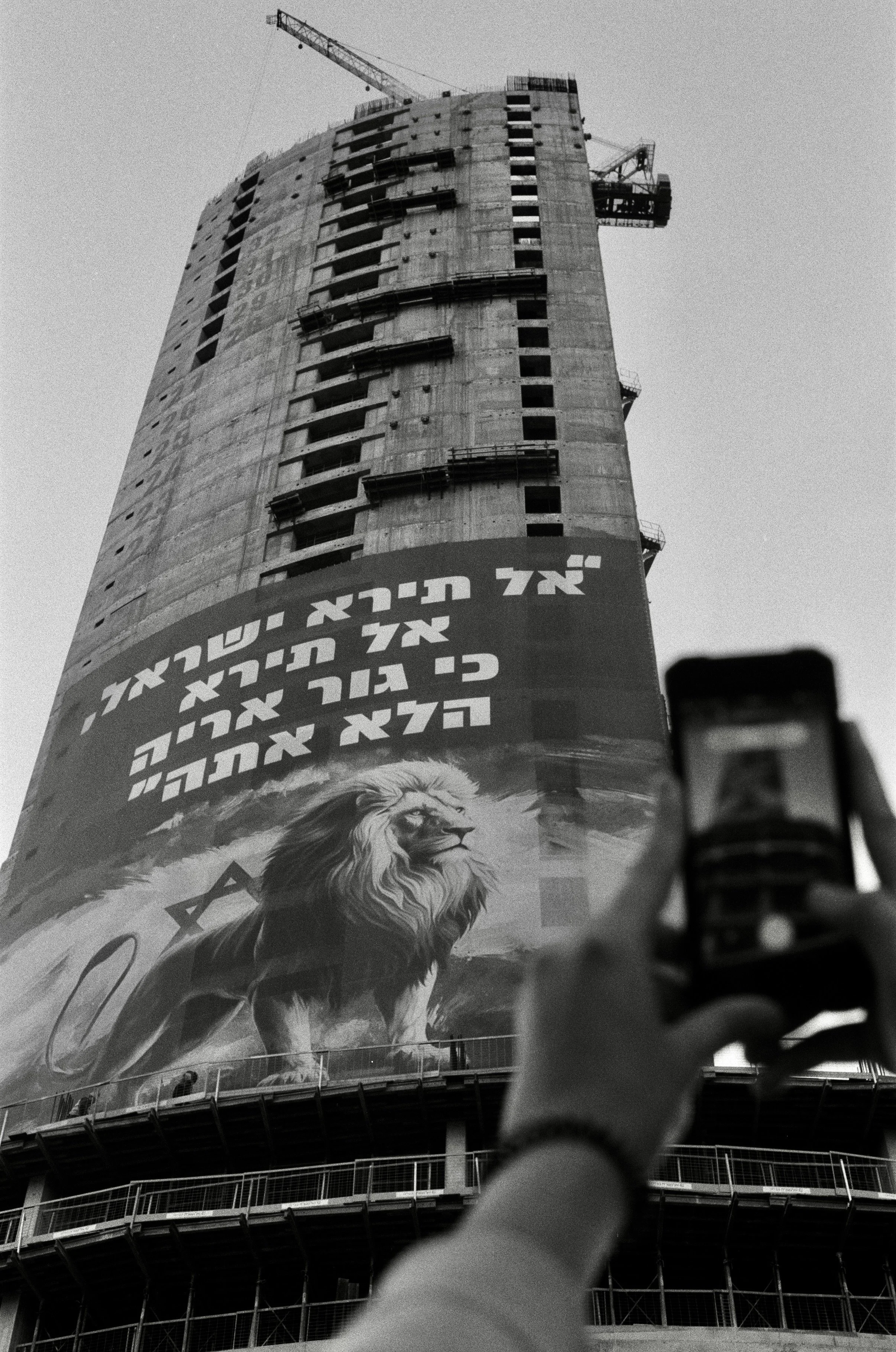
A new ‘olim’ or immigrant photographs a new concrete high-rise rising over downtown Tel Aviv beneath a banner of a lion, the Star of David, and a biblical verse.
A nation rebuilding. New immigrants require new housing. The tower shows how Israel keeps building even under threat, turning security into part of everyday urban design through reinforced construction and safe rooms. The biblical lion is an ancient symbol of Jewish strength and paired with systems like Iron Dome and nuclear power, signals a country advancing through both faith and innovation.
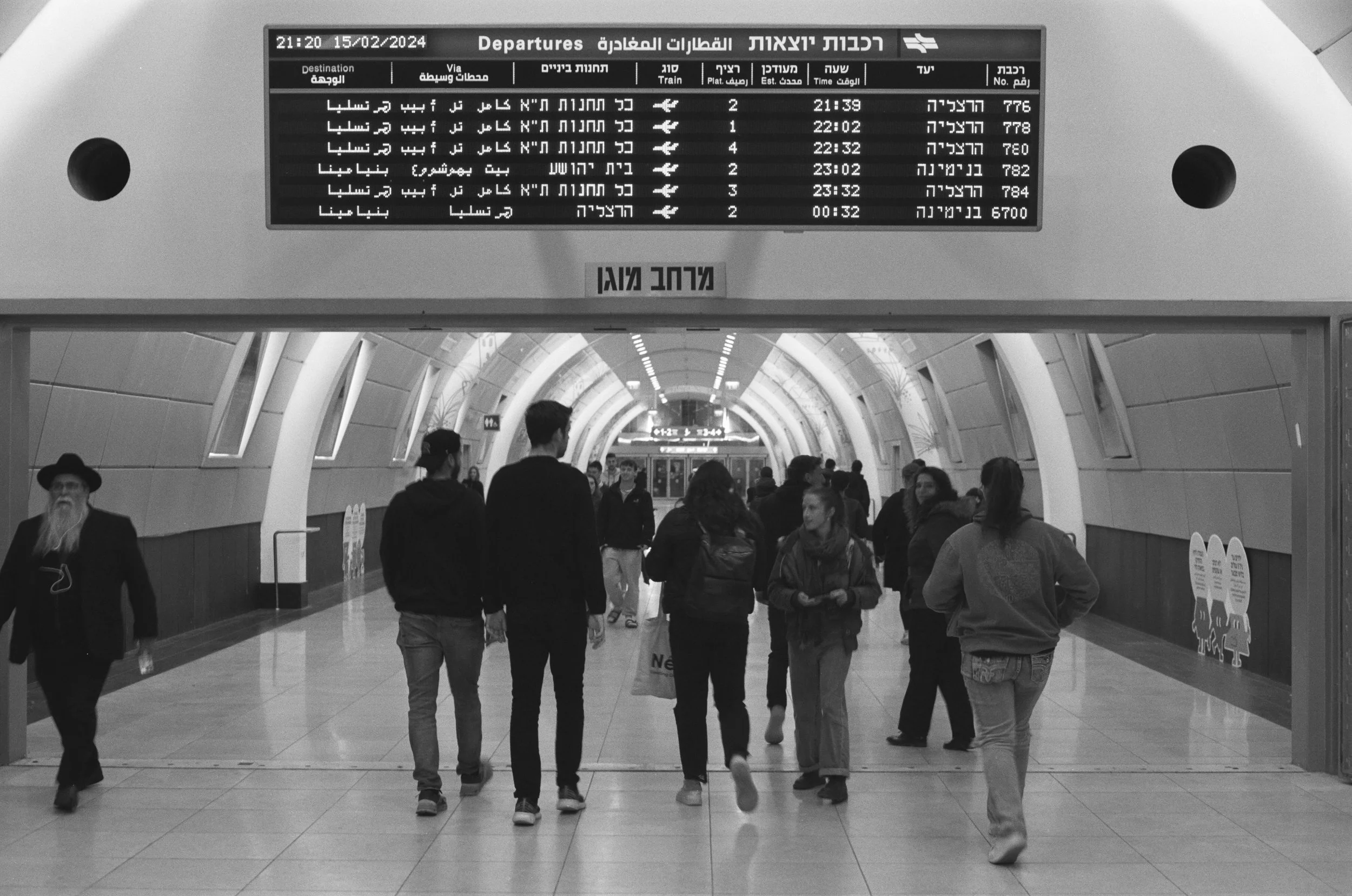
A group of young international Jewish volunteers walk through Israel’s new underground rail station.
On a Friday evening they travel toward Jerusalem before Shabbat, joining an ancient rhythm of religious life to a cutting-edge transport system. The high-speed Tel Aviv–Jerusalem line, an engineering first in the region, which shows how a modern, technologically advanced Israel now connects its past and future in thirty minutes.
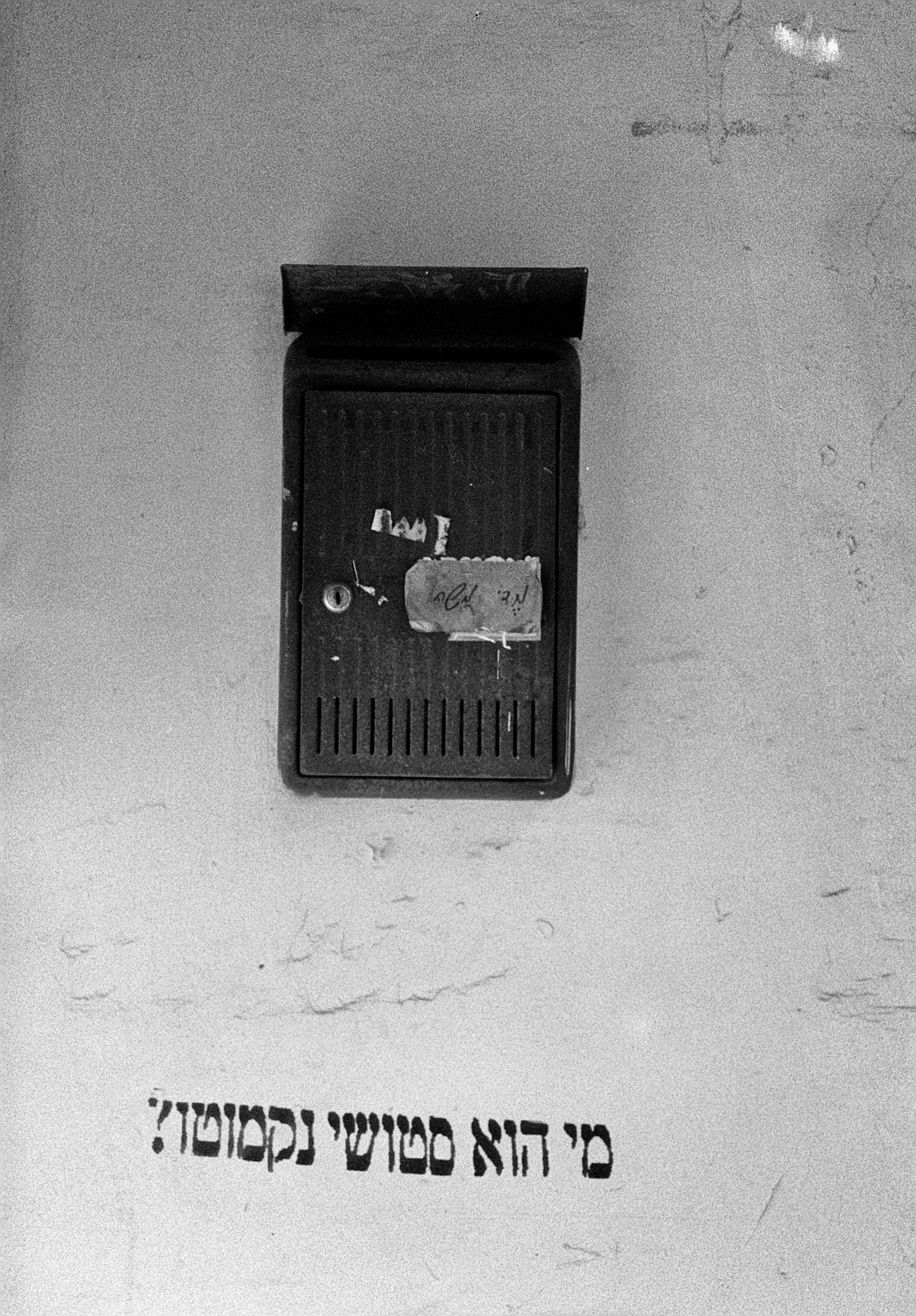
Hebrew graffiti inside the courtyard of an old apartment complex in Jaffo.
The weathered mailbox is marked with Hebrew graffiti that questions “Who is Satoshi Nakamoto?”
The reference to the anonymous creator of Bitcoin illustrates how an ancient culture now confronts the most radical structures of the innovative digital world in post–October 7 Israel.
Ancient language, modern world, one surface.
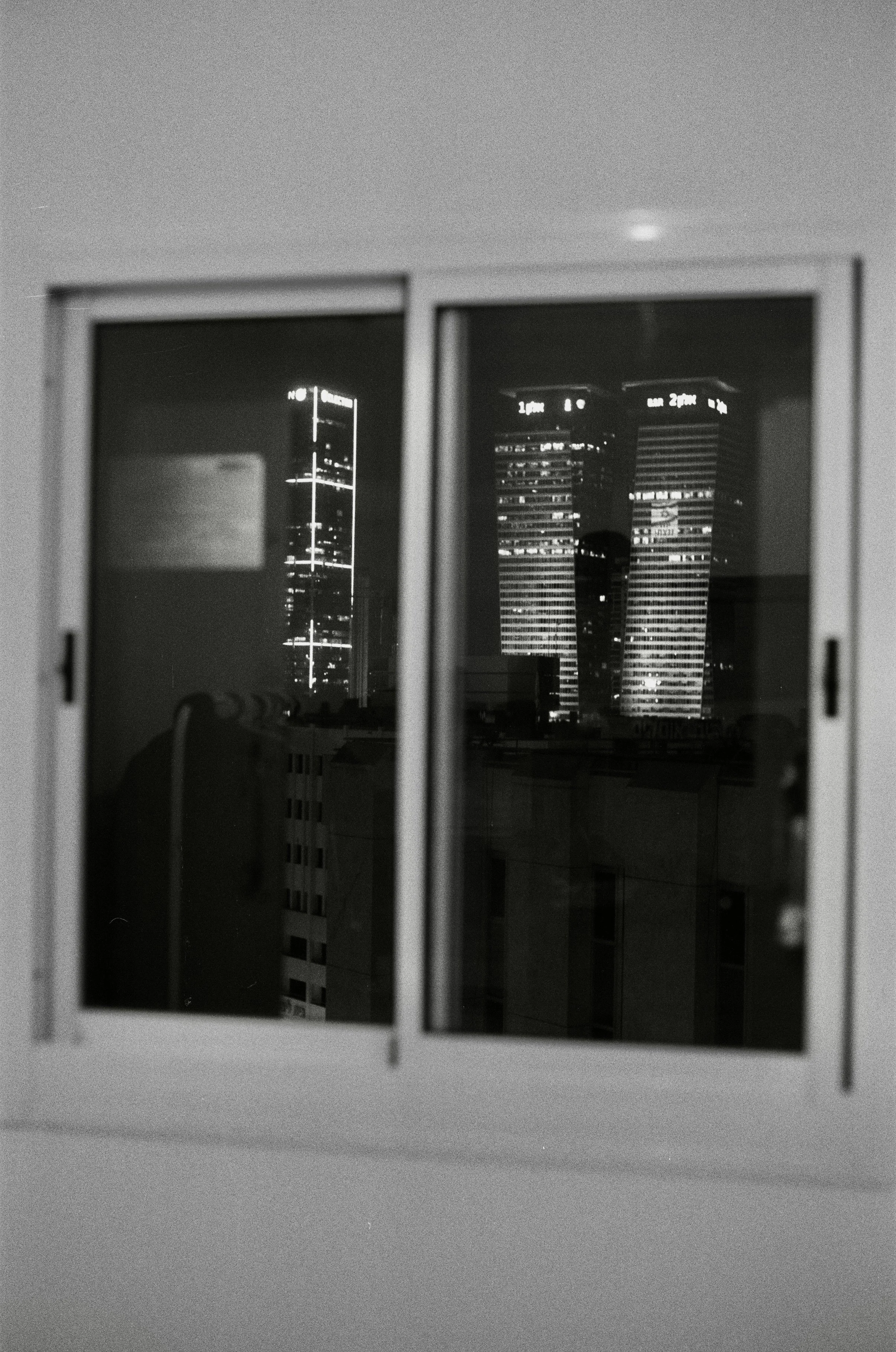
Downtown Tel Aviv and the newly built NVIDIA tower seen through the small, reinforced window of a household safe room.
A nation of innovation. Every Israeli home contains a similar concrete room with a steel blast shield, showing how daily life is built around constant security realities. The skyline dominated by a global AI-chip campus reveals a country that keeps innovating while under threat, joining protection and technology.
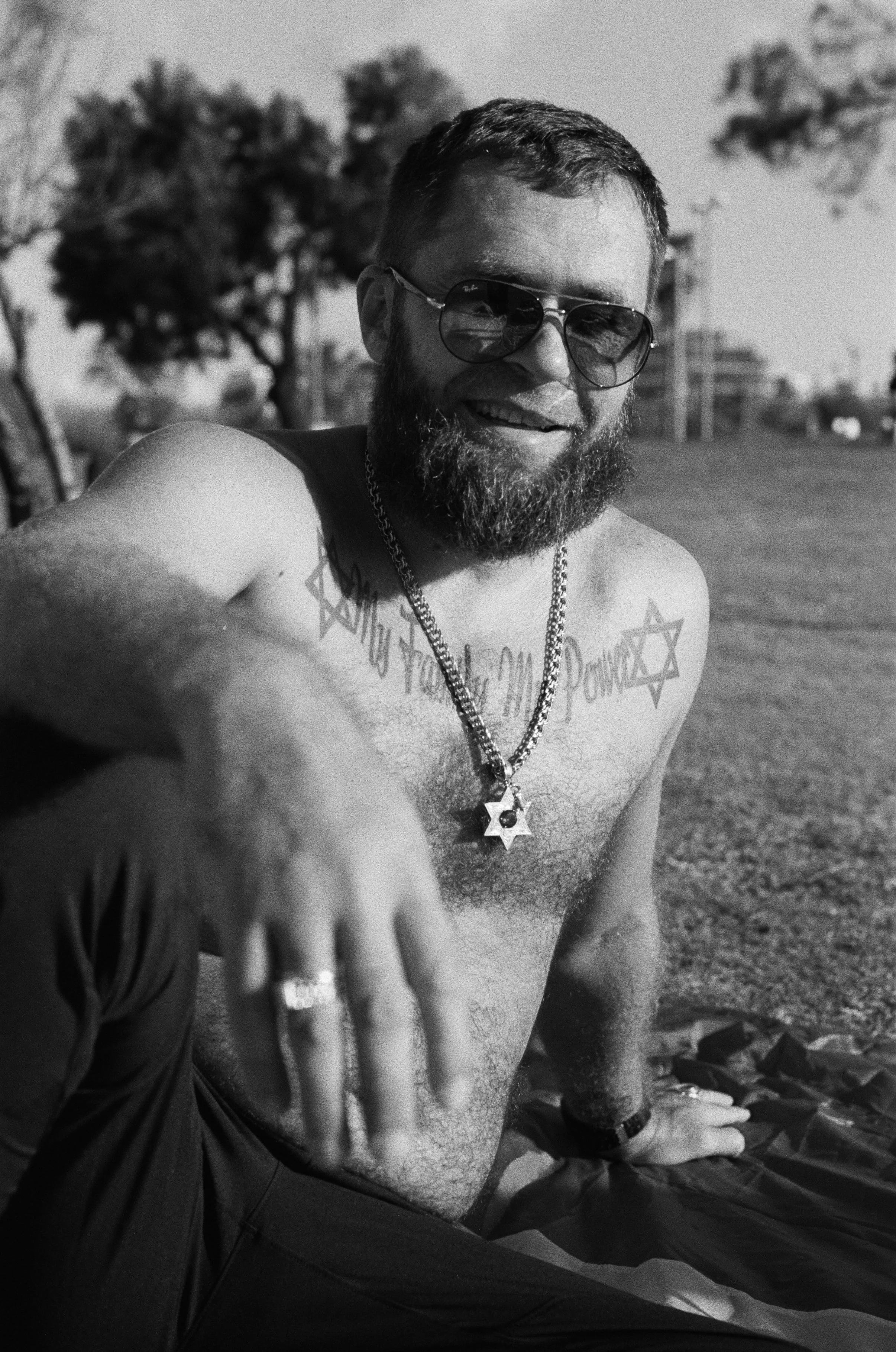
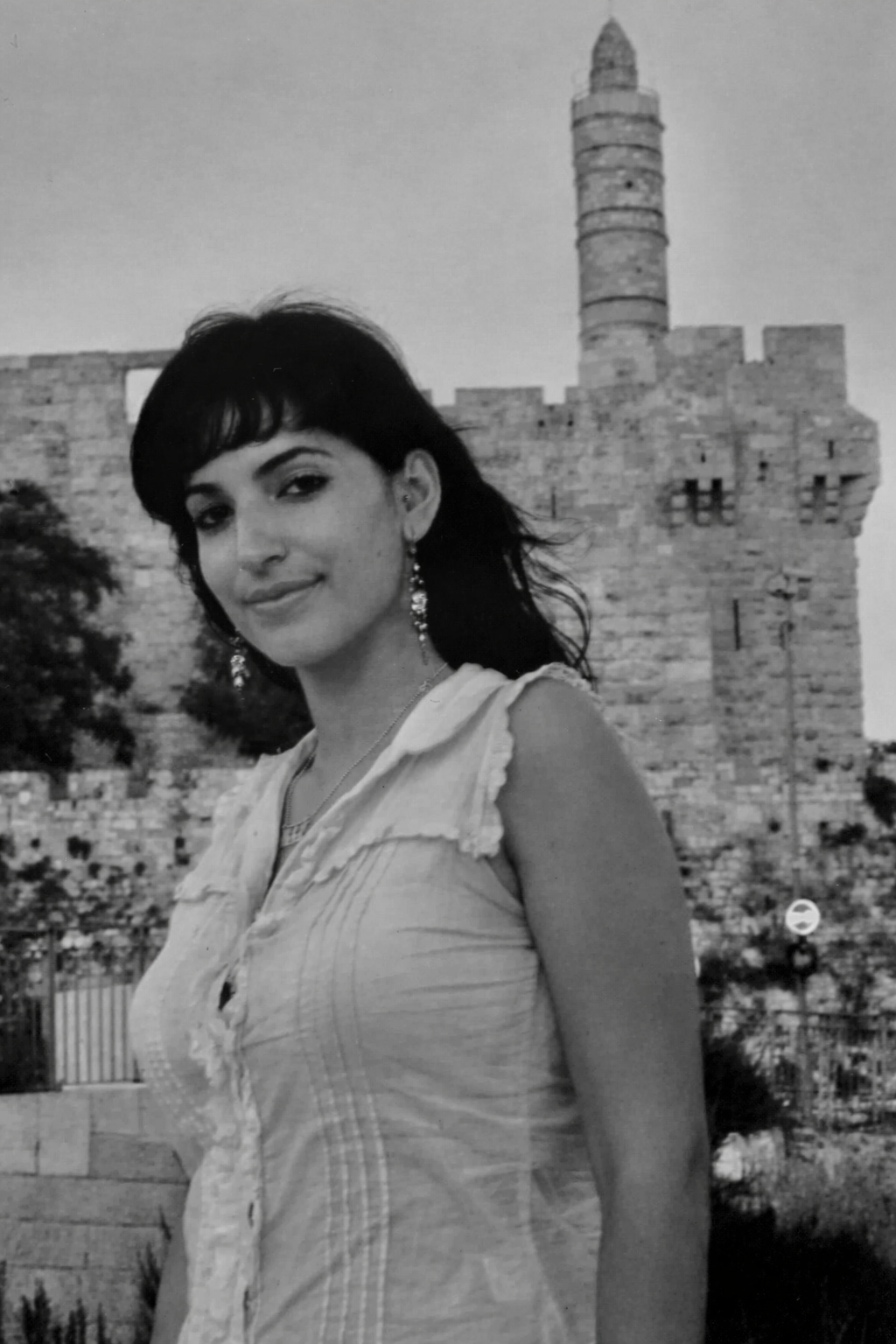
These are the new Israelis.
He arrived from Poland and she immigrated from Egypt. The young and jewish come from all over the world, seeking acceptance, partnership and peace. They bring new languages and customs to Israel, but they rely on the old ways, the shared Jewish traditions including Shabbat and Hebrew. The two worlds survive and thrive together. Ancient and modern coexisting for a stronger nation.
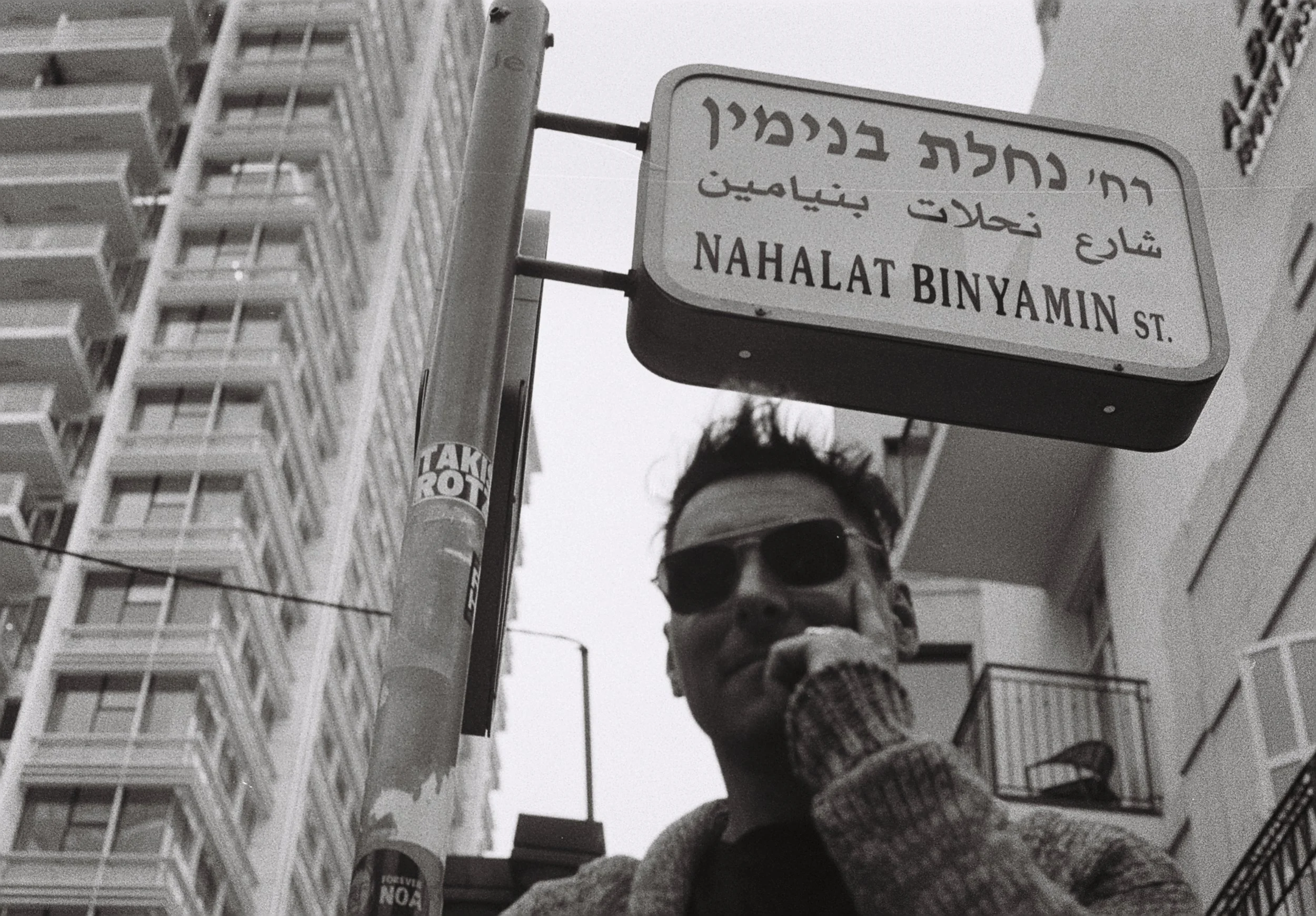
A man in dark sunglasses stands beneath a street sign for Nahalat Binyamin Street in Tel Aviv, printed in Hebrew, Arabic, and English, framed by modern apartment buildings.
His relaxed posture and understated aesthetic reflect a distinctly Tel-Avivian style embodied by modern, informal clothing built for movement in a city accustomed to uncertainty. The trilingual marker and his composed presence reflect a cosmopolitan and international identity that remains calm and quietly prepared for conflict.
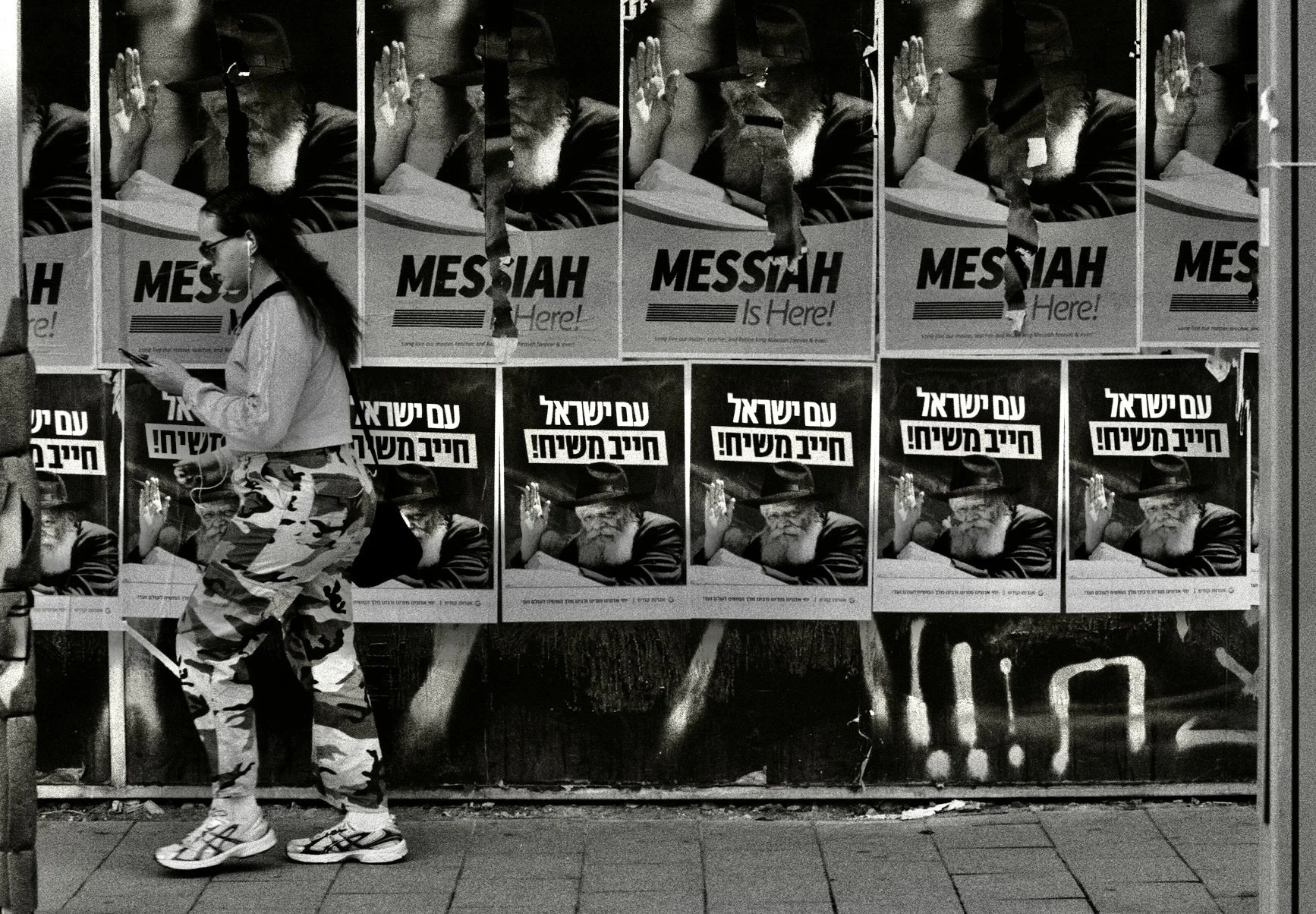
A young woman in camouflage pants, sunglasses and running shoes walks through Tel Aviv with headphones in, passing a wall covered in posters proclaiming “Messiah Is Here.”
Her clothing blends military pattern with global streetwear, reflecting how compulsory service and security culture influence everyday fashion in Israel. The image captures a defining cross section of contemporary Israeli life, where war, religion, and cosmopolitan identity coexist and shape how readiness becomes part of personal style.
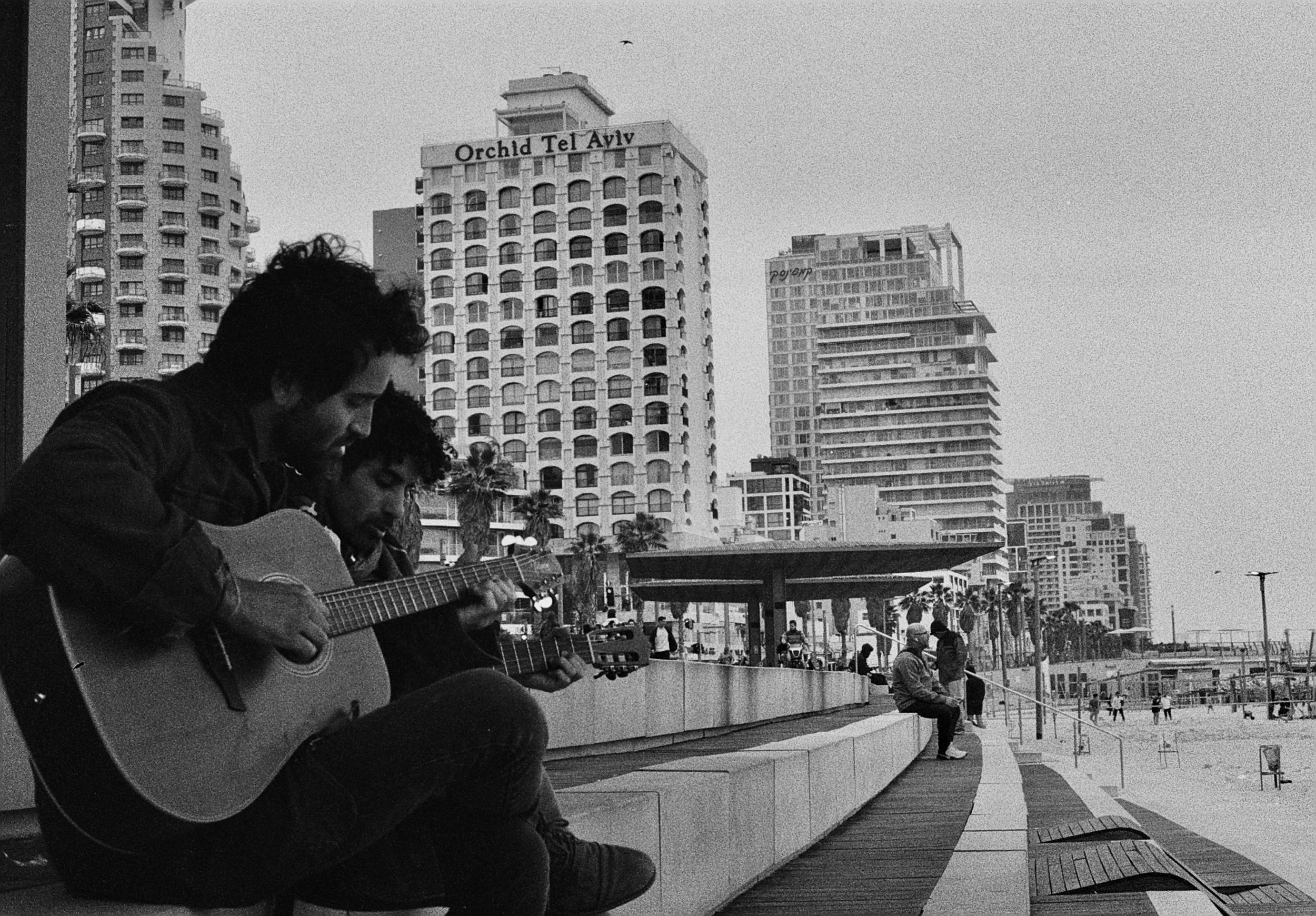
Two Israeli men sit on the beach in Tel Aviv and sing “Hatikvah” the national anthem of Israel.
The national anthem which means “The Hope”. Officially adopted in 2004, the anthem represents the 2,000 year old longing of the Jewish people to return to their homeland and live as a free sovereign nation. The song itself symbolizes Jewish resilience, identity and the hope for peace.
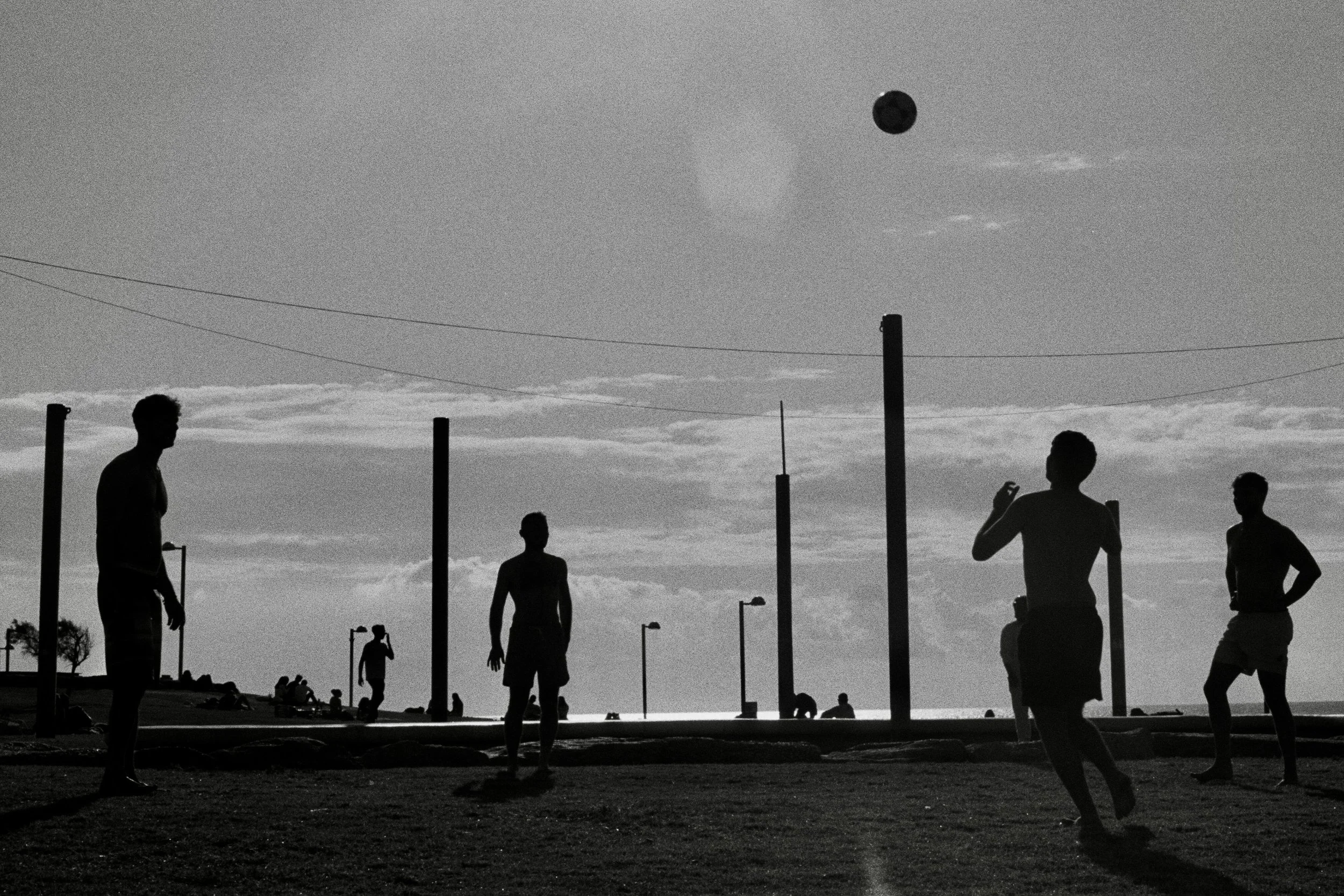
Across from the beach in Tel Aviv, men play volleyball.
Life continues in Israel. After devastation, the Jews of Israel return to their roots: mourning, prayer, farming, rebuilding, innovation. Family, friends, life and fun continue. The new Israelis are ‘anti-fragile”. The more they are stressed and damaged, or even broken, the stronger they become.
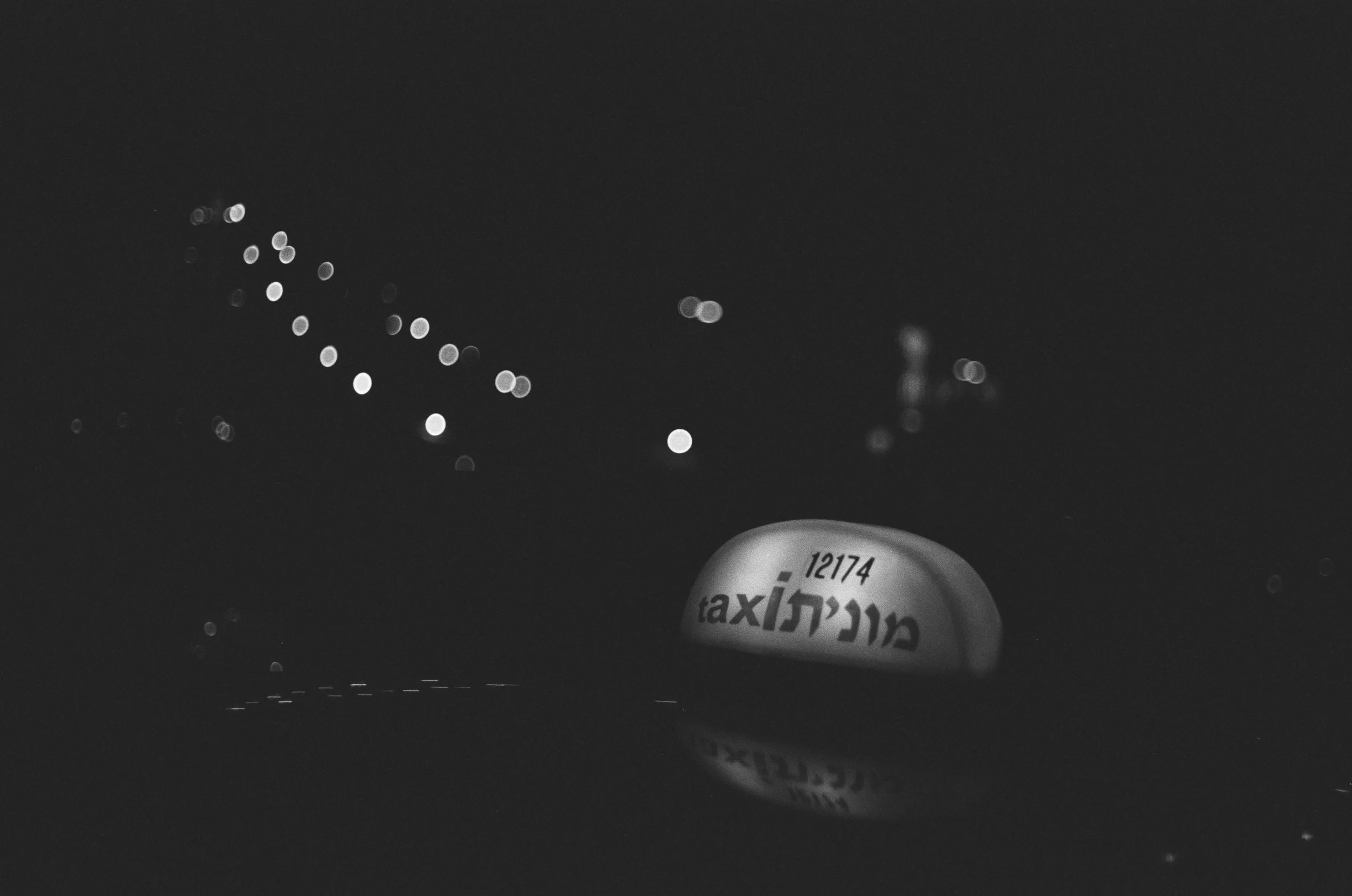
An Uber taxi waits in Jaffa at midnight, its Hebrew and English letters floating over the darkness.
The ancient port of Jaffa, founded more than 4,000 years ago, now serves as one of Israel’s most vibrant nightlife districts, where history, language, and faith collide with ride-shares, smartphones, and high-tech modernity. In this single frame, Israel exists in both time zones at once: an old civilization moving at hypermodern speed , bruised by war, yet still awake, alive, and unmistakably forward-looking.