CIVILIANS: War is the Infrastructure
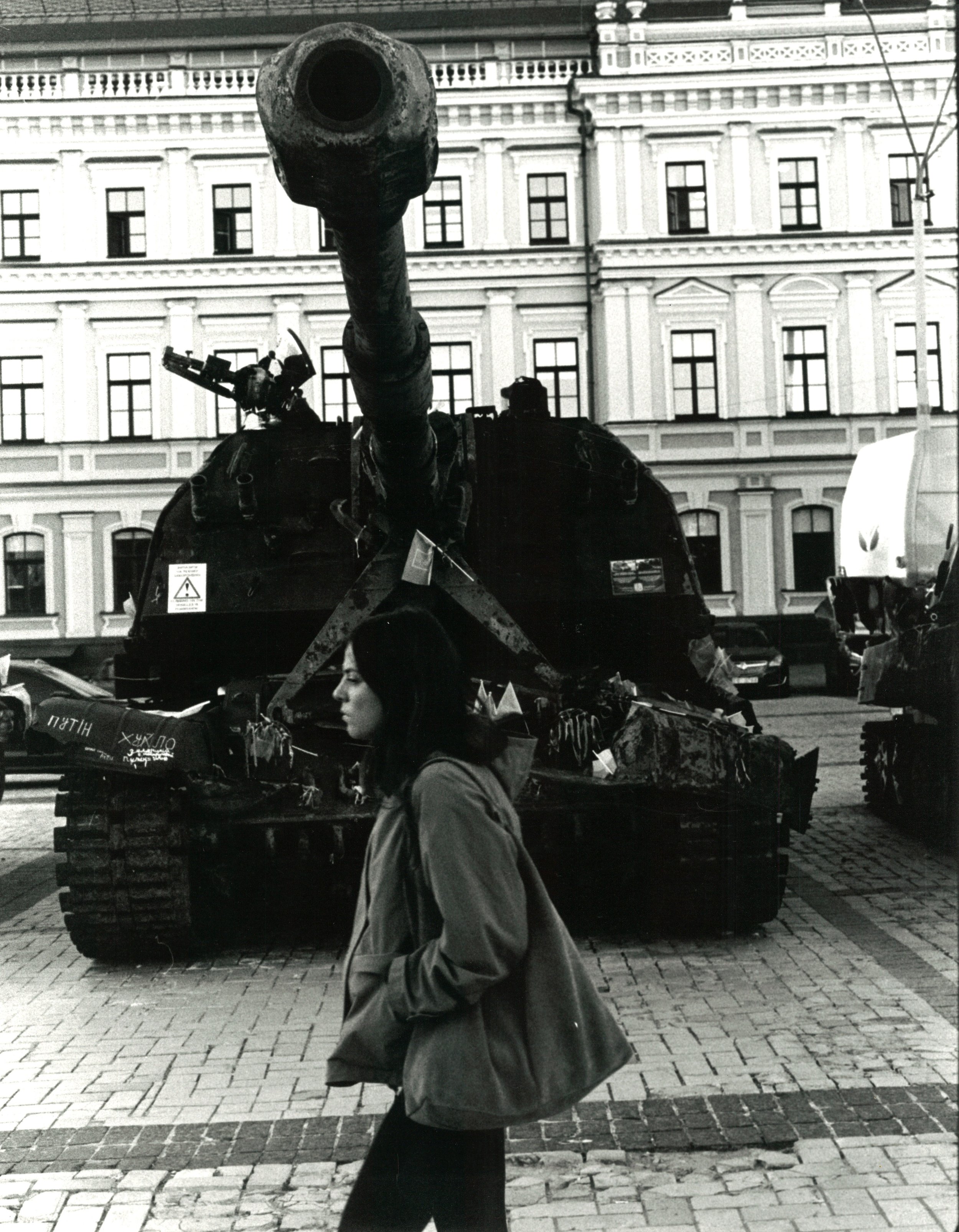
Cover Photo: A woman walks past a destroyed Russian tank positioned in central Kyiv, its gun barrel aimed outward in front of a government building.
The disabled armor now sits as a public monument in a civilian square, where daily movement continues beneath the machinery of war. Military force no longer exists at a distant front line, it now occupies public space, becoming part of the infrastructure through which ordinary life must pass.
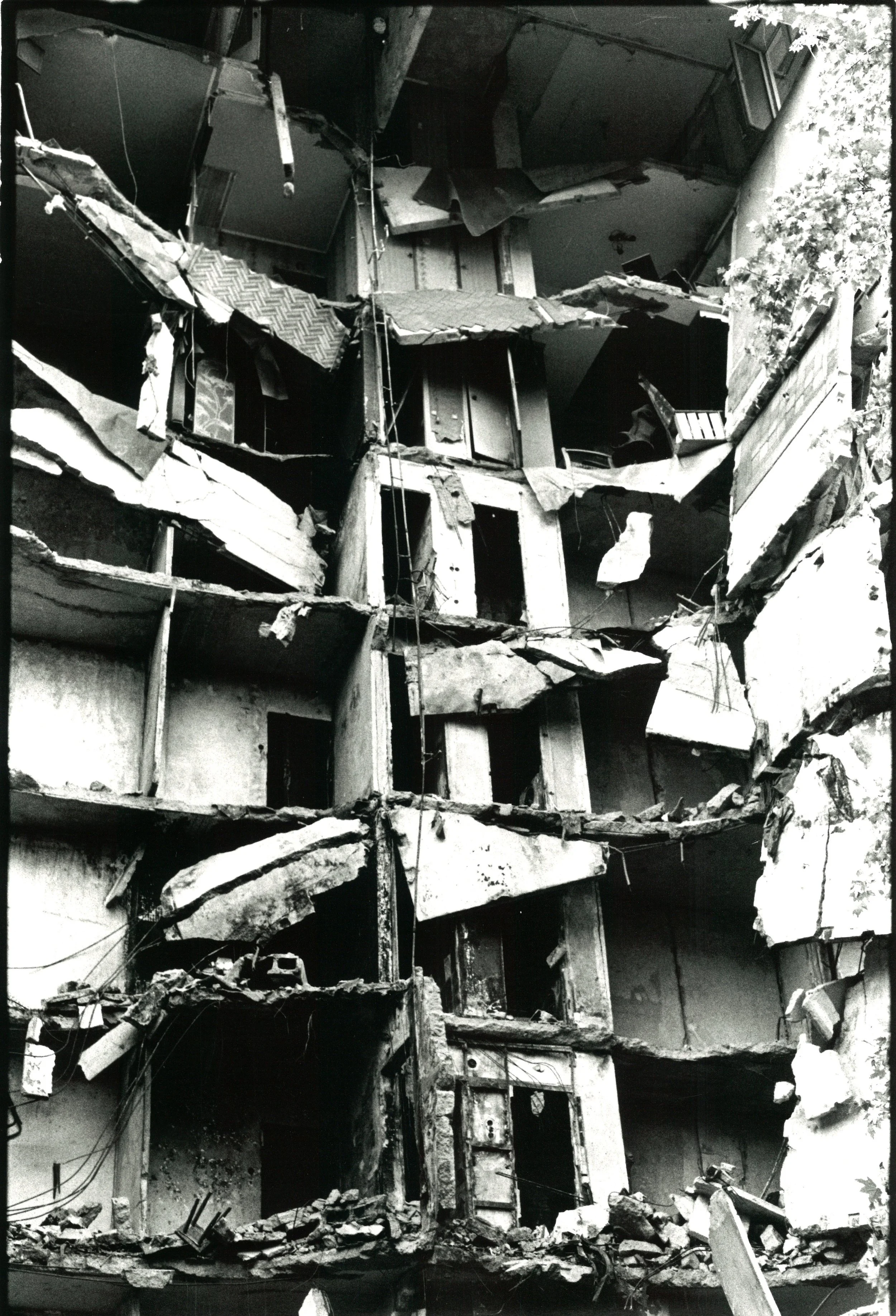
A residential apartment building stands heavily damaged after a direct Russian missile strike.
Tens of thousands of civilians have been killed in drone, rocket and missile strikes. The destruction of civilian housing and everyday infrastructure contributes to displacement as homes become unsafe or uninhabitable.
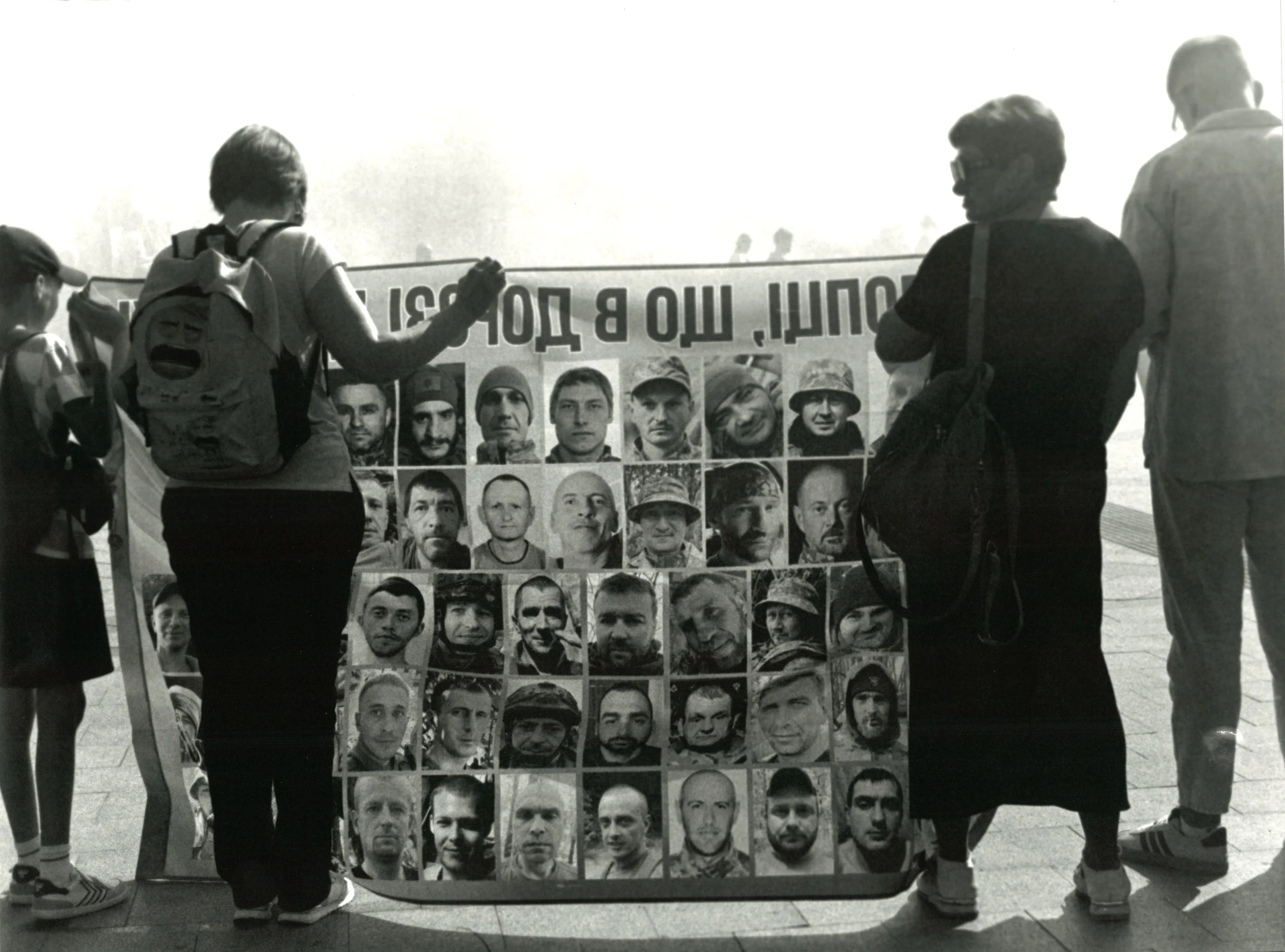
Civilians stand at a mass funeral for those killed during the war, holding a banner of the dead as part of a public mourning ritual. These men are not professional soldiers, but the war has dressed them as such. They are fathers, brothers, and sons.
As civilian deaths increase, funerals move into streets and squares becoming routine features of daily life in every city of Ukraine. Loss is no longer private, fracturing families and communities in full view of the city.
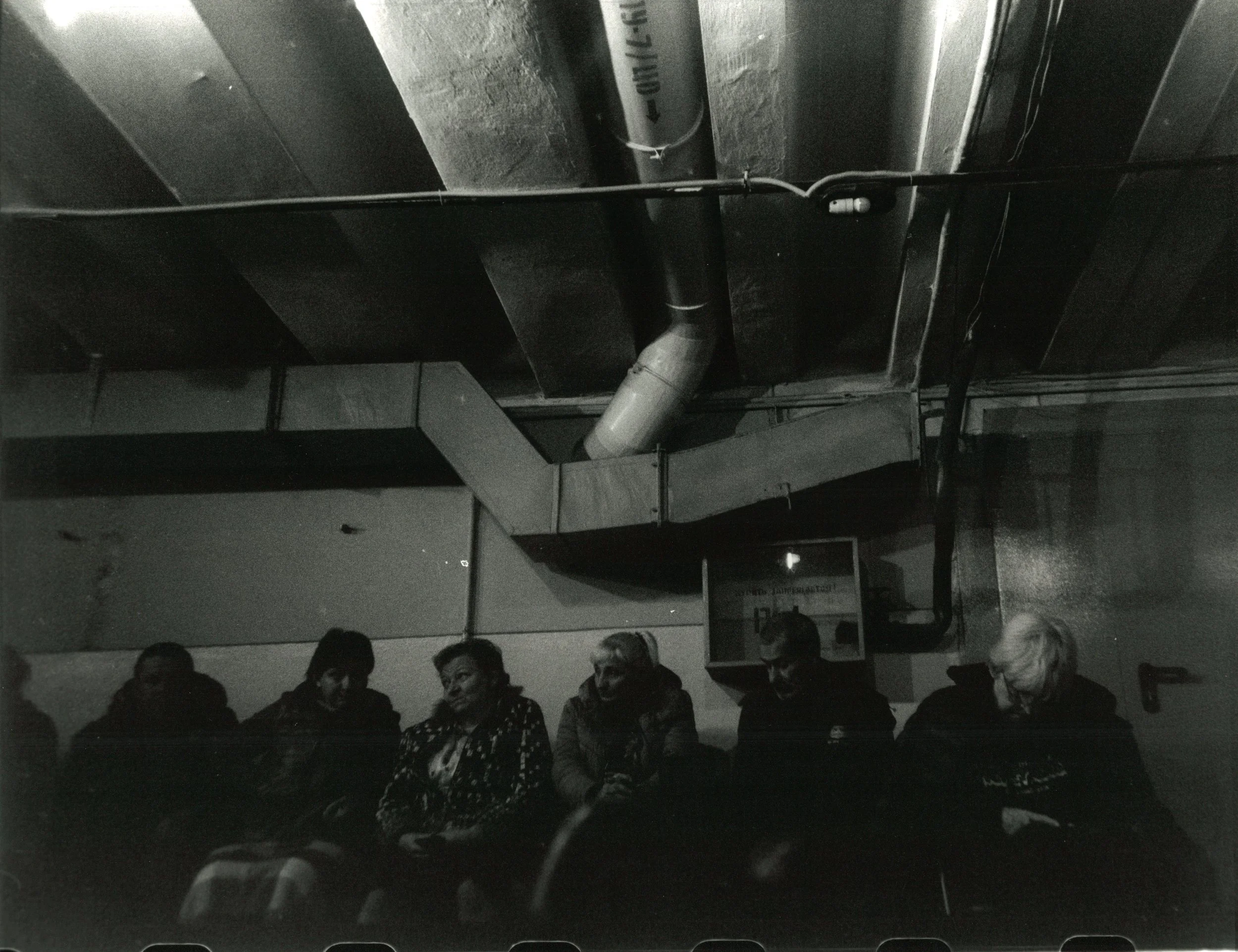
Elderly women wait underground for hours in cold, overcrowded conditions during repeated alerts, many unable to relocate or leave the city.
Protection here is functional, not dignified. Endurance reduced to waiting and fear. This photograph was taken discreetly from the floor of an air-raid shelter.
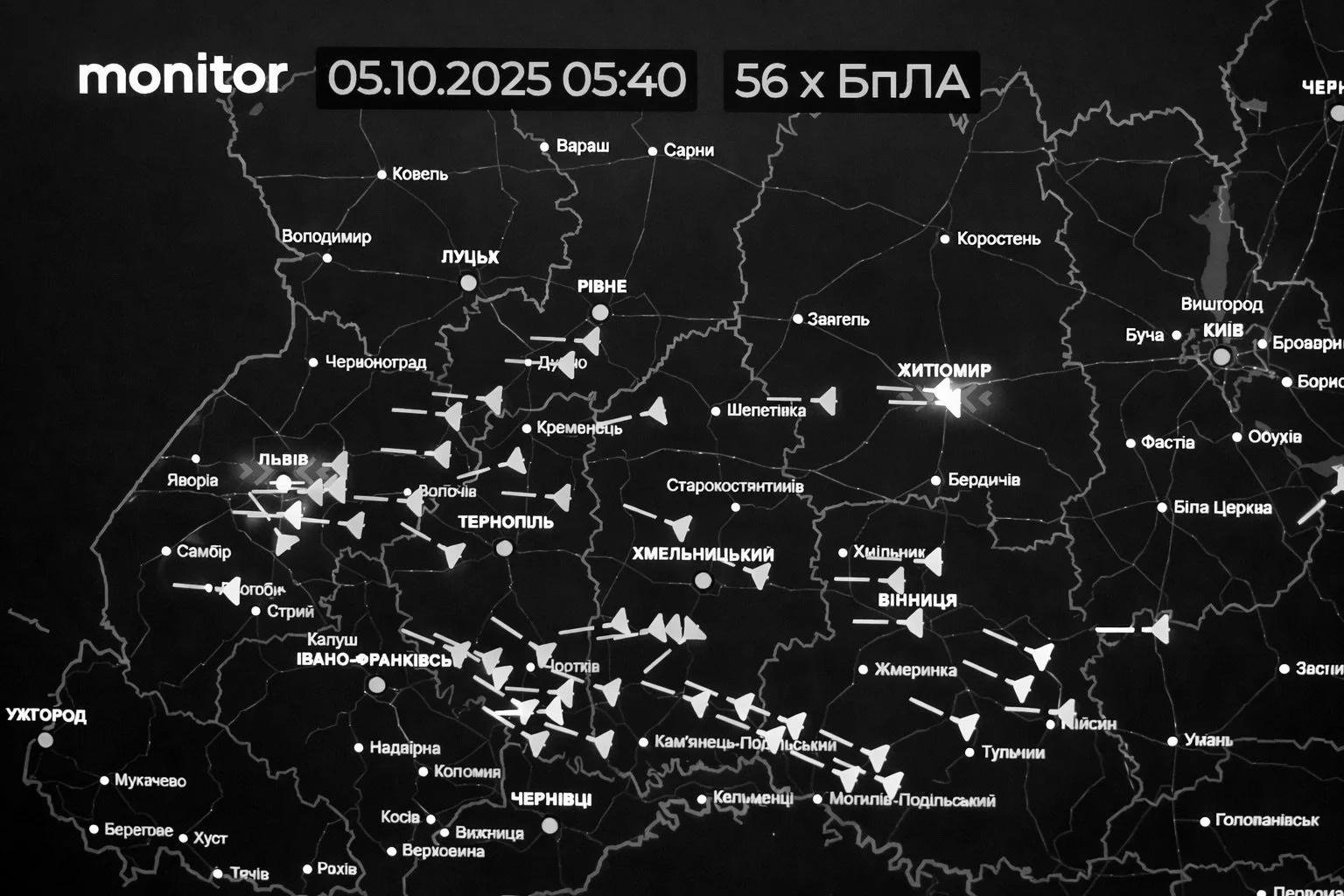
A cell phone screen shot displays Ukraine’s air-raid application mapping incoming drones across the country in the early hours of the morning.
It marks cities and likely flight paths in real time. That night more than 50 missiles and 500 drones were launched at Lviv in western Ukraine making it one of the largest attacks of the war. Even underground in shelters, impacts are heard and felt, collapsing the distance between warning and consequence.
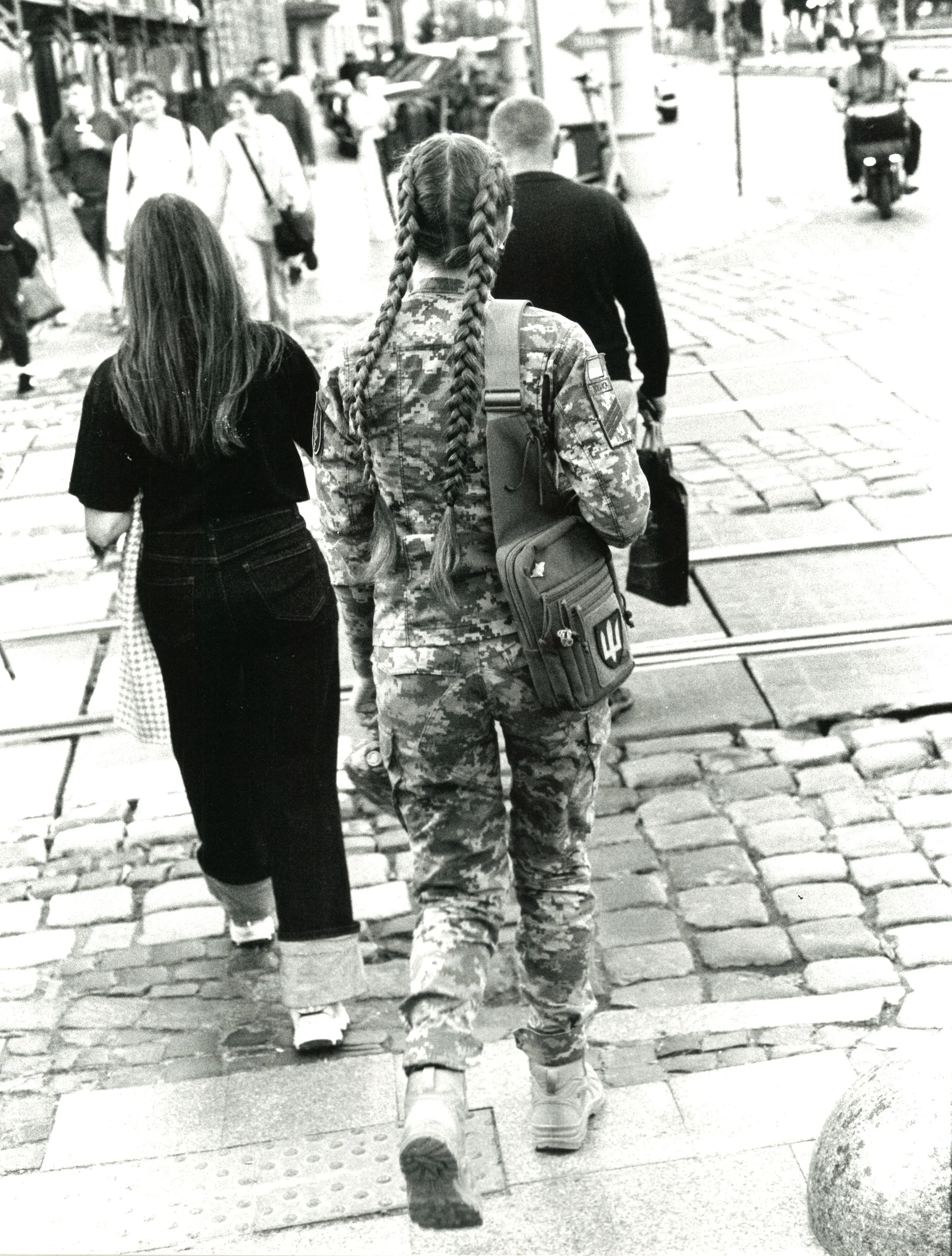
A woman in military uniform walks through a city street, photographed from behind to conceal her identity.
As the war continues, women increasingly occupy roles traditionally held by men, reflecting shifts in gender roles and the reorganization of civilian society under prolonged conflict.
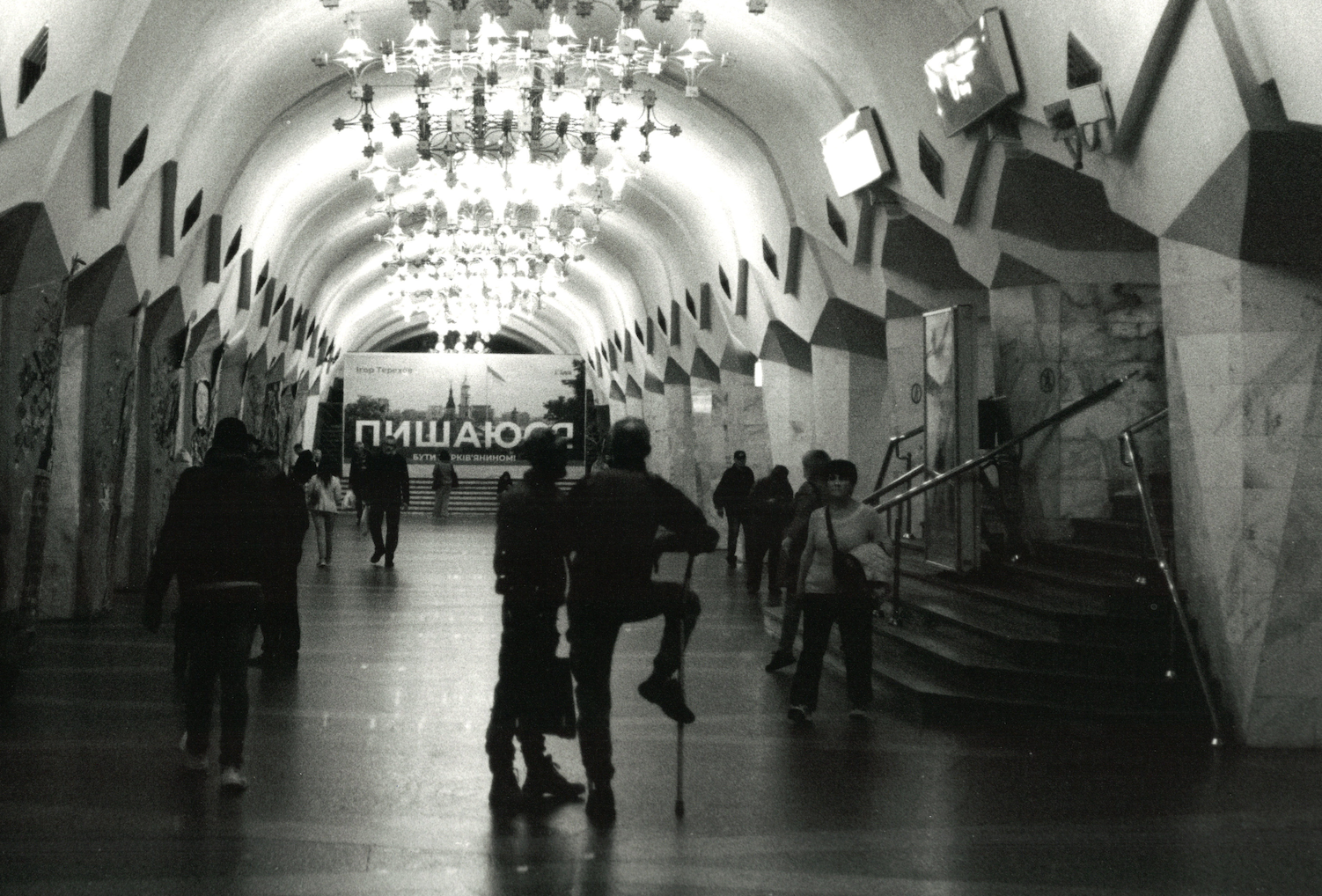
A soldier on crutches stands in the foreground of a display highlighting Ukrainian pride in an ornate Kyiv metro station that also functions as a bomb shelter.
The walking wounded are a stark reminder of what the conflict continues to take from the country. Soldiers injured by shrapnel or landmines are a common scene in everyday life.
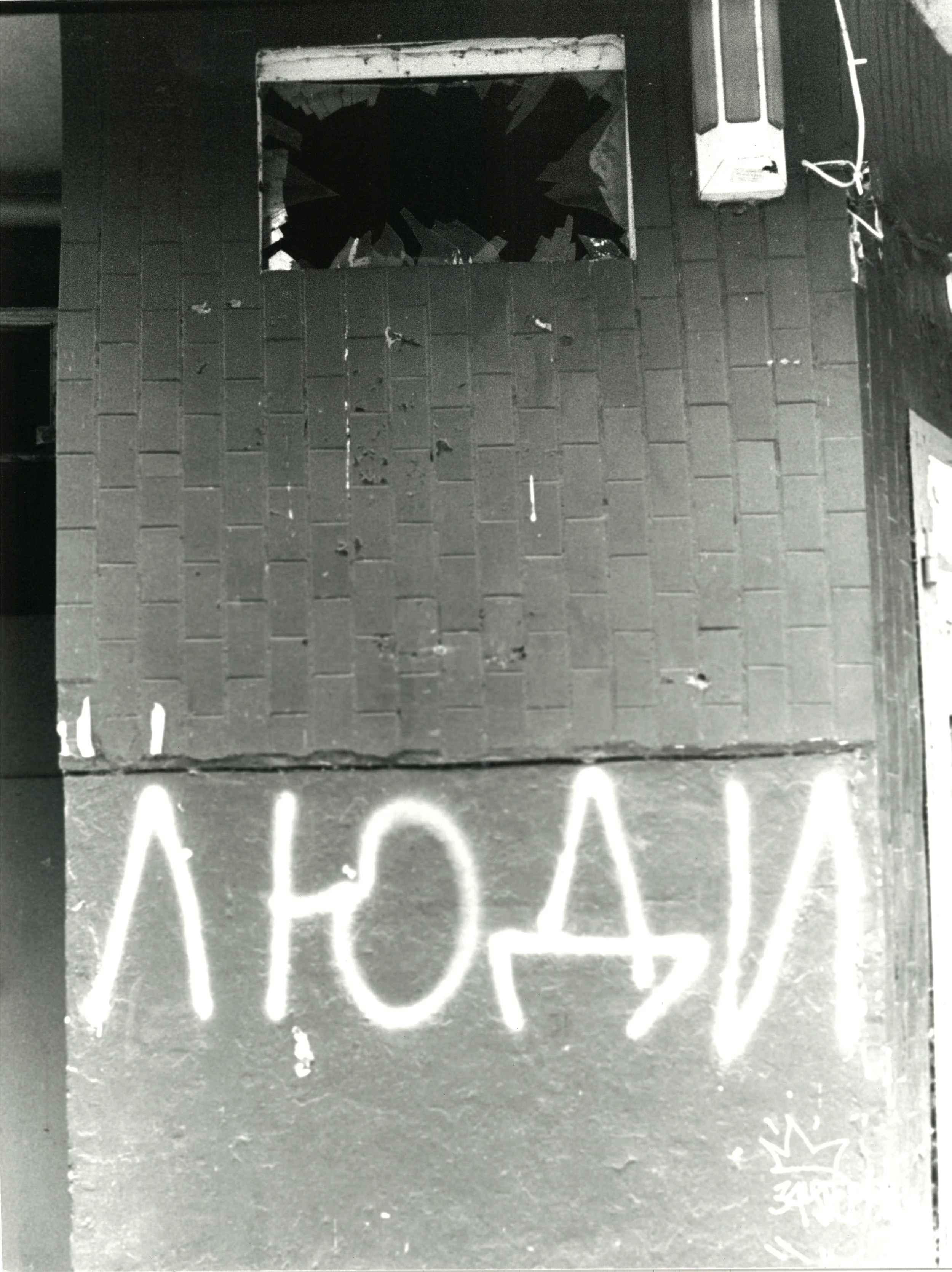
A damaged building marked with the word “CIVILIANS” is seen after shelling.
Despite its clearly identified civilian status, the structure was deliberately targeted and destroyed.
Such attacks constitute war crimes under international humanitarian law and demonstrate the intentional targeting of civilian infrastructure.
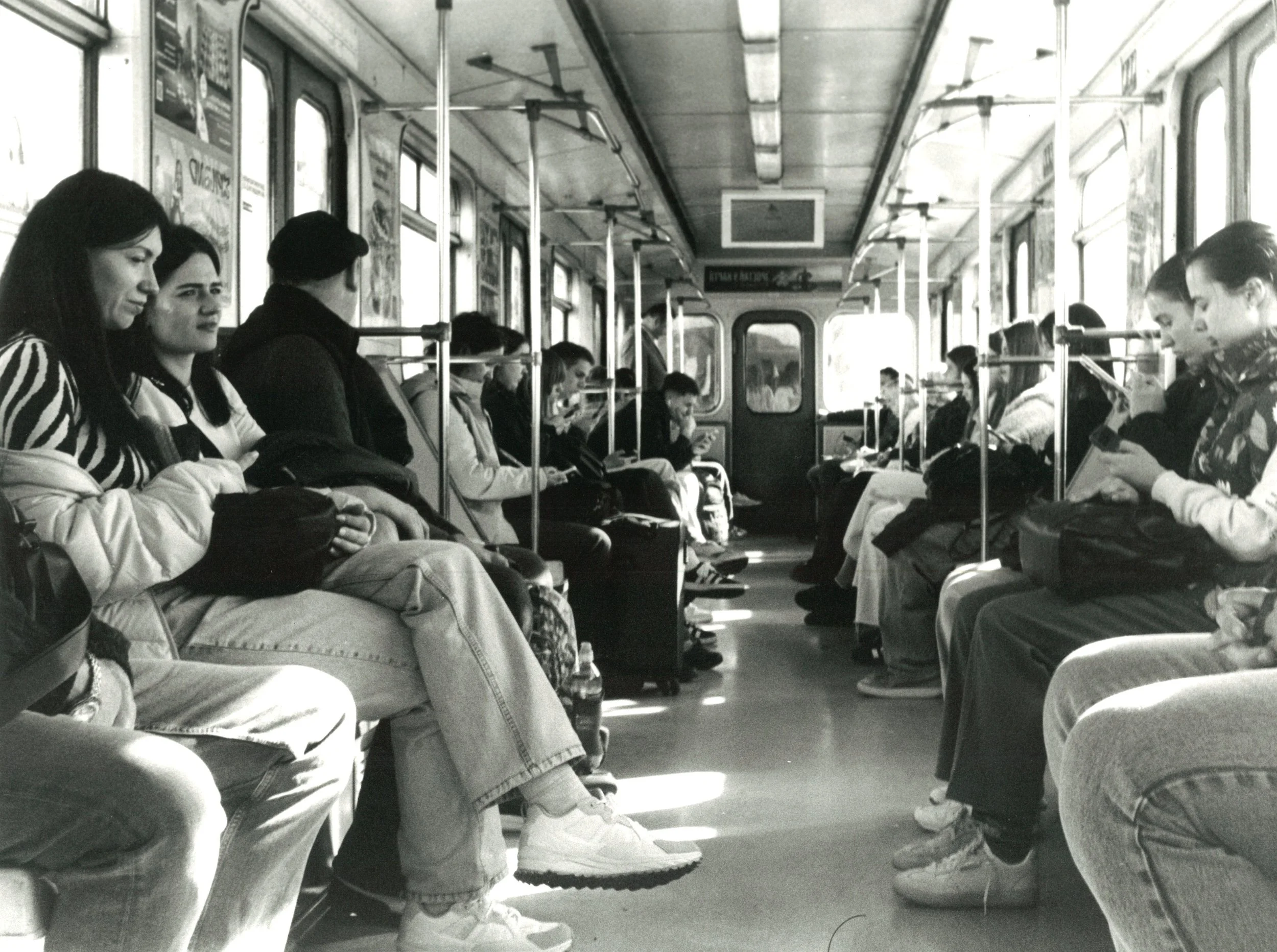
Women have become the significant majority of the population as photographed inside a metro car in Kyiv.
Demographic shifts in public space reflect mobilization, casualties, and displacement caused by the war. Ukrainian men are fighting, killed in action, or hiding from military authorities to avoid military conscription.
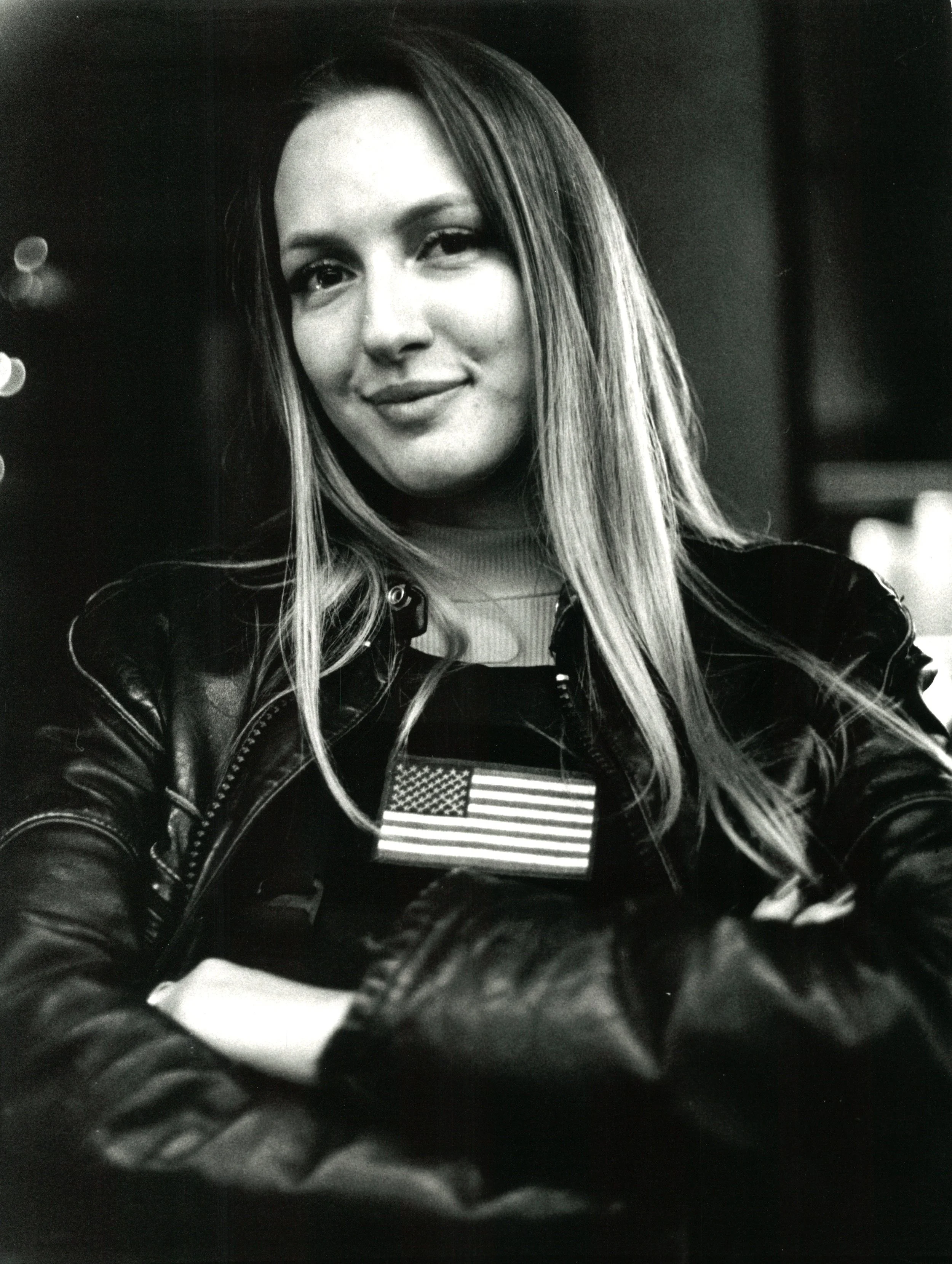
A female Ukrainian civilian standing inside a bomb shelter wears a kevlar vest bearing an American flag military patch.
The gesture itself a statement of alignment with the United States and distance from Russia. In a prolonged war that has normalized danger, her composure embodies defiance and resilience: she is the Motherland.
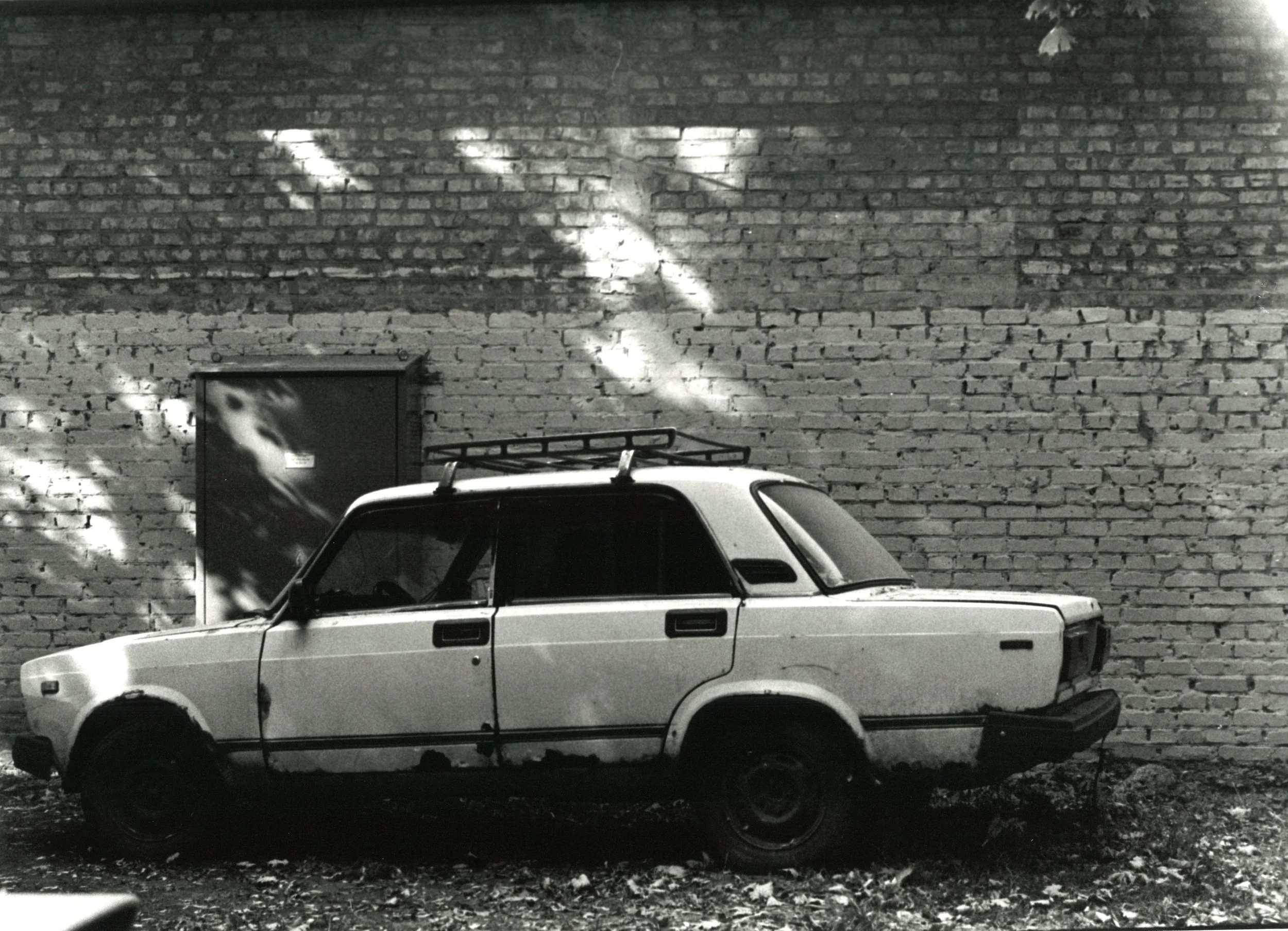
A rusting Soviet-era vehicle sits beside an empty building left to decay.
Years of war have driven civilians from their homes, leaving property abandoned while owners are scattered across Europe or presumed dead, unknown even to their former neighbors.
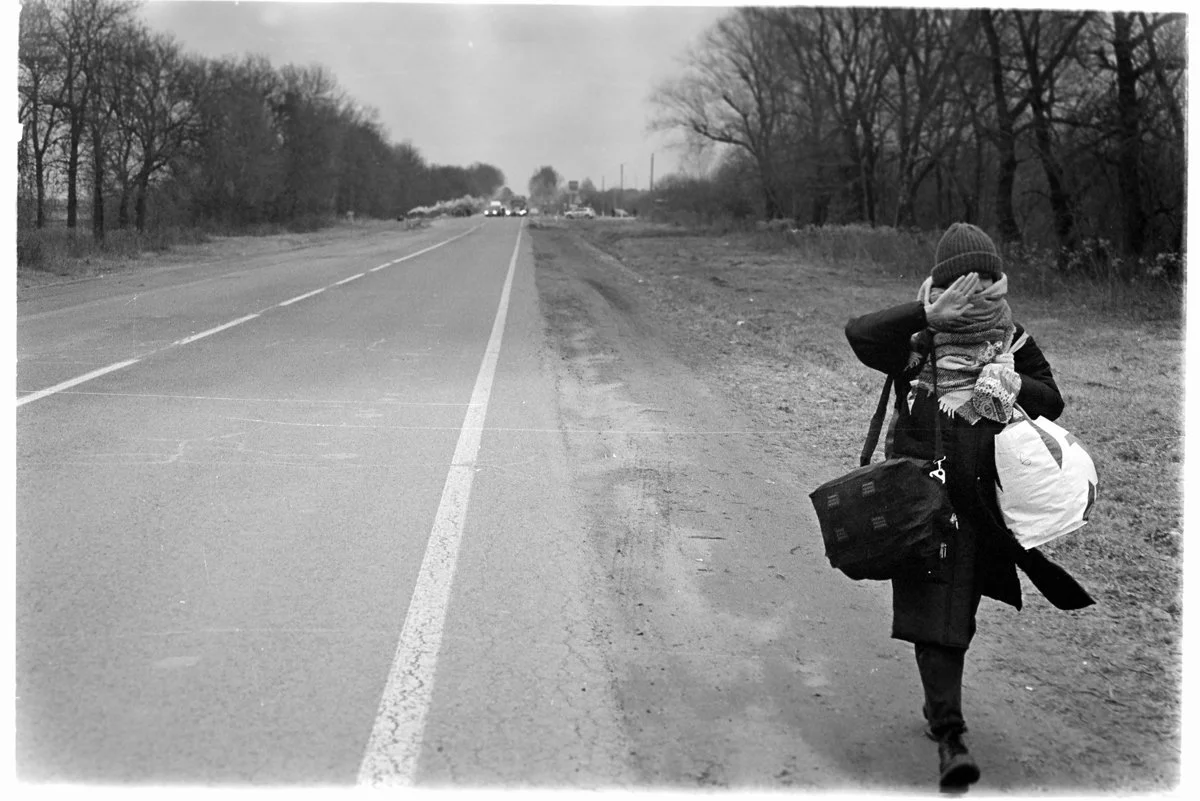
A young woman walks alone along a route used by civilians fleeing Ukraine, carrying only what she can hold and shielding her face from the cold and the camera.
Damage to infrastructure and continued violence leave civilians no choice but to move quickly and with little. In this moment, she becomes a war refugee.
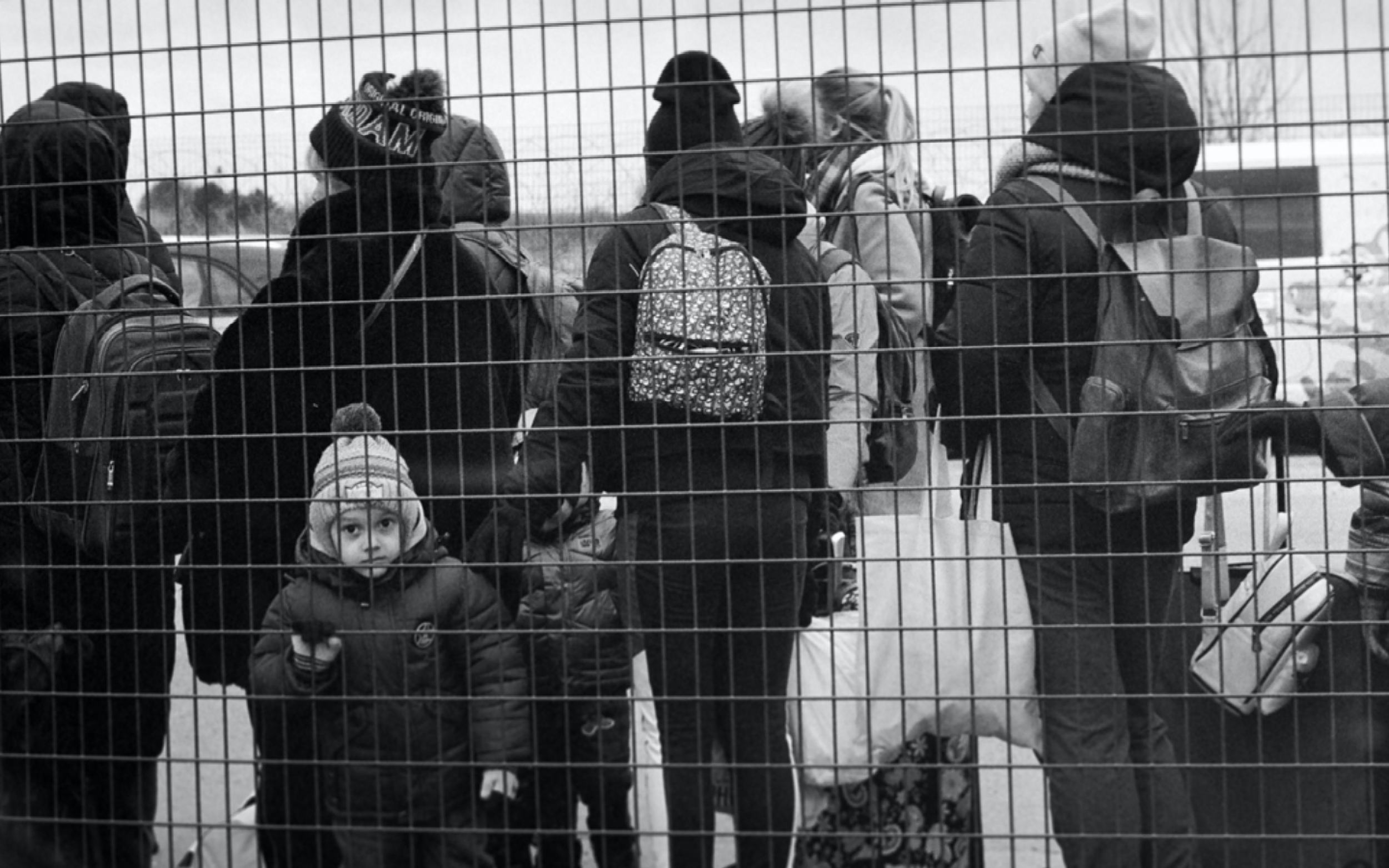
A young boy looks cold and desperate through a fence while standing with women fleeing the war.
Movement is slowed as civilians wait for permission, transport, or processing during displacement.
For many, including him, the separation may be permanent. Home reduced to memory rather than a destination. This boy may never return to Ukraine.
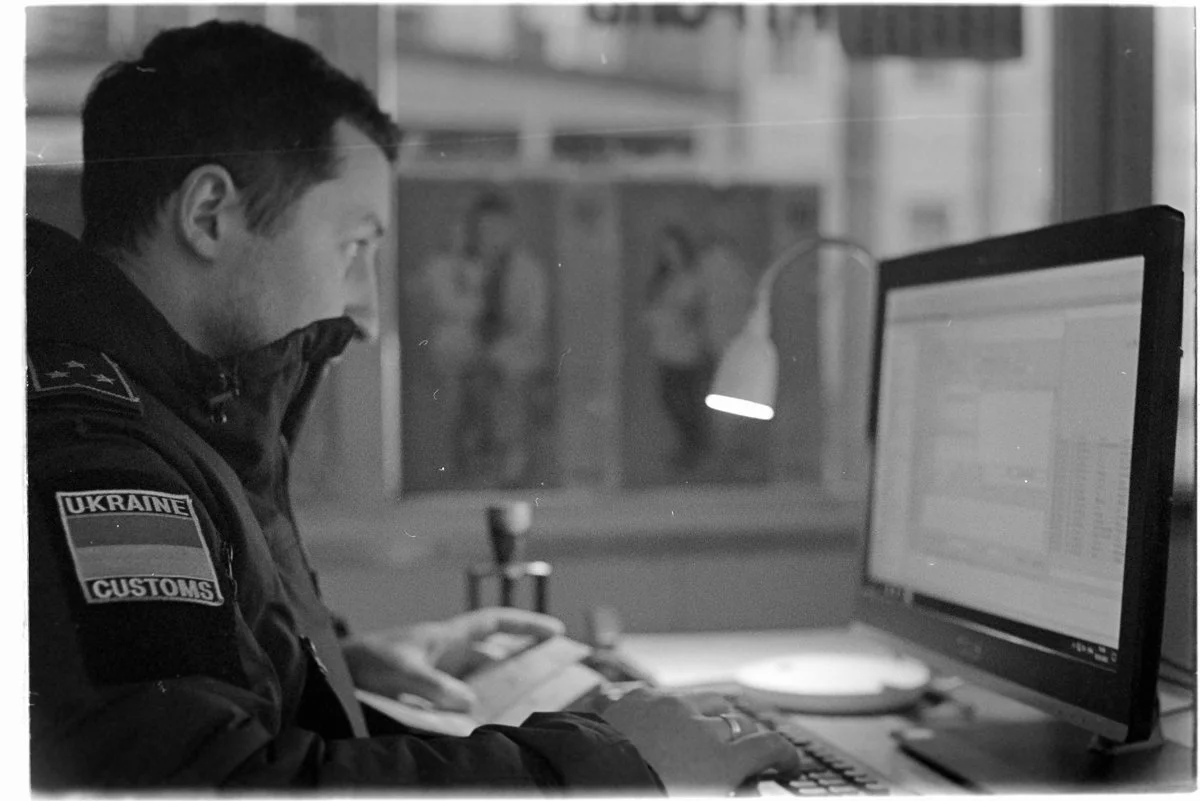
A Ukrainian customs officer enters a traveler’s passport into the border database inside a fortified checkpoint.
From his desk he witnesses both refugees leaving and volunteers arriving, the human traffic of a country at war. Even in this quiet office, every crossing is shaped by conflict.
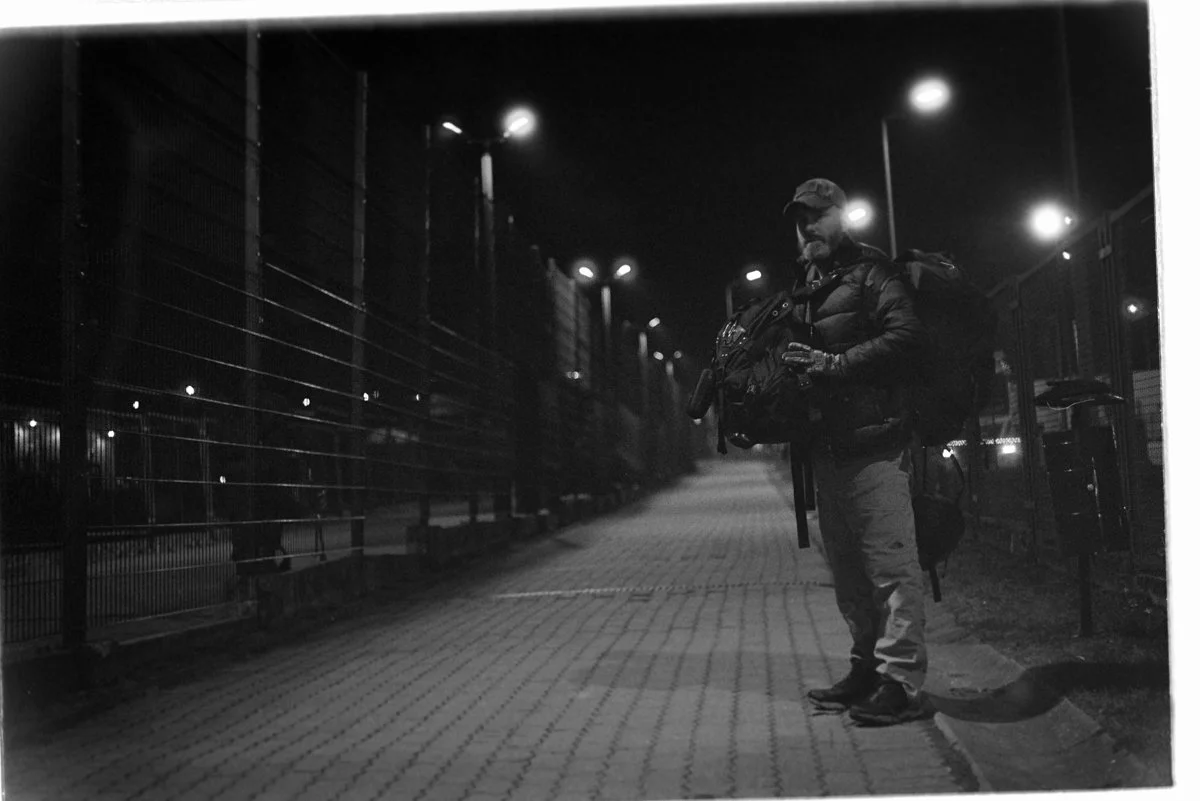
An American walks through the dark, isolated strip of ‘No Man’s Land’ between Poland and Ukraine in freezing temperatures.
Moving toward the Ukrainian border at night, he crosses paths with women and children fleeing west. After seeing reports that Ukraine needed pilots, he volunteered to join the International Legion and is heading east to fight for Ukraine. In wartime, ordinary roads harden into militarized passages where people must choose between leaving, waiting, or taking up arms.
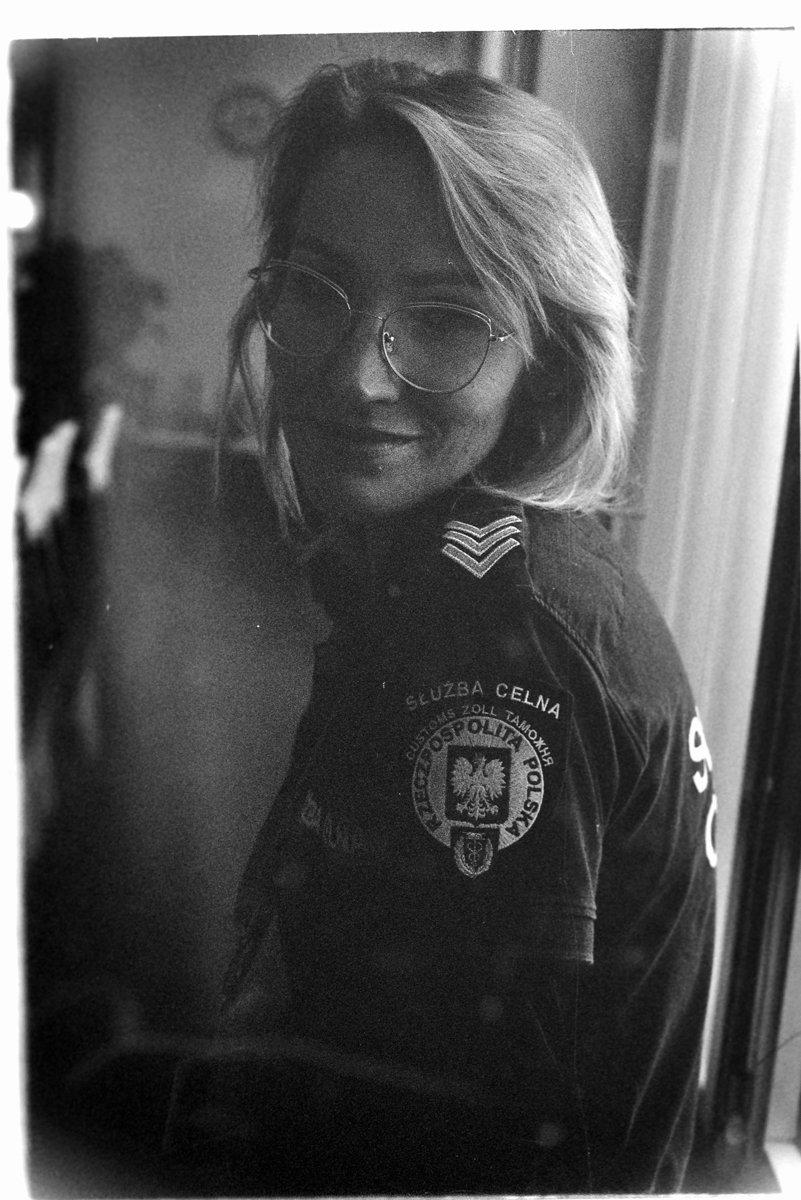
A Polish customs officer monitors the crossing as Ukrainian civilians arrive.
Behind her glasses and uniform is a quiet attentiveness. Calm and composed, she represents the infrastructure that absorbs the war’s human movement. Assistance rather than combat, order rather than chaos.
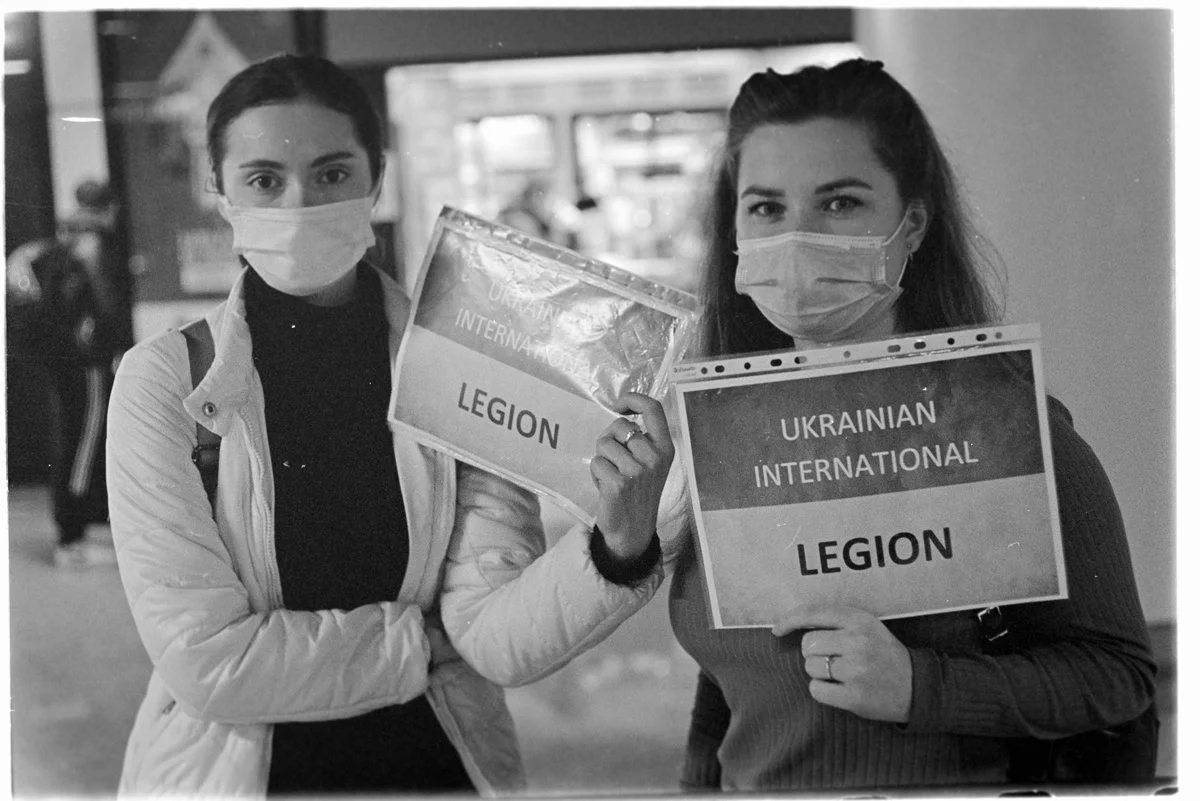
Two young Ukrainian women hold signs attempting to recruit for the International Legion inside Poland’s Krakow international Airport.
They are appealing to foreign men arriving from around the world to join the Ukrainian military and help defend their country. They stand at an international point of transit, near the baggage claim, where ordinary travel intersects with a combat zone, turning an airport into a threshold between civilian life and armed commitment. For many, this is where the war truly begins.
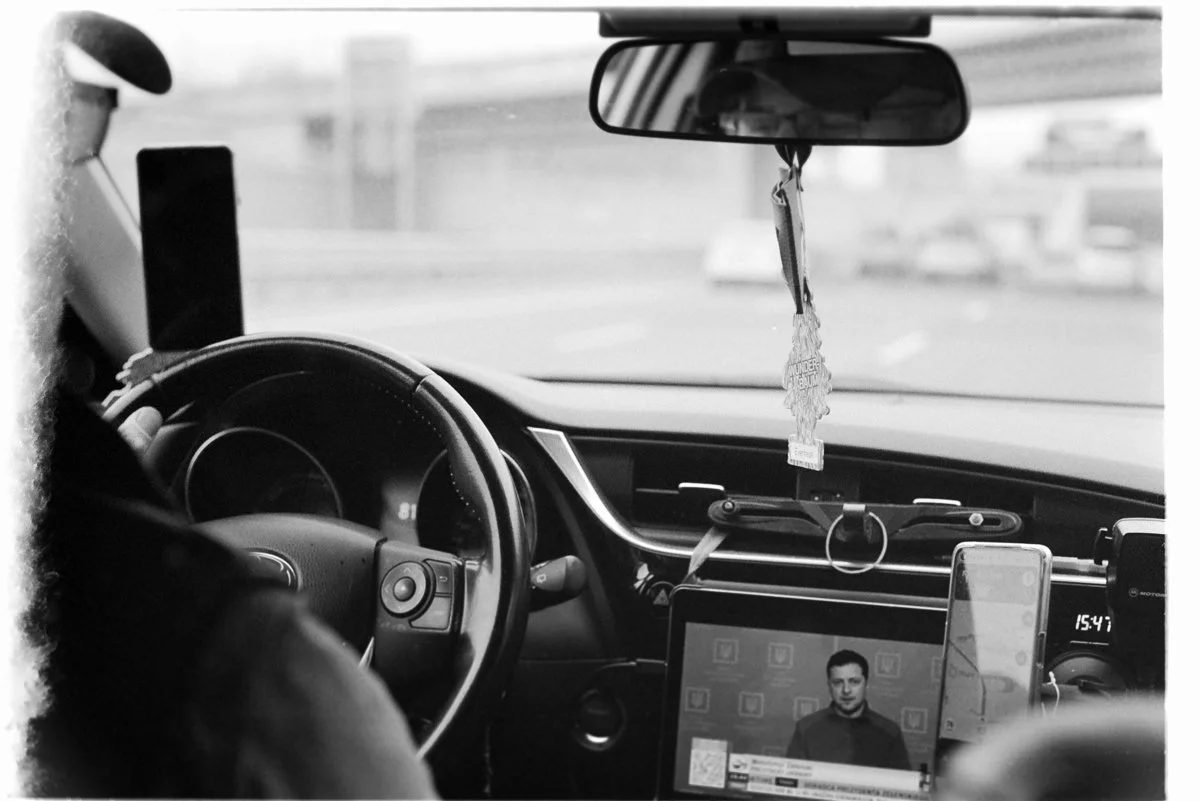
Inside a taxi moving from Poland toward the Ukrainian border, a small screen plays a broadcast of President Volodymyr Zelensky.
The war follows every journey, entering even private vehicles as the country’s leader speaks from a state under attack. A former actor who has become a wartime president, Zelensky appears in the most ordinary spaces of movement toward the front.
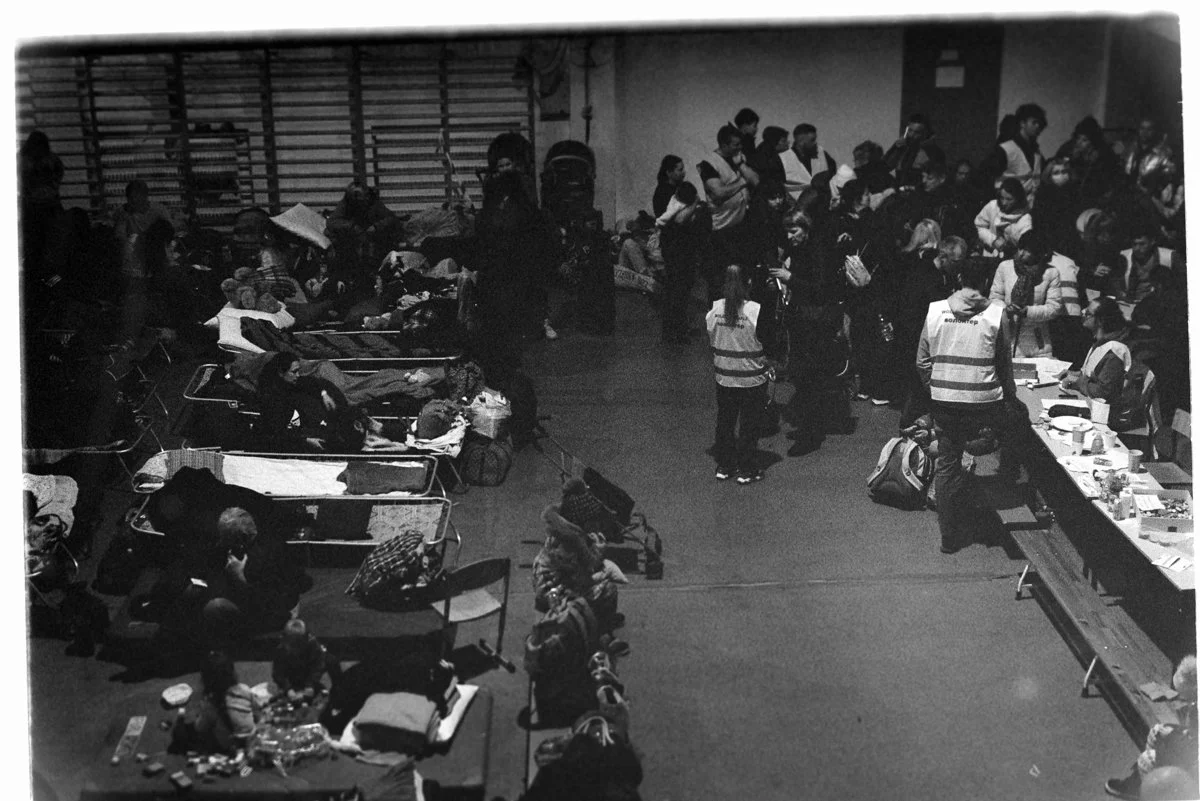
From a balcony above, the entrance to a war refugee shelter in Poland appears chaotic as international workers coordinate beds, food, and safety for arriving civilians.
In the crowd, relief and exhaustion collide. Brief order imposed on lives already fractured by displacement.Shelters like this are now located in most cities throughout Europe. The scene shows how care, logistics, and survival operate simultaneously at the margins of war.

A young refugee girl sleeps on a cot while her brother searches his phone for missing family members in an overcrowded shelter. The space offers protection but not rest.
Only a suspended night between danger and an uncertain future. Here, displacement begins quietly. By morning they will board a bus toward Europe and begin life as war refugees.
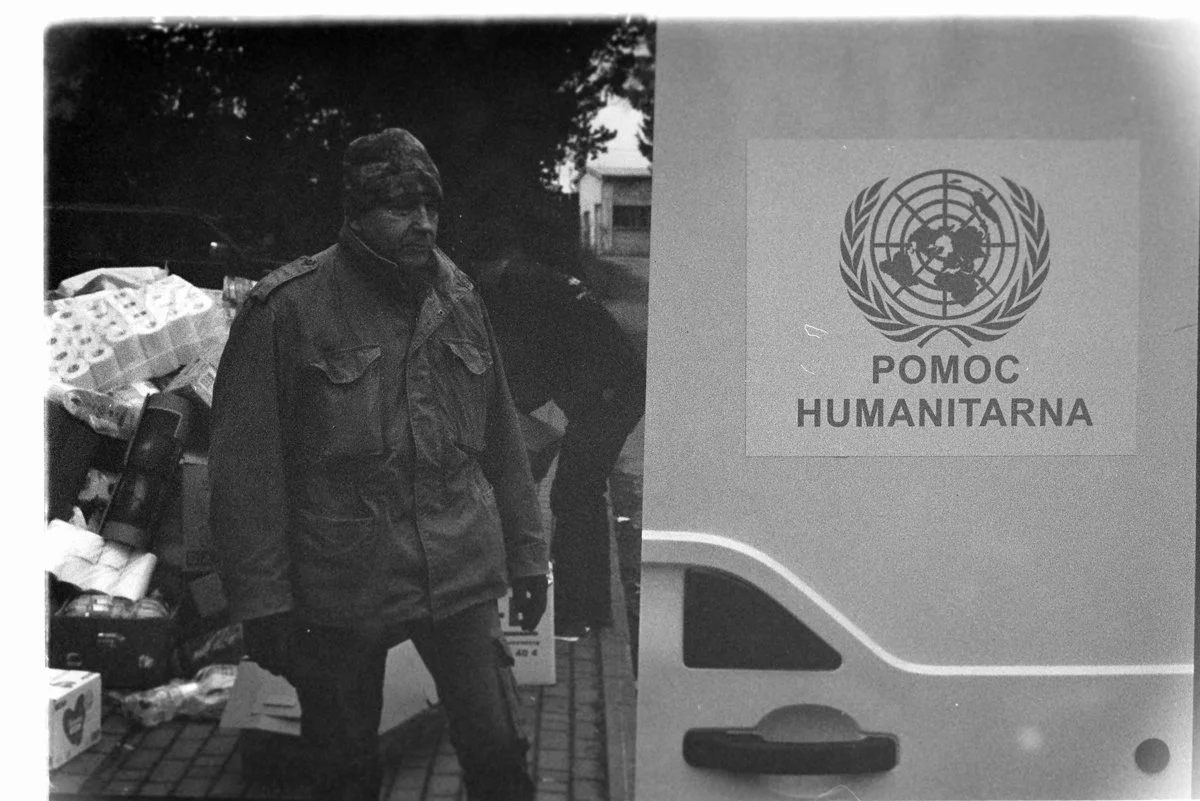
Civilian volunteers in Poland have assisted Ukrainian refugees since the beginning of the war. For years, the man pictured has transported food, clothing and medical supplies into Ukraine and always returns with families fleeing the war. In total he has made hundreds of trips. He is a retired Polish Border Patrol Officer so he can move quickly across the border. He accepts no money, only a handshake. He is a true humanitarian.
Polish and Western European civilians believe that these type of humanitarian actions will save lives and also keep the Russian military from pushing through Ukraine, and eastward toward their own borders. They hope for peace.