The New America: Portrait of a Movement
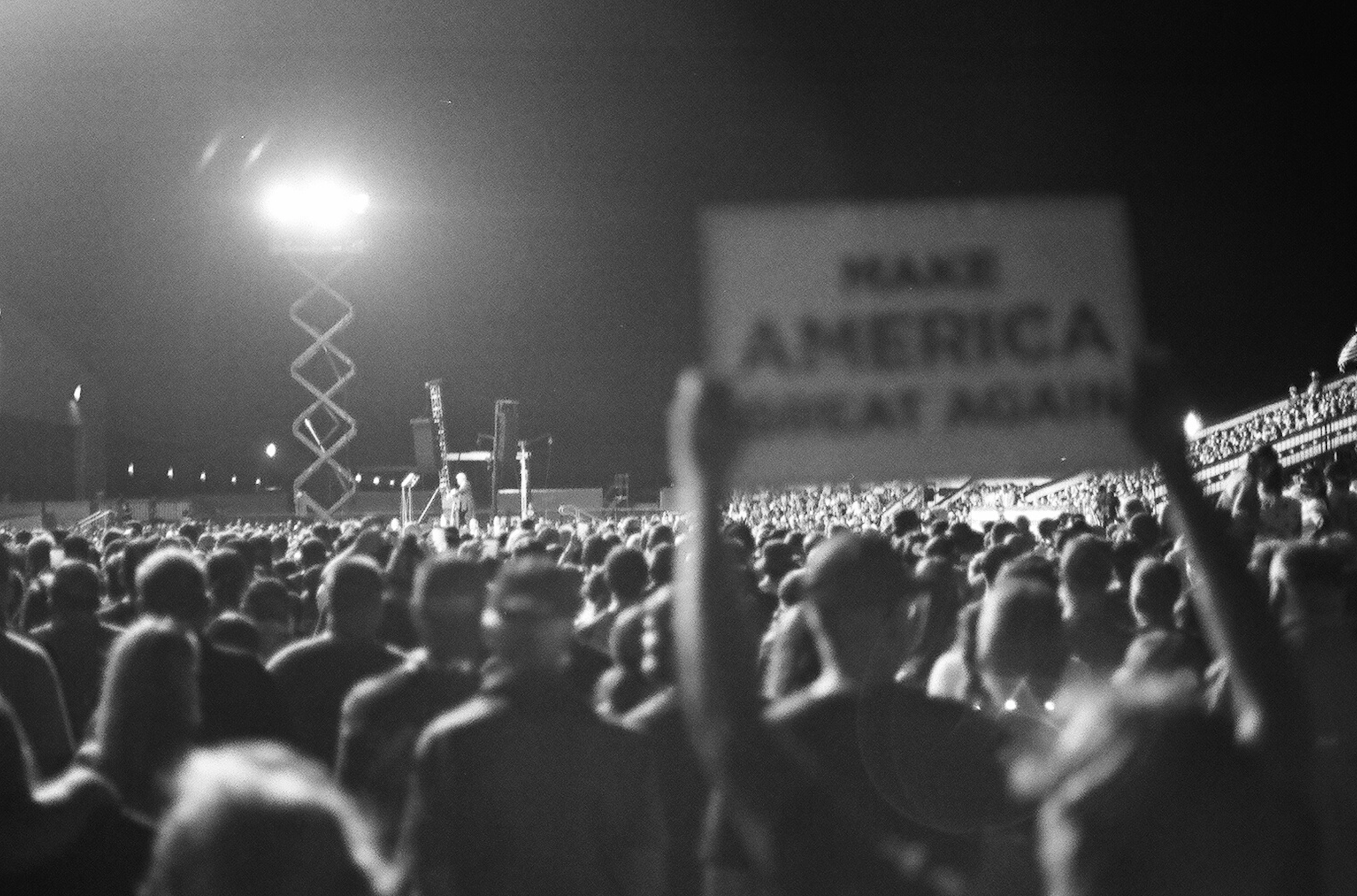
Cover Photo: From the rear of the tarmac at a Presidential rally, a vast crowd stretches toward a distant stage beneath harsh temporary lights.
Layers of mostly male, largely indistinct faces merge into a single mass as the President appears small at the center of the horizon. A iconic “Make America Great Again” sign rises singularly above the assembly, completing the frame and giving the scene a sense of inevitability. A visual alignment of leader, symbol, and collective.
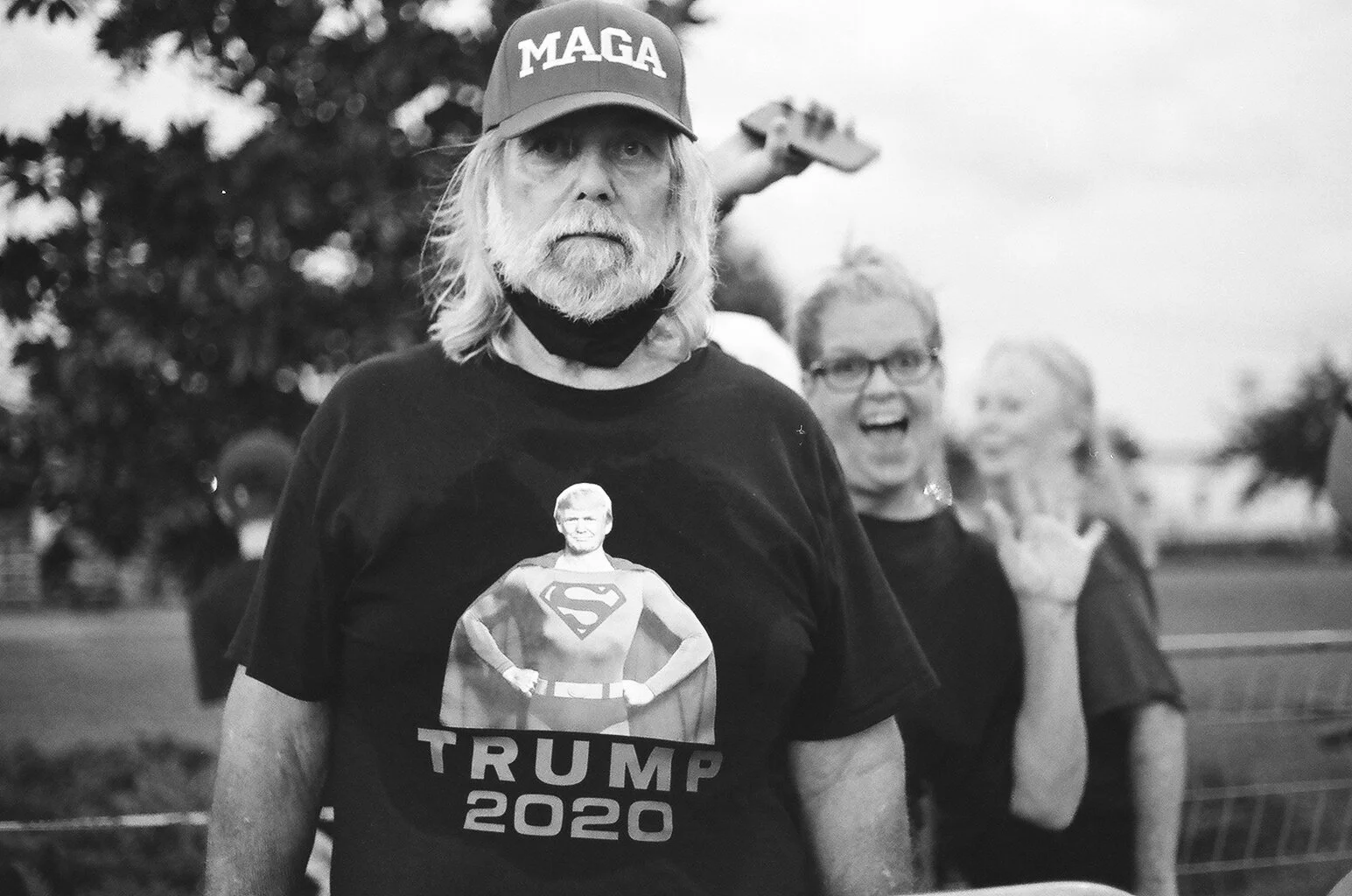
A man stands in the security line of the rally wearing a MAGA hat and Trump imagery.
His fixed, unsmiling presence symbolizes a movement where political belief becomes personal identity and public belonging is worn on the body. The sweat stain on his shirt quantifies his dedication, standing for hours in the hot sun.
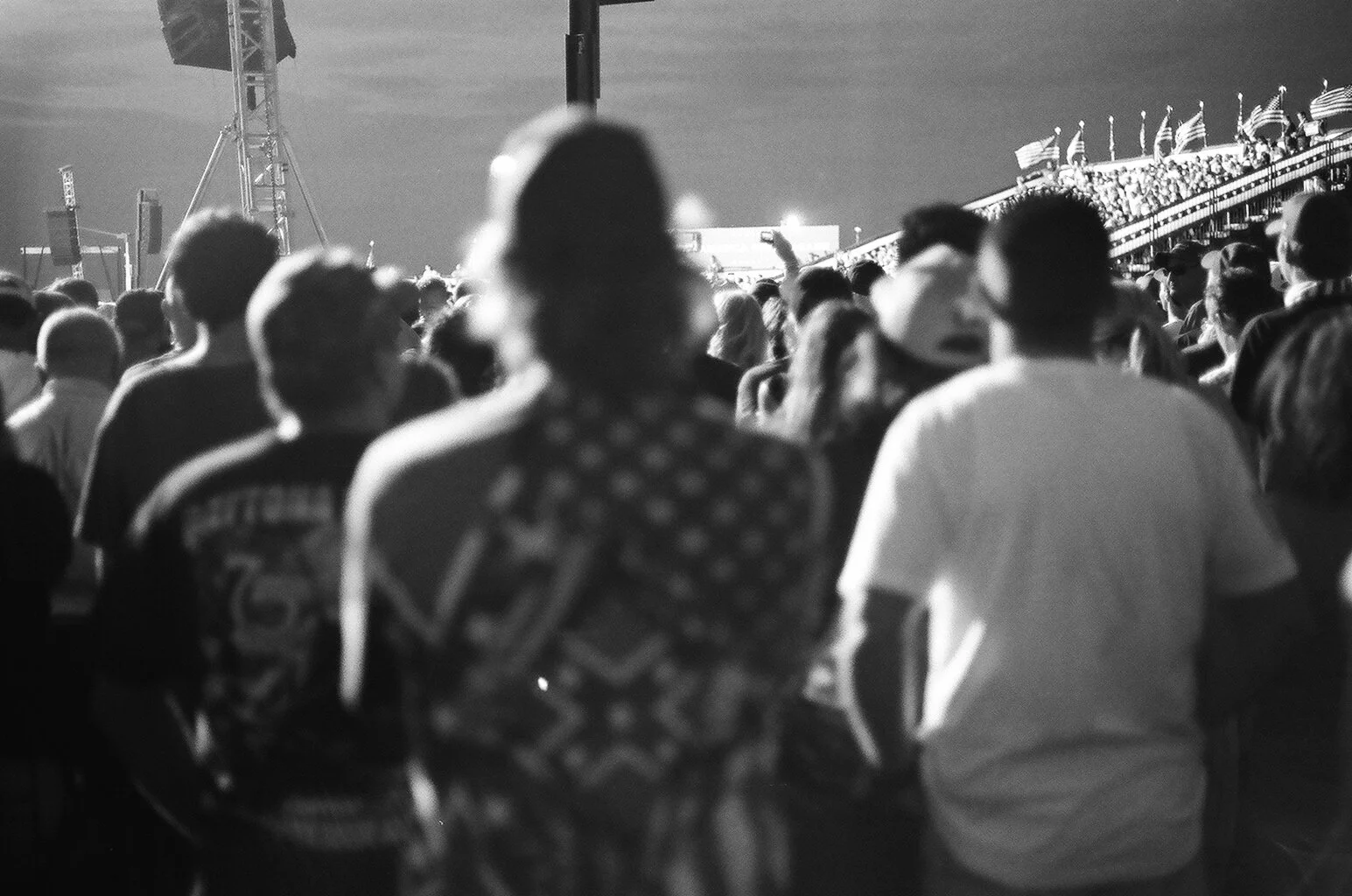
From the threshold, the crowd appears dense and almost impenetrable, packed with mostly middle-aged and older men wearing American and Confederate flags alongside other political symbols.
The scene symbolizes a highly ritualized display of patriotism where identity, history, and loyalty merge into a single, overwhelming collective presence before the rally even begins.
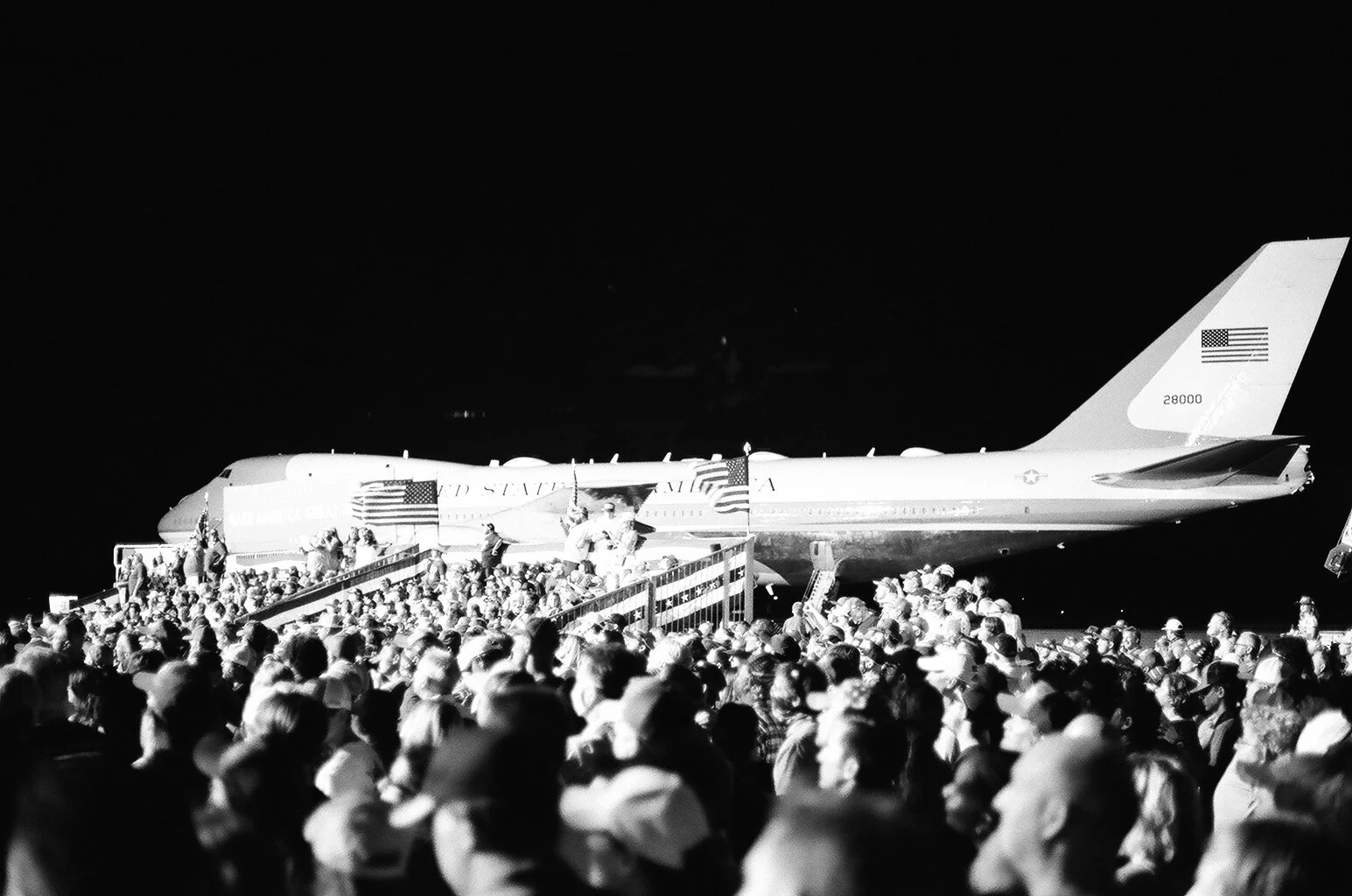
Air Force One sits behind the stage as a towering backdrop while thousands of spectators stretch across the tarmac.
Its placement symbolizes institutional power fused with popular support, suggesting that state authority and the crowd’s loyalty are visually and emotionally aligned.
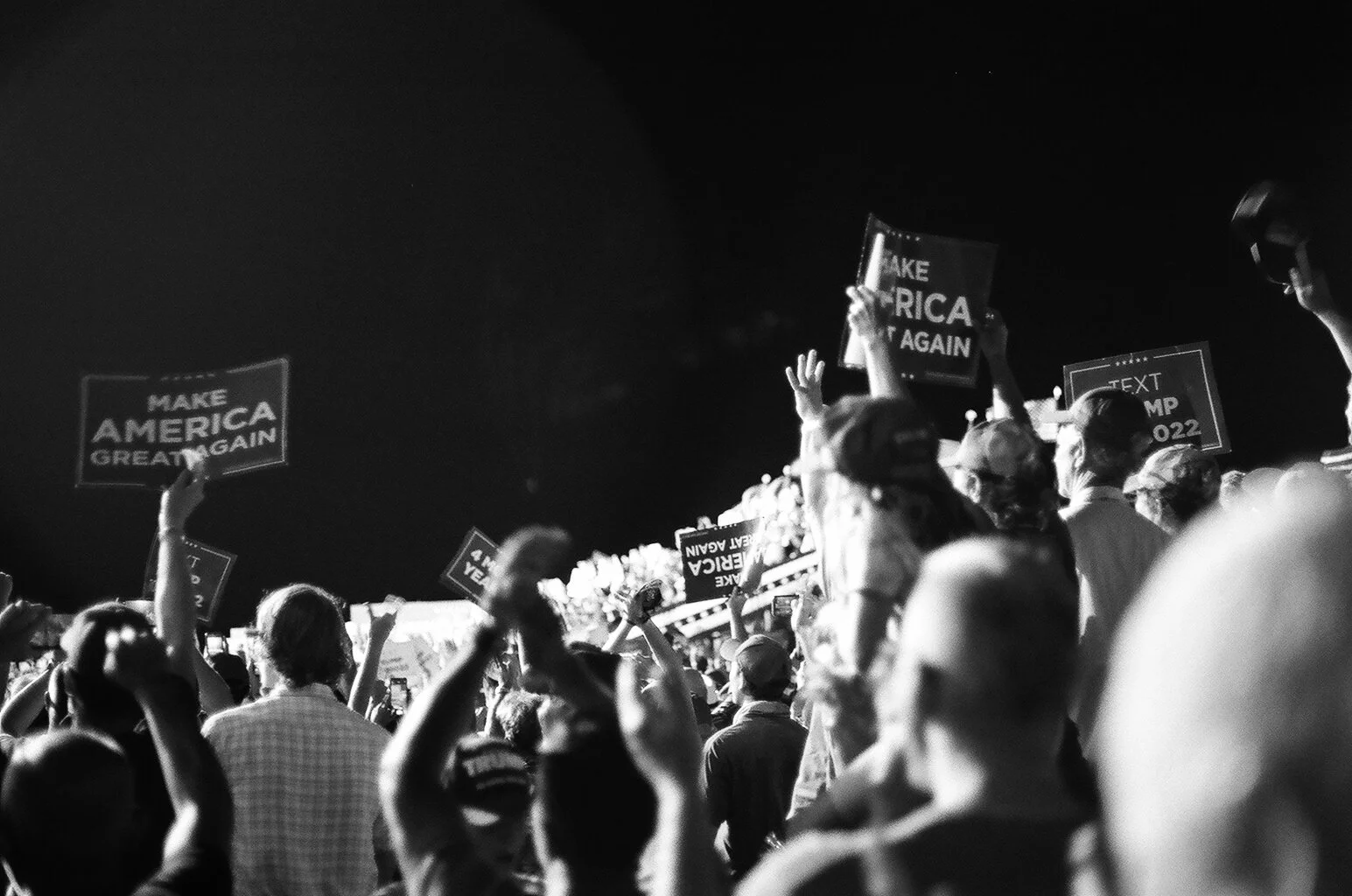
From a low vantage point, the crowd stretches deep into the night, punctuated everywhere by the iconic “Make America Great Again” signs.
The repetition of a single phrase across such a vast, organized gathering symbolizes careful preparation, cohesion, and the way simple language can unify a mass of otherwise diverse individuals.
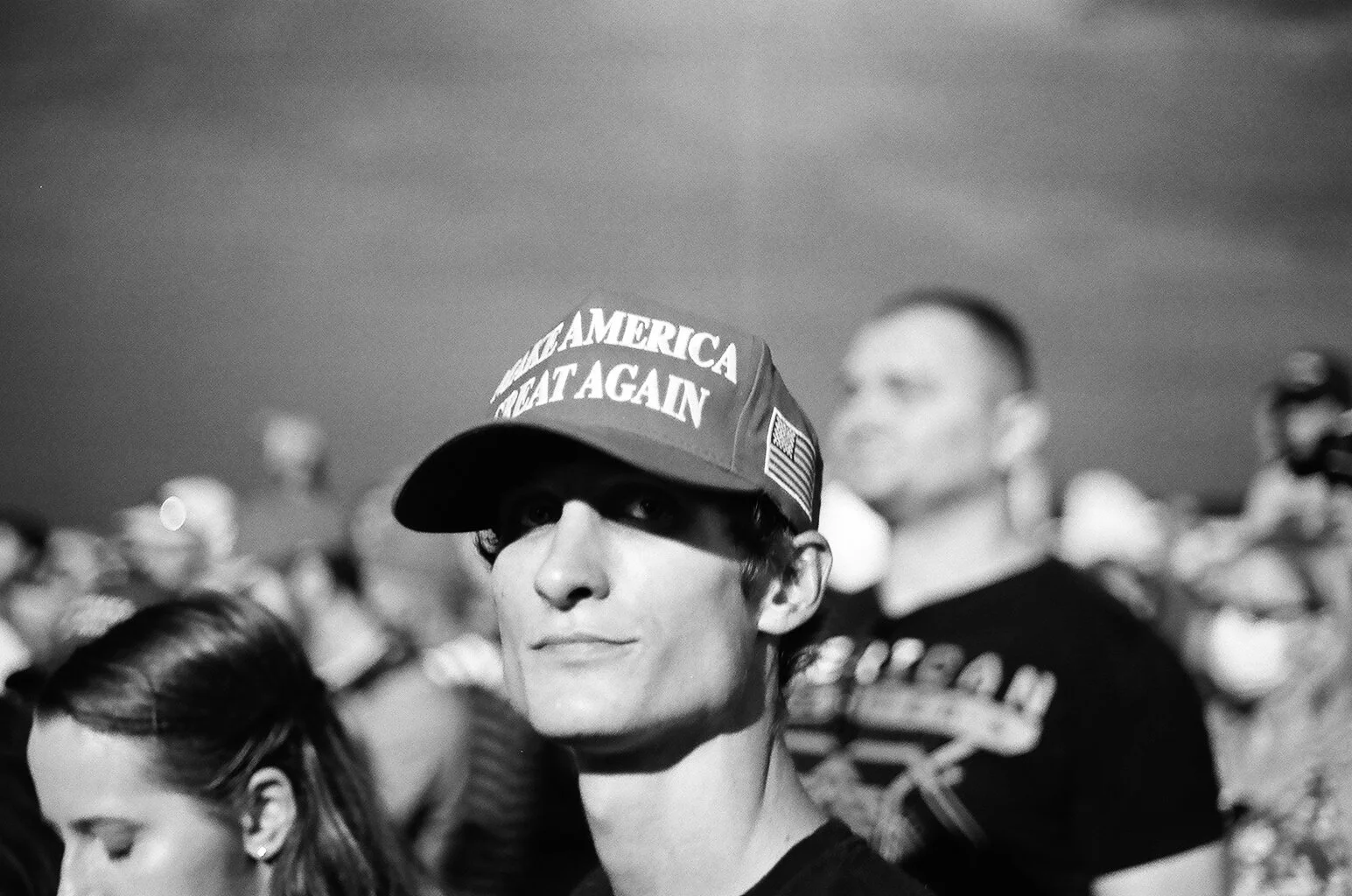
A square jawed young man stands toward the front of the crowd, the brim of his MAGA hat casting a hard shadow across his eyes.
The light makes him look clean, solid, and distinctly American, yet slightly severe, as if poised between promise and warning.
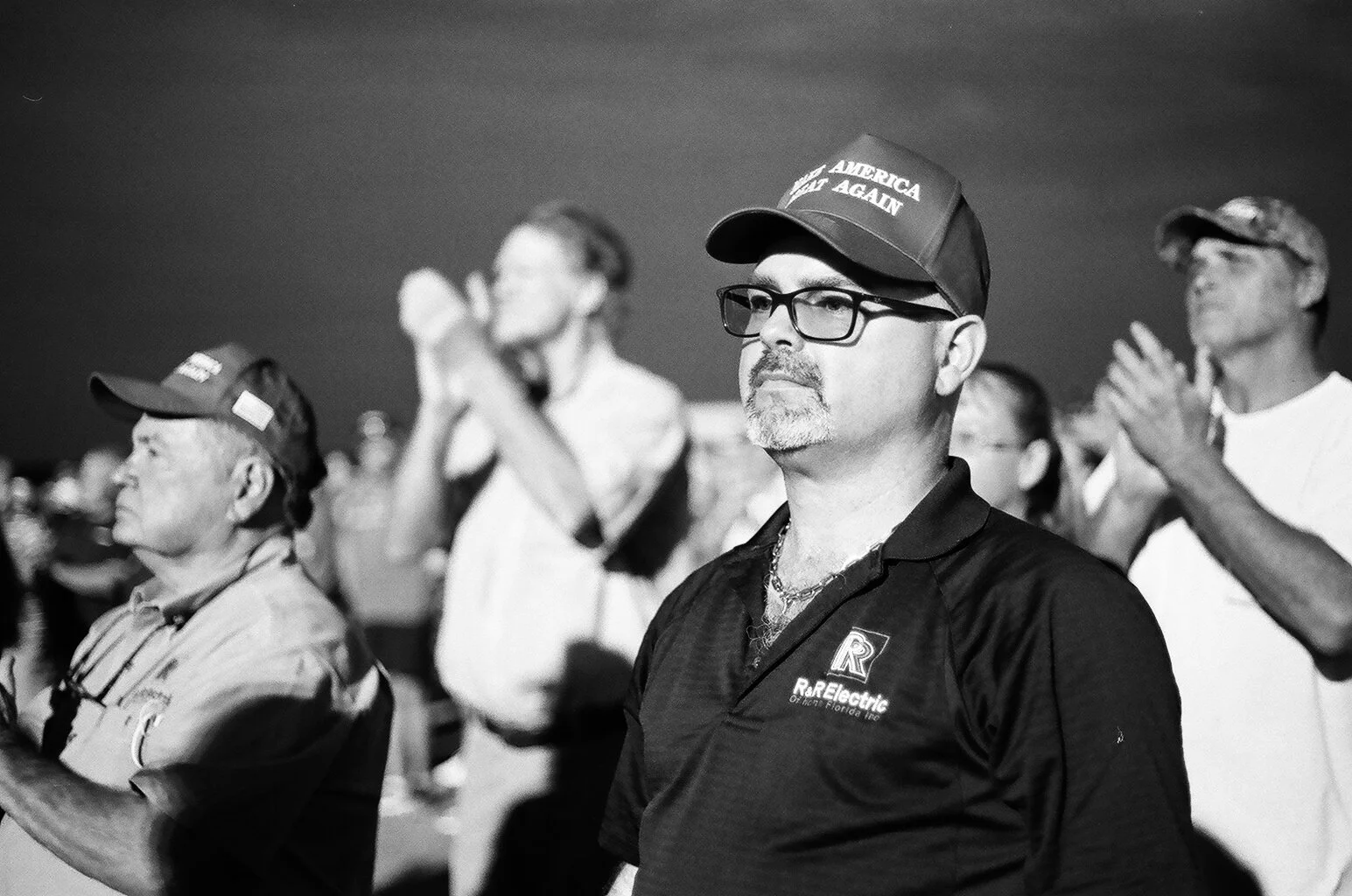
Older working-class men stand watchful under harsh lights.
Their faces are hard and fixed, unified by grievance and expectation as they stare toward the speaker they hope will change their fate. Applause erupts as the President delivers sharply critical remarks about political opponents and marginalized groups. The mood is tense, heavy, and unmistakably foreboding.
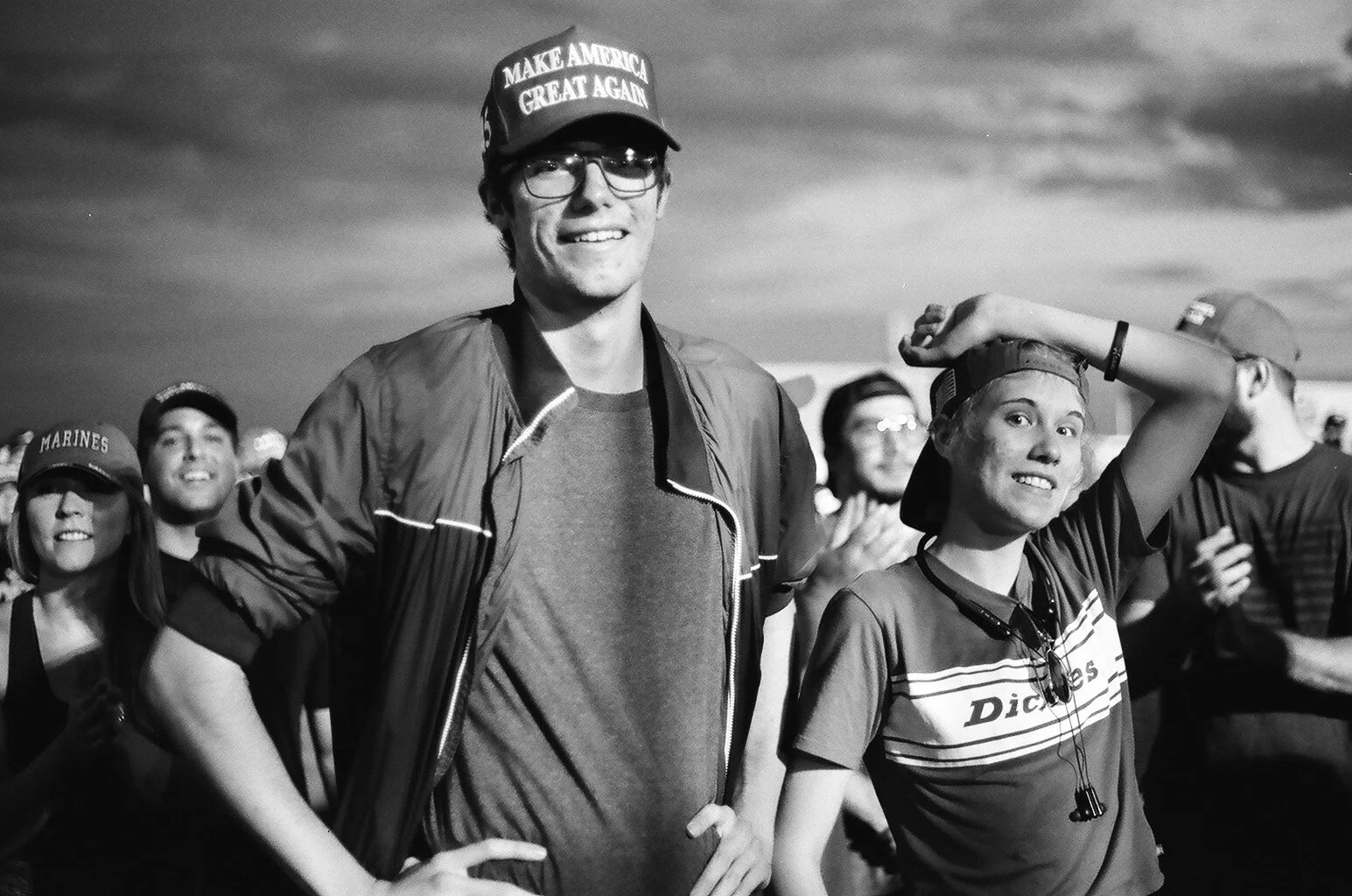
Toward the rear of the crowd, a cluster of young people stand together, more relaxed than the men at the front.
The young man centered with hands on his hips beneath a MAGA cap smiles openly, slightly awkward in posture yet self-assured. Their demeanor suggests pride in being present and confidence that the speaker represents a better future they are eager to witness.
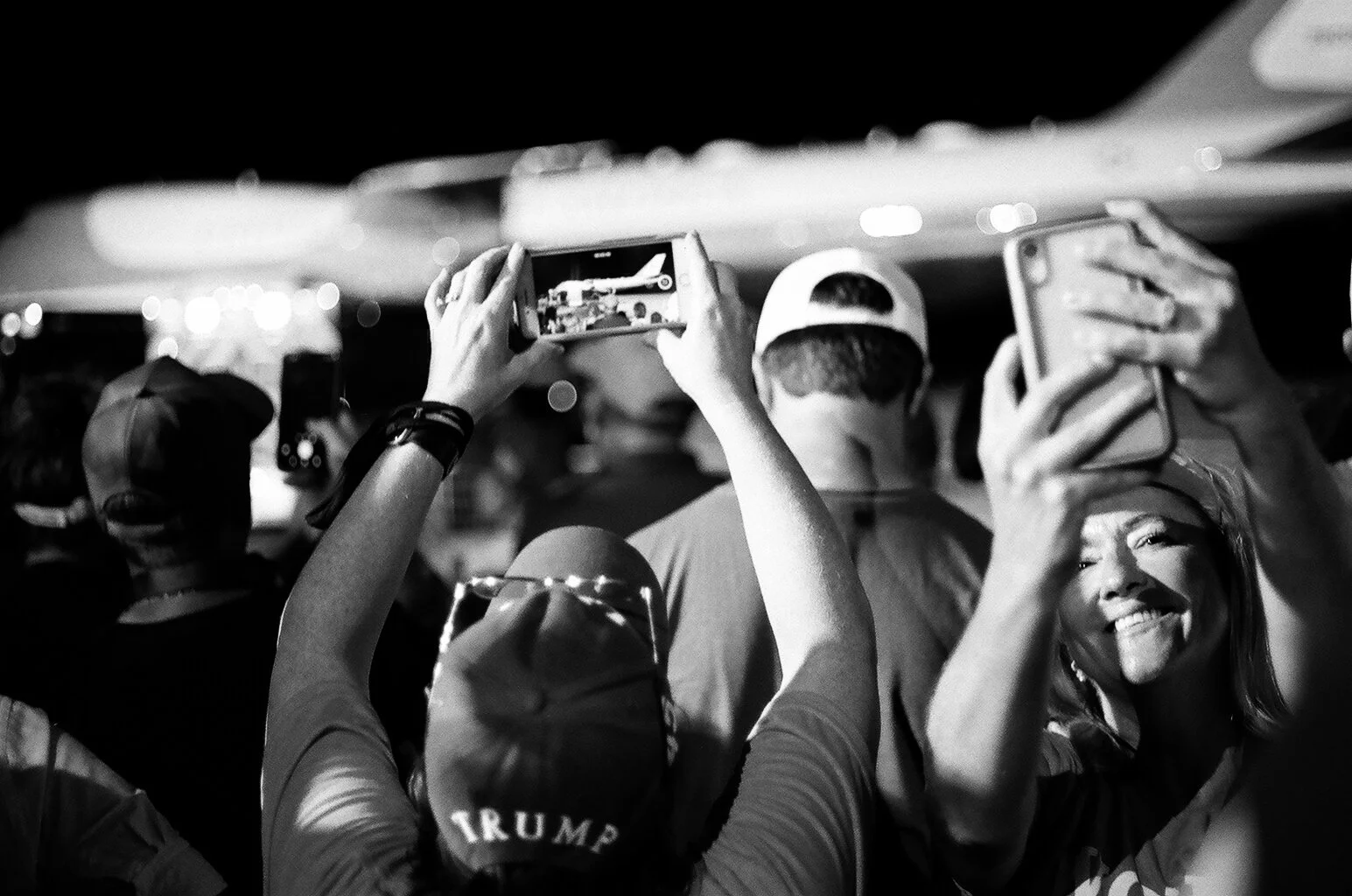
As the rally concludes, the president moves toward Air Force One. The crowd surges forward, lifting phones to record the moment.
Dozens of screens replace faces, turning the departure into a shared act of witnessing. Part documentation, part self-portrait, as attendees preserve proof of their presence and proximity before the night ends.
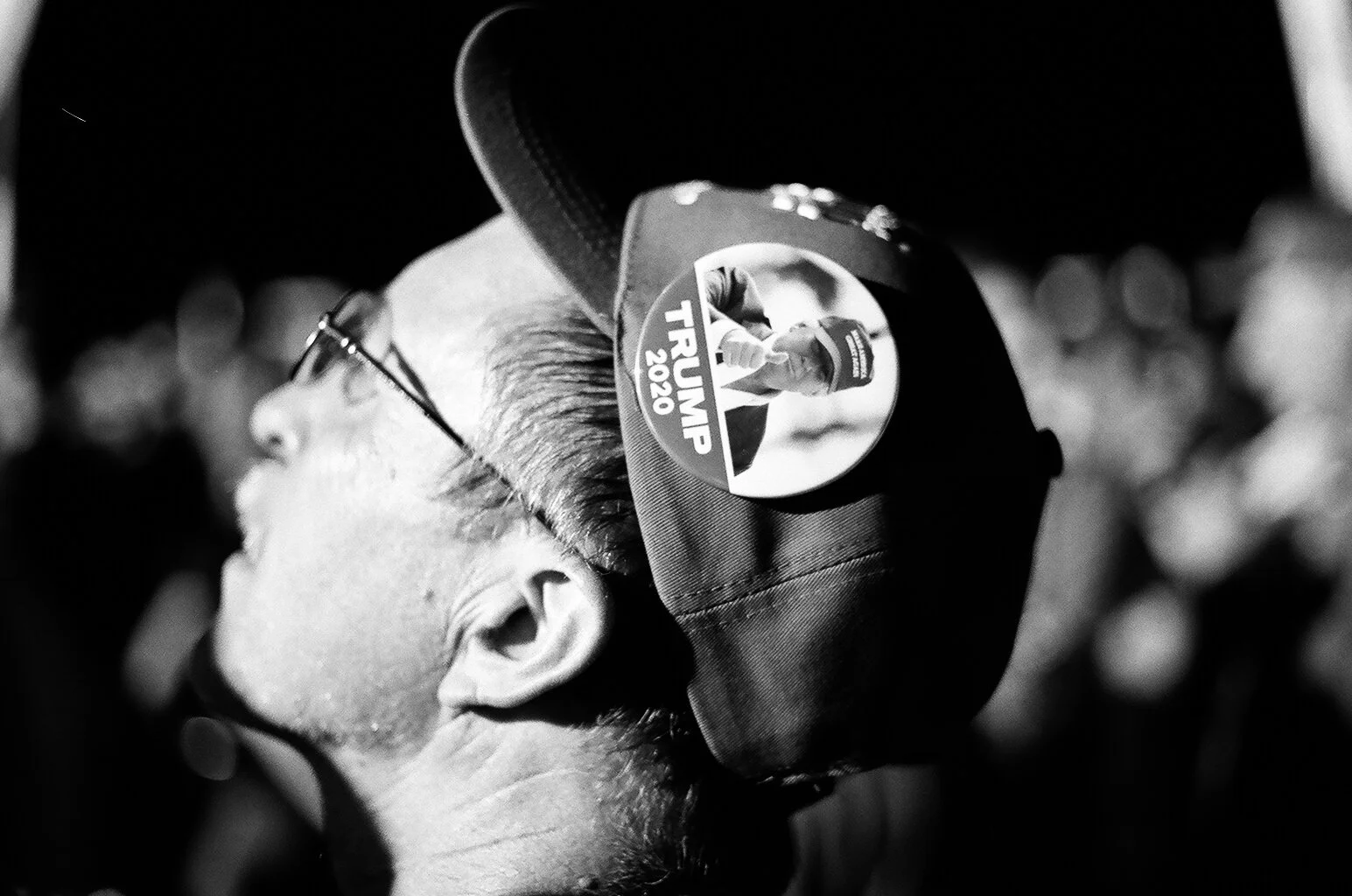
A man tilts his head upward as Air Force One climbs into the night, his gaze fixed on the fading aircraft.
A Trump button pinned to the crown of his hat becomes a striking emblem of loyalty as the plane disappears. In this final moment, attention shifts from the crowd to the sky. True devotion lingering even after the leader has gone.
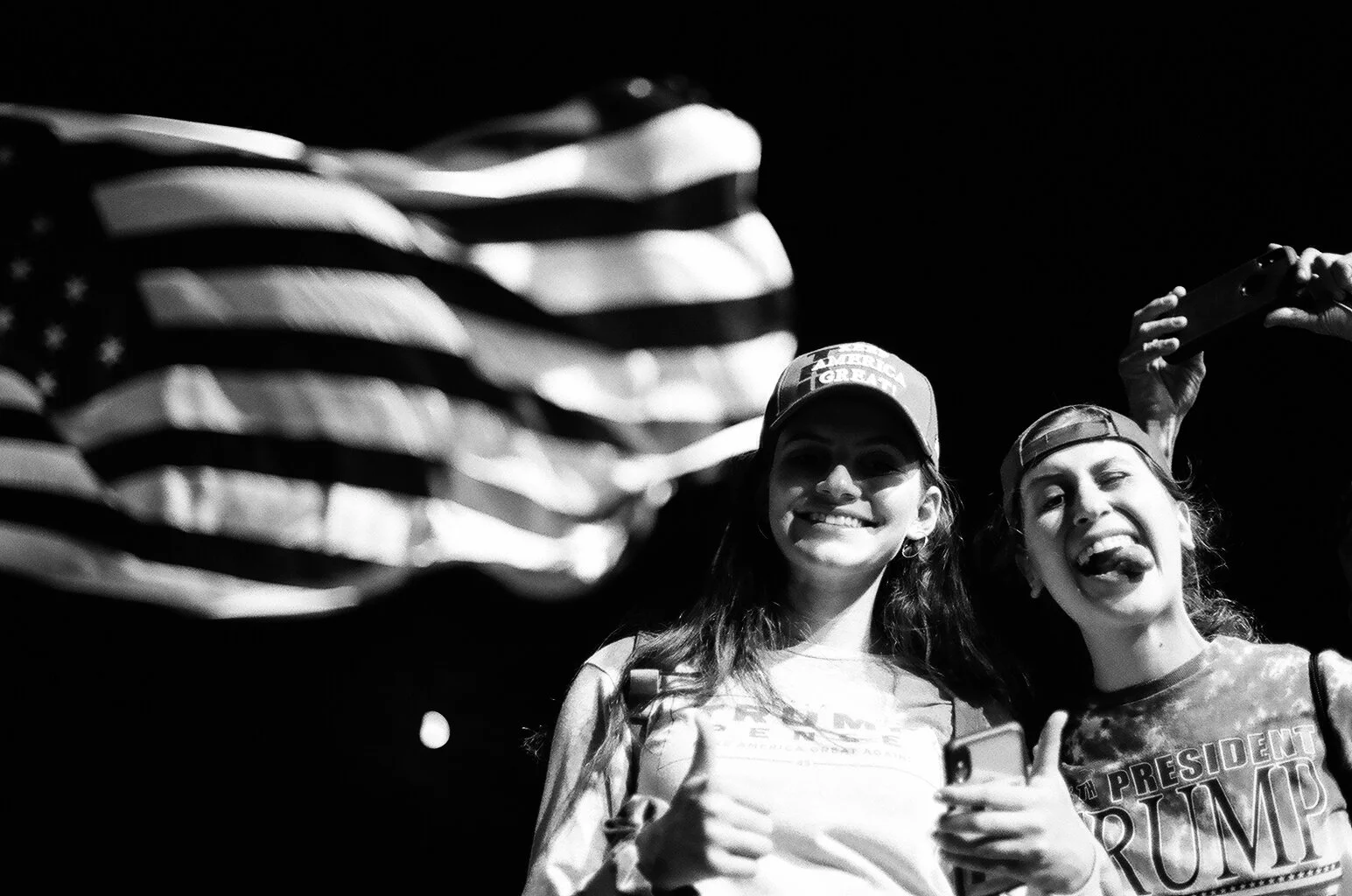
After “wheels up,” the mood shifts from watchful silence to emotional release.
Two young women laugh and pose beneath a large American flag as phones rise around them and music fills the night. Their exuberance marks the rally’s final turn from anticipation and loyalty to open celebration of identity, belonging, and patriotism.
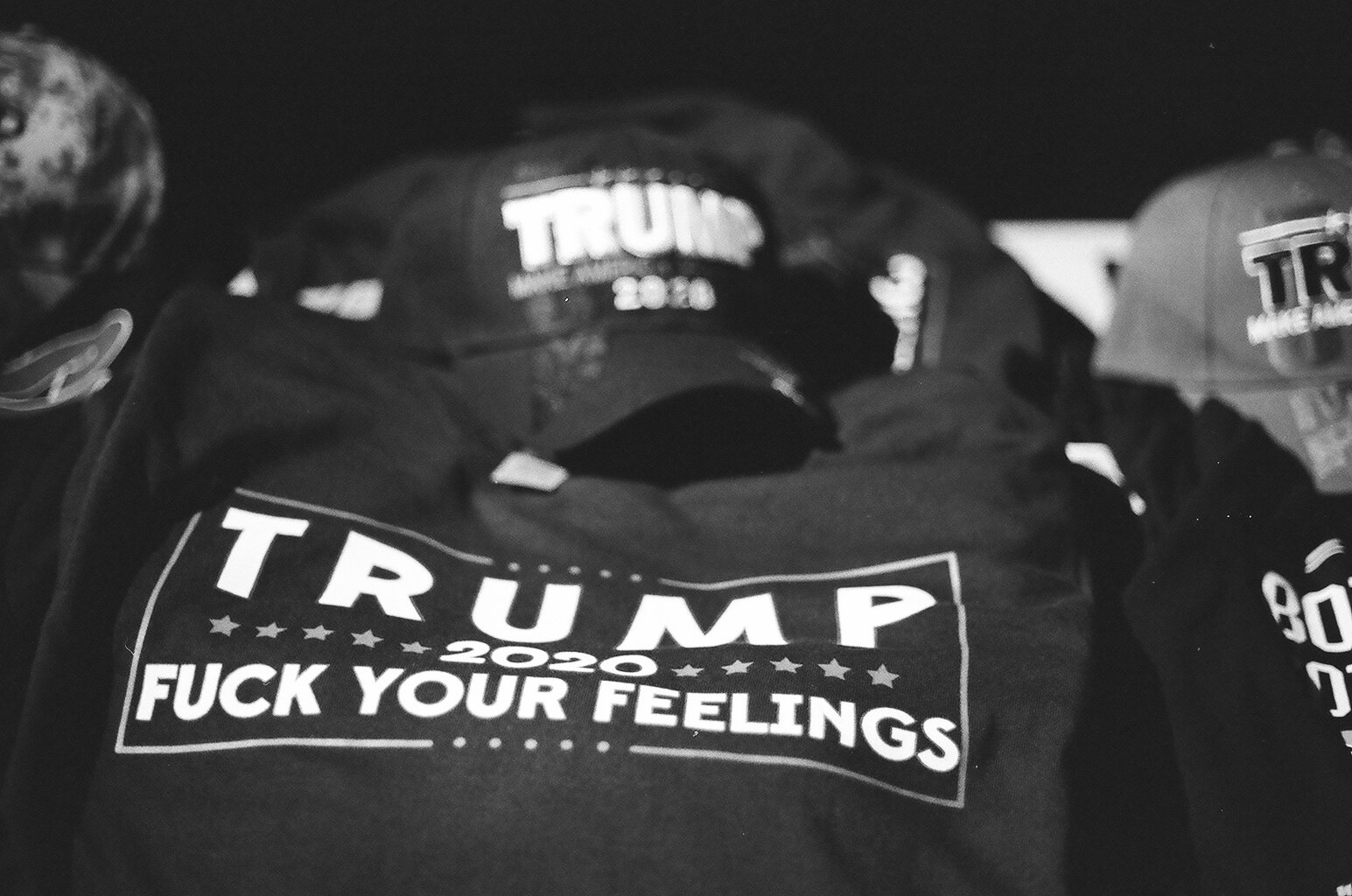
Rows of hats and shirts are stacked at makeshift merchandise stands surrounding the tarmac.
Alongside conventional slogans, openly vulgar messages are sold and displayed without hesitation. The merchandise reflects an unapologetic blending of identity, provocation, and loyalty, where political affiliation becomes both marketplace and attitude.